Category: Reviews

Review – The Sea Hides Its Dead

Posted July 30, 2026 by Nicky in Reviews / 4 Comments

Review – The Sea Hides Its Dead

The Sea Hides Its Dead

by Megan Bontrager

Genres: Horror
Pages: 351
Rating: two-stars
Synopsis:

Trapped in an underwater cave, a group of academics must face a series of deadly, supernatural trials—each one demanding they confront their darkest sins—in this chilling aquatic cult horror debut from Megan Bontrager.

Grad student Caro has no idea what she wants to do with her life, but when an opportunity arises to act as a research assistant on an anthropological expedition for her professor and lover, Edward Beck, she doesn’t hesitate. Beck assembles a team of academics and professionals to study the ancient sea-based Cult of the Leviathan, and the expedition descends into the sea caves where the cult is said to have dwelt.

But when the cave entrance collapses, trapping them inside, the expedition finds they are not alone in the darkness. Surrounded by strange artifacts and scattered bones, an ancient trial has been set in motion. One by one, the members of the expedition will be tested and forced to atone for their greatest sin... or die.

I received a copy of this book for free in exchange for an honest review. This does not affect my opinion of the book or the content of my review.

I was initially really unsure about Megan Bontrager’s The Sea Hides Its Dead, because the prose… gets in its own way, especially in the first fifty pages or so. It’s a mix of “trying too hard” and “…did you ask an LLM to help you come up with an original simile here?”, and sometimes it’s just plain overwritten. Some choice bits that I went “eh???” at include:

I bore the day like a rotten organ, one that had gotten stuck in its botched extraction.

Like… I get where this one is going for, but it doesn’t sound or feel right; “rotten organs” don’t get “stuck”, you just… well, die. And then this, after the protagonist realises that she’s forgotten that that particular day is the anniversary of her mother’s death:

It takes no bravery to make the active choice not to mourn. This, too, just happens.

But she didn’t make an active choice not to mourn. She forgot. That’s… these are not the same things. You understand that, right? Author? Right?! (Please don’t answer. This review is not for you. If you have feelings about it, feel free to go and speak to other authors, a sympathetic family member, or your therapist. This was rhetorical and not an invitation.)

I guess you can be generous there and say that the protagonist then chose not to mourn for the rest of the day after remembering, or that the very forgetting was an active choice through deliberately not trying to remember the date, but that’s all getting a bit special pleading for a sentence that doesn’t, on the face of it, make a lot of sense. It’d be easier and clearer to just write, “I’d been trying not to mark the date, to not think about it, not to set aside special time to mourn.”

And, final example, this bit:

The open, curious expression on Mallory’s face twisted, wilting in on itself like a rusted lattice.

The combo of “wilting” and “lattice” makes me think the author started off with “wilted lettuce” and then decided it wasn’t quite the right note.

Anyway! I felt like this sort of thing evened out a bit once we were into the meat of the story, which takes most of the first 100 pages. There’s an obviousness about it all, from the sordid relationship between Caroline and the professor to the drug-addicted doctor to the soldier who deserted his men. The darkness in their pasts takes obvious forms, and there’s no real ambiguity about whether Beck’s right about what the whole cave system is about. The ultimate outcome is predictable, even most of the twists.

That said, I did think the way that Caroline confronts her “sin” is pretty well done: I’m not sure she’s more likeable for the choice she makes and the way she treats it, but she definitely stands out more for it. The unashamed way she goes, “Yeah, I did that, and I’d do it again!” — yeah, pretty great. I also enjoyed her friendship with Mallory: I think we didn’t get enough build-up to that, really, but their closeness within the cave makes enough sense that it works.

Overall, it came together better than I’d feared from my sense of the writing when I started the book: maybe I got used to it, maybe it genuinely settled out and those first pages had been over-polished or something. Either way, I had a reasonable amount of fun reading it, but I’m not sure I’d recommend it, so I keep wavering on how exactly to rate it now I’m looking back at the whole. Perhaps it’s just not enough my usual genre for me to really know; I’m more of an occasional horror reader.

Rating: 2/5 (“it was okay”)

Tags: , , ,

Divider

Review – Life Changing

Posted July 30, 2026 by Nicky in Reviews / 0 Comments

Review – Life Changing

Life Changing: How Humans are Altering Life on Earth

by Helen Pilcher

Genres: Non-fiction, Science
Pages: 384
Rating: three-stars
Synopsis:

For the last three billion years or so, life on Earth was shaped by natural forces. Evolution tended to happen slowly, with species crafted across millennia. Then, a few hundred thousand years ago, along came a bolshie, big-brained, bipedal primate we now call Homo sapiens, and with that, the Earth's natural history came to an abrupt end. We are now living through the post-natural phase, where humans have become the leading force shaping evolution.

This thought-provoking book considers the many ways that we've altered the DNA of living things and changed the fate of life on earth. We have carved chihuahuas from wolves and fancy chickens from jungle fowl. We've added spider genes to goats and coral genes to tropical fish. It's possible to buy genetically-modified pets, eat genetically-modified fish and watch cloned ponies thunder up and down the polo field.

Now, as our global dominance grows, our influence extends far beyond these species. As we warm our world and radically reshape the biosphere, we affect the evolution of all living things, near and far, from the emergence of novel hybrids such as the pizzly bear, to the entirely new strains of animals and plants that are evolving at breakneck speed to cope with their altered environment.

In Life Changing, Helen introduces us to these post-natural creations and talks to the scientists who create, study and tend to them. At a time when the future of so many species is uncertain, we meet some of the conservationists seeking to steer evolution onto firmer footings with novel methods like the 'spermcopter', coral IVF and plans to release wild elephants into Denmark. Helen explores the changing relationship between humans and the natural world, and reveals how, with evidence-based thinking, humans can help life change for the better.

Helen Pilcher’s Life Changing is a book about how humans have altered other life on earth, deliberately and accidentally, covering topics like the domestication of animals, cloning, genetic engineering, extinction and conservation. None of it came as a huge surprise to me, but it was written in a very readable way, and it was kinda useful to have this kind of thing gathered and grouped together (rather than read separately in books about conservation, animal domestication, etc, all separate from one another).

Throughout, Pilcher tries to keep it light, despite the sometimes-heavy topics: sometimes the humour worked for me, sometimes less so; I wouldn’t call it laugh out loud funny, but it does keep things fairly casual (and sometimes helps to make her point, e.g. when she jokingly refers to her dog as a genetically engineered creature: essentially, he is).

It’ll probably be pretty familiar if you’ve read similar books on the topic before, but it’s accessible and a reasonably easy read. There’s no numbered footnotes or even a numbered bibliography, though, for those who would prefer to be able to fact check: it’s veeeery much on the light end of popular science, in that sense.

Rating: 3/5 (“liked it”)

Tags: , , , ,

Divider

Review – Brigands & Breadknives

Posted July 28, 2026 by Nicky in Reviews / 10 Comments

Review – Brigands & Breadknives

Brigands & Breadknives

by Travis Baldree

Genres: Fantasy
Series: Legends & Lattes #3
Rating: four-stars
Synopsis:

Fern has weathered the stillness and storms of a bookseller's life for decades, but now, in the face of crippling ennui, transplants herself to the city of Thune to hang out her shingle beside a long-absent friend's coffee shop. What could be a better pairing? Surely a charming renovation montage will cure what ails her!

If only things were so simple...

It turns out that fixing your life isn't a one-time prospect, nor as easy as a change of scenery and a lick of paint.

A drunken and desperate night sees the rattkin waking far from home in the company of a legendary warrior surviving on inertia, an imprisoned chaos-goblin with a fondness for silverware, and an absolutely thumping hangover.

As together they fend off a rogue's gallery of ne'er-do-wells trying to claim the bounty the goblin represents, Fern may finally reconnect with the person she actually is when there isn't a job to get in the way.

I hesitated about starting Travis Baldree’s Brigands & Breadknives for a while: the first book came at a perfect moment for me and was delightfully cosy, but the second book (the prequel) didn’t quite hit the same spot, so I wasn’t sure where this one would fall. Ultimately, I didn’t like it as much as I like Legends & Lattes, but I think the choice to avoid sticking too close to the template of the first one and go for a less cosy, more quest-like adventure brought with it a breath of fresh air.

Which is not to say that it abandoned one of the things I like a lot about Legends & Lattes: the book follows Viv as she tires of being a mercenary and turns to something else that’s calling her more, and that’s essentially what’s happening for Fern here as well. Baldree could’ve written essentially the same story again, with Fern settling into the bookshop next door to Viv and finding contentment in a change of pace and location, but instead he chose something truer to the spirit of the original: Fern’s lost, and her relationship to her work has changed, and so she ends up setting out to seek something new.

There are elements of the way things turned out that I’d predicted, but also some differences — which I won’t say too much about, to avoid spoilers! I liked that it somewhat ducked my expectations, but in a way that beautifully made sense of everything.

Overall, I didn’t love it as much as Legends & Lattes, but I did enjoy it a lot. The characters are fun (I love Zyll most of all), we get to see more of the world, and we do see glimpses of Viv, Tandri, et al.

One sour note: a character declares they don’t go by a particular name anymore, and everyone continues to use it. It doesn’t matter why someone wants to change their name, even if you think it’s silly. If the name is upsetting for them or doesn’t fit with who they are in any way, then the right thing to do is accept that change. I didn’t enjoy this element being continuously ignored and used for humour, at all. Names are important. It wasn’t funny.

Rating: 4/5 (“really liked it”)
Tags: , , ,

Divider

Review – Our Not-So-Lonely Planet Travel Guide, vol 1

Posted July 27, 2026 by Nicky in Reviews / 0 Comments

Review – Our Not-So-Lonely Planet Travel Guide, vol 1

Our Not-So-Lonely Planet Travel Guide

by Mone Sorai

Genres: Manga, Romance
Pages: 208
Series: Our Not-So-Lonely Planet Travel Guide
Rating: three-stars
Synopsis:

Super serious Asahi Suzumura and laidback, easygoing Mitsuki Sayama might seem like an odd couple, but they made a deal; they'll vacation around the world and when they get back to Japan, they'll get married.

As they travel from country to country, the different people, cultures and cuisine they encounter begin to bring them closer together. After all they're not just learning about the world, but about themselves too.

The first volume of Mone Sorai’s Our Not-So-Lonely Planet Travel Guide introduces us to Asahi and Mitsuki, a Japanese gay couple who are going on a tour around the world. When they get back, they plan to get married. Obviously the wrench thrown into that plan is the fact that Asahi doesn’t want to be out, and the two of them bicker and seem ill-matched at several points in the story so far (though there are also some cute/tender moments).

Because of Asahi’s self-doubt and internalised homophobia, it’s hard to just view this as light fun — sorry, but getting het up about your boyfriend wanting to hold your hand or be sappy in public is just not where I’m at (at least not when it’s for those reasons).

Like I said, there are some cute moments, and aspects I do like, but… I’m not a huge fan of the art style (particularly Asahi’s design and expressions), so I’m not super drawn to reading more. Glad I gave it a shot though.

Rating: 3/5 (“liked it”)

Tags: , , , ,

Divider

Review – First Rain in Paradise

Posted July 26, 2026 by Nicky in Reviews / 0 Comments

Review – First Rain in Paradise

First Rain in Paradise

by Gwyneth Lewis

Genres: Poetry
Pages: 96
Rating: one-star
Synopsis:

First Rain in Paradise is a book about falling. Gwyneth Lewis's highly inventive poems trace an interior landscape carved out by the trauma of childhood emotional abuse through subsequent chronic ill health and towards a hard-won resurrection.

These accounts of living in and emerging from the dark wrestle with the angel of language. Suffering does not preclude humour and may, in fact, require it, in poems written from the shadows but committed to the light. This work refuses to keep pain a secret. Shame is a lurking presence.

Gwyneth Lewis has won wide acclaim for her versatile and varied writing across genres, most notably in her award-winning poetry in both English and Welsh. This book shows a deepening of her technical, imaginative and intellectual resources which are challenged and exercised to the full. The poems map uneasy terrains with realism and - most importantly - with joy.

I was very curious about Gwyneth Lewis’ First Rain in Paradise; I’m very interested in Welsh literature in English, and the fact that Lewis writes in both Welsh and English was also a draw. Unfortunately, I didn’t enjoy this collection at all, especially since the opening is poem is (on the surface) all about spiders and they recur as an image in several poems. Nooot ideal for me, ahaha.

But just beyond that surface level of using the spider imagery, I didn’t really find myself enjoying the style or choice of words, and the poems didn’t seem to sink in and hook me. I didn’t find anything I wanted to save to quote for the review, even, which I try to do.

Not a collection for me, alas, though I might try something else by Lewis if the National Poetry Library has another volume, just to see if the spiders threw me off.

Rating: 1/5 (“didn’t like it”)

Tags: , , ,

Divider

Review – William Tyndale and the English Language

Posted July 26, 2026 by Nicky in Reviews / 0 Comments

Review – William Tyndale and the English Language

William Tyndale and the English Language

by David Crystal

Genres: History, Linguistics, Non-fiction
Pages: 242
Rating: two-stars
Synopsis:

‘Dearly beloved’, ‘say the word’, ‘the powers that be’, ‘for ever and ever’ – these familiar phrases and many more were set down in print for the first time by William Tyndale. For his groundbreaking English translation of the Bible, he deliberately chose to write in a way that could be understood by the widest possible audience.

In the first half of this pioneering exploration of the extraordinary impact Tyndale’s writing had on the development of the English language, David Crystal provides an analysis of his prose style, demonstrating its character as a novel genre of ‘written speech’, and bringing to light the remarkable number of cases where Tyndale is the first recorded user of a word or phrase in English. He also draws attention to the hitherto unrecognised role of Tyndale as an early lexicographer. The second half of the book is a linguistic detective story, devising an innovative lexical and grammatical metric to investigate the often-stated claim that eighty per cent of later biblical translations display Tyndale’s influence.

The result is a fascinating exploration of the work of the Father of the English Bible.

David Crystal’s William Tyndale and the English Language basically wants to examine the premise that William Tyndale had, via the King James Bible, a huge influence on modern English. In aid of that, there’s a lot of analysis of the words and phrases Tyndale uses, and then Crystal works out a way to compare Tyndale’s translations to the King James Bible in order to determine the level of influence.

Apparently there had been past work on this, but Crystal seems to have found this unsatisfying/wanted to put it to the proof, because he tries to reverse engineer the conclusion and then come up with his own ways of making the comparison.

I found the first few chapters quite interesting, but after that I kind of tailed off: the point felt made, and I didn’t have the interest in the point-by-point comparisons, or the dozens-to-hundreds of examples about Tyndale’s language choices in his translations and commentaries.

It’s probably a great read if you’re more into the results of the investigation, but I ran out of stamina for the facts and figures and started skimming once I caught the gist of each chapter.

Rating: 2/5 (“it was okay”)

Tags: , , , , ,

Divider

Review – How Animals Sleep

Posted July 24, 2026 by Nicky in Reviews / 0 Comments

Review – How Animals Sleep

How Animals Sleep

by Jiří Dvořák, Marie Štumpfová

Genres: Children's, Non-fiction
Pages: 40
Rating: four-stars
Synopsis:

How do animals sleep? Curious young minds will be fascinated to discover the amazing variety of ways the animals featured in this picture book sleep. Some sleep nearly all the time while others hardly at all; some sleep underwater while others standing on one leg; some sleep in snow while others in the baking hot desert. . .

How Animals Sleep invites inquiry and comparison between the animals and their sleep behaviors plus reflection on how we as humans get rest.


I don’t read a lot of kids’ books, but Jiří Dvořák’s How Animals Sleep kept drawing my eye on my library’s Comics Plus subscription, so… I decided to read it for the art at least. The art (done by Marie Stumpfova) is very cute, and though the facts about how animals sleep are terribly complex or surprising, I found the descriptions surprisingly sweet and lyrical. Here’s an example:

Mommy otter places her baby onto her belly and together the two close their eyes… Above them, stars peek through holes in their dark blanket, beneath them, their briny bed rocks them till morning.

That’s partly down to the translation by Benjamin Lovett, I’m sure, but the sentiments and ideas are from the original.

A nicely done little book. Not sure about anything like reading age (since that kind of thing is out of my usual area for reviewing books), but would recommend checking it out if you think it sounds nice.

Rating: 4/5 (“really liked it”)
Tags: , , , , ,

Divider

Review – Find Me Where It Ends

Posted July 23, 2026 by Nicky in Reviews / 4 Comments

Review – Find Me Where It Ends

Find Me Where It Ends

by Cassandra Khaw

Genres: Fantasy
Pages: 128
Rating: three-stars
Synopsis:

Antigone can see death coming. It always takes the form of a black dog, nipping at the heels of the soon-to-be-departed.

When Antigone's own black dog appears on her doorstep, she isn't frightened. In fact, she welcomes her death inside, and it quickly becomes her closest companion. Having death at her side is almost a comfort. But it also forces Antigone to reckon with the life she's lived.

Sometimes we live best when we're dying.

I received a copy of this book for free in exchange for an honest review. This does not affect my opinion of the book or the content of my review.

It’s tough for me to review Cassandra Khaw’s Find Me Where It Ends, because the novella as a whole is probably something I shouldn’t have read. You might think that this is all a pretty obvious metaphor about suicide: someone knows they’re going to die at some point in the next few days, months or years because they met their black dog, and then they invite that dog in and pet it, welcoming it into their life.

Well… yeah, but also, it’s not a metaphor: the whole book is just plain about suicide, and the metaphor is honestly the least of it. I’m going to have to discuss suicide and mental health a bunch of times in this review in order to grapple with the novel, and though I’m trying to be fairly matter-of-fact, I’d say if you have any triggers around that… maybe you’d better not read my review, either.

So… let’s get into it. Antigone is the main character, and she meets her black dog. She knows it means she’s going to die because that always happens to women of her family: okay so far. Problem is, the dog doesn’t mean “you’re going to die tomorrow” or “you’re going to die within two weeks”. It just means “you’re going to die” — and in Antigone’s case she has conflicting information from divination, which let her know long ago that she would have a long life (though, perhaps crucially, she stopped the process of investigation before learning what would kill her).

However, she treats the arrival of her dog as a sign of absolutely impending doom, despite those two pieces of information and that… does and doesn’t make sense to me. It’s not very logical, which is why it doesn’t totally make sense. But in another sense, it’s familiar: I have anxiety, sometimes quite serious anxiety, and I can easily imagine (don’t really have to imagine) getting this one signal of death, weighing it against knowing myself to be healthy, and deciding I’m going to die and getting terrified. In this situation, I can definitely imagine myself taking the arrival of my black dog as being a sign that I was developing some long, slow, horrible illness that would lead to my death in many years after a lot of misery.

So… while I initially felt like the setup didn’t quite work for me, on reflection it does make a lot of sense. When it comes to anxiety/depression, rationality doesn’t help (at least, not without a lot of work in helping yourself apply it), because it feels less true. It might be pretty fair to say this novel is not only about suicide or depression, but also about anxiety.

The novel turns over the thought of suicide in a few ways: Antigone’s mother saw her black dog and immediately decided to commit suicide, and after the arrival of her dog, Antigone deals with a woman who is haunted by the ghost of her abusive mother, locked into a horrible cycle with her. When that woman refuses to let Antigone exorcise the ghost and then ends up killing herself, her daughter says that if her own mother comes back to haunt her, she’ll kill herself. And then, of course, Antigone decides to kill herself, held back only by a promise to a friend to try to live a few days more.

Like I said, it’s not a metaphor. The suicide part is text, and it’s throughout the whole story. The tension in the book becomes about whether Antigone will choose to live or not, with the friends and family around her reacting (sometimes in unhelpful ways) to her despair.

Thinking it over now at a distance of a few days, I think it’s well done and well written. I think the feelings Antigone has make a lot of sense, and the glimmer of hope at the end feels earned and real, if fragile. I’m still not sure I should personally have read it, because while my reactions to my fear aren’t the same as Antigone’s, the fear of uncertainty is something that strikes deep for me. It was certainly not a comfortable read.

Rating it was a struggle; I normally rate on how much I like a book, but that feels far too complicated with this novella. In the end I settled somewhere between my appreciation for the rumination Khaw’s doing here, and the craft that went into it, and my discomfort with the experience of reading it. I’d have given it 1/5 (“didn’t like it”) right after reading, but it is something that settled a little given time.

Rating: 3/5 (“liked it”)

Tags: , , ,

Divider

Review – The Wife Comes First, vol 1

Posted July 22, 2026 by Nicky in Reviews / 2 Comments

Review – The Wife Comes First, vol 1

The Wife Comes First

by Lv Ye Qian He

Genres: Fantasy, Light Novels
Pages: 396
Series: The Wife Comes First #1
Rating: four-stars
Synopsis:

As his life flashes before his eyes, self-obsessed Prince Cheng has a moment to reflect on something curious. Despite knocking at death’s door, only one person remains by his side: his all-but-abandoned prince-consort, Mu Hanzhang. Except, rather than celebrate that fact, Prince Cheng can only wonder… Why, after everything, is Mu Hanzhang still with him?

After all, Prince Cheng spent most of his life philandering and mastering political intrigue. Meanwhile, Mu Hanzhang had to discard his dreams of taking the Imperial Examination to become a minister, and was instead coerced to serve as male wife to a cruel prince!

Granted a second chance, Prince Cheng is miraculously reborn, waking up the morning after his wedding. As he does, the prince makes another vow: the wife comes first, the state second, and the husband last.

Where to start? Well first, he must kneel outside Mu Hanzhang’s bedroom door and beg to be let in, of course! Then again, after the sacrifices Mu Hanzhang’s had to make, will he even be willing to forgive his new husband?

I hadn’t heard much about Lv Ye Qian He’s The Wife Comes First before picking up volume one, but I was quickly hooked by the concept: it opens with Jing Shao’s death, with the body of his neglected but loyal first wife (his only male wife, Mu Hanzhang) in his arms, and then his awakening beside that same wife on their wedding night.

It starts in a bit of an uncomfortable place, truth be told: the wedding night didn’t actually go well, and Jing Shao injured Mu Hanzhang pretty badly. It’s not entirely clear how consensual that all was from the narrative: Mu Hanzhang doesn’t consider that he can say no, while Jing Shao was drunk… but I will say that in the rest of the novel, when Mu Hanzhang shows reluctance or says no, Jing Shao listens and does only what Mu Hanzhang is comfortable with (albeit maybe with a bit of pleading and cajoling). It’s all a bit difficult because of the setting: both of them were forced into the marriage, and it’s unclear how far either of them would’ve been able to meaningfully consent in the circumstances.

Personally, my read was that Mu Hanzhang would’ve been unlikely to give an outright no, and Jing Shao would likely have heeded it if he had — but it is ambiguous because it happens off-screen, and Jing Shao’s behaviour in hurting Mu Hanzhang (though later shown to be due to ignorance, at least in part) isn’t great, so keep all that in mind.

I would also note that there is some significant violence against women, largely off-screen, including Mu Hanzhang ordering for someone to be beaten to death for betraying him and Jing Shao. It isn’t treated as horrifying, just completely matter-of-fact — it’s almost easy to miss for how unremarkable it is. Most of the female characters are scheming and/or nasty, aside from one of Jing Shao’s servants (who works to protect Mu Hanzhang from the empress’ scheming) and Mu Hanzhang’s mother. Part of that is pretty much compelled by the plot: if only Mu Hanzhang stood by Jing Shao at the end, his other wives/concubines necessarily couldn’t stick by him… but it isn’t great.

That said, a lot of the rest is really sweet, and I actually really enjoyed it — for the number of words I’ve spent explaining these factors, they’re background to the story rather than the most prominent thing. Jing Shao quickly becomes fascinated with Mu Hanzhang, who is more reserved but quickly begins to have feelings for his husband as well, regardless of his fears around sex. The whole concept of “gentleman wives” (mandatory for the younger sons in certain families) and their gatherings is a nice touch, rather than just having Mu Hanzhang be some kind of exception. I also enjoyed that Jing Shao actually cares deeply about his elder brother, and we see their relationship grow as a result of his understanding (from his past life) that his brother cares for him.

Soo… overall, I enjoyed the relationship development and the court intrigue (and Mu Hanzhang’s scheming mind), and ended up flying through the book. I’m very curious to see how their relationship develops, and how the two of them manage to avoid the bad outcome that we see at the start, especially since Mu Hanzhang knows nothing about it (as least as far as we know, and the third person limited narrative seems to confirm that: Jing Shao is presumably the only one who got the “do-over”).

Rating: 4/5 (“really liked it”)
Tags: , , , , ,

Divider

Review – Cat + Gamer, vol 1

Posted July 21, 2026 by Nicky in Reviews / 10 Comments

Review – Cat + Gamer, vol 1

Cat + Gamer

by Wataru Nadatani

Genres: Manga
Pages: 186
Series: Cat + Gamer #1
Rating: three-stars
Synopsis:

Riko, a twenty-nine-year-old office worker with an obsession for video games, finds her quiet life upended when she takes in a stray cat in this adorable manga series!

Her coworkers can’t quite figure her out—she never talks about her personal life, she never works overtime, and she never joins them for happy hour. Is she antisocial? Nope, she’s rushing home to play video games! One day, a stray cat is found in the office parking lot, and before Riko knows it, the cat has moved in with her! Having no experience with pets, Riko uses lessons drawn from video games to guide her in cat care, while her cute companion tries to understand her behavior through a cat's worldview.

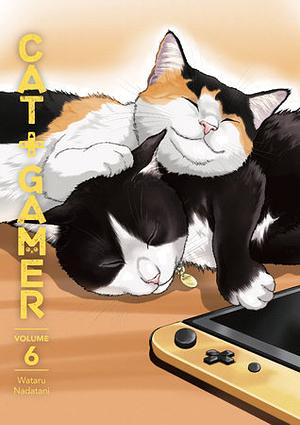
Volume one of Wataru Nadatani’s Cat + Gamer is pretty fun: an office worker who clocks off right on time and goes home to play video games at night impulsively adopts a cat. She knows little about taking care of pets, and eventually decides to view it in a gamified sort of way.

Sometimes that’s kinda cringe (rushing the cat to the vet with fleas, talking about it having a debuff), but it mostly comes out cute. I especially like the interludes between chapters, showing events from the cat’s point of view.

Overall it’s silly light fun, and a nice palate cleanser.

Rating: 3/5 (“liked it”)

Tags: , , ,

Divider