Tag: SF/F

Review – The Voyages of Cinrak the Dapper

Posted September 5, 2026 by Nicky in Reviews / 0 Comments

Review – The Voyages of Cinrak the Dapper

The Voyages of Cinrak the Dapper

by A.J. Fitzwater

Genres: Fantasy, Short Stories
Pages: 145
Rating: two-stars
Synopsis:

Cinrak the Dapper is a keeper of secrets, a righter of wrongs, the saltiest capybara on the sea and a rider of both falling stars and a great glass whale. Join her, her beloveds, the rat Queen Orvilia and the marmot diva Loquolchi, lead soprano of the Theatre Rat-oyal, her loyal cabin kit, Benj the chinchilla, and Agnes, last of the great krakens, as they hunt for treasures of all kinds and find adventures beyond their wildest dreams. Let Sir Julius Vogel Award-winning storyteller A.J. Fitzwater take you on a glorious journey about finding yourself, discovering true love and exploring the greatest secrets of the deep. Also, dapperness.

I read this ages ago and realised I’d never posted the review! So I dug it out for you now…

I’d heard about this book quite frequently, but only picked it up recently, for some reason. I love the idea of a dapper, polyamorous, lesbian pirate capybara, and the introduction to the book states something really vital: queer joy is important. Yes, we still have fighting to do, to ban conversion therapy and reverse the recent erosion of trans rights… but to do that we need to nourish ourselves. Our joy is needed too. Plus, a happy queer person is one in the eye for the haters.

So… I wanted to love this book, and I definitely did enjoy the diverse cast, the inclusiveness of Cinrak’s crew and world.

But it feels a little like a collection of stories based on an existing world that the reader should already be familiar with. Things aren’t explained, they just happen. Oh, Cinrak has salt magic — okay, but what does that mean? What are the bounds on it? I initially got the impression it was all sea-related, then it can also sense danger, then it can bust open other magic to save the day… Cinrak and crew always suddenly had the resources/capabilities needed in any given situation.

There were a lot of gaps, and they weren’t the kind that are just part of figuring out the world; I like worldbuilding that makes you do the work, but this wasn’t that.

This collection is enjoyable — and hey, a dapper polyamorous lesbian pirate capybara is a glorious concept and one I’m glad to have met — just didn’t quite work out for me.

Rating: 2/5 (“it was okay”)

Tags: , , , ,

Divider

Review – Mistakenly Saving the Villain, vol 3

Posted September 1, 2026 by Nicky in Reviews / 0 Comments

Review – Mistakenly Saving the Villain, vol 3

Mistakenly Saving the Villain

by Feng Yu Nie

Genres: Fantasy, Light Novels, Romance
Pages: 308
Series: Mistakenly Saving the Villain #3
Rating: four-stars
Synopsis:

SOME MISTAKES ARE DESTINY

After a dramatic confrontation with An Long, Song Qingshi and Yue Wuhuan finally begin to speak openly about their feelings. Their relationship deepens—an oasis of tenderness in a world that has offered them little peace.

But shadows remain. Even with treatment, Yue Wuhuan’s illness still festers, and Song Qingshi faces his own sickness: the slow collapse of his cultivation. Worse yet, the system—the mysterious voice that first bound him to this story—is far from satisfied with his failure to save the “right” person.

As the truth behind Song Qingshi’s biggest mistake unravels, so does reality itself. Perhaps he and Yue Wuhuan are nothing more than puppets of fate, destined to be twisted and broken by the heavens. Is anything in the world strong enough to break that cycle?

Volume three of Mistakenly Saving the Villain opens on that horrible cliffhanger, and predictably the two of them solve it in the most stupid possible way, by not talking about it properly and just sort of sliding into a relationship anyway. I say this as someone who basically did that in my own relationship with my now-wife, to be clear: I am affectionately talking about it as the most stupid possible thing.

I love that Song Qingshi is not actually as ignorant of what Yue Wuhuan is thinking and feeling as he sometimes seems, and that he works out what Yue Wuhuan is doing, coaxes him to act on his feelings, and starts helping him distinguish between what is real and what is his trauma/illness. So far it hasn’t much stopped Yue Wuhuan getting worse, because Song Qingshi doesn’t do a good job of boundaries, but… Yue Wuhuan’s unhinged devotion to Qingshi is what we’re here for, right?!

This volume then… goes places. It’s quite the ride, and I have no idea how this is all going to wrap up: the system has reasserted itself (sort of), and we get a glimpse of the bigger picture, a whole bigger tangle that Yue Wuhuan (or whatever he’d like to be called now) and Song Qingshi are part of, which I assume will round things off.

I’m trying not to say too much because a) I’m not sure I’m fully following everything yet and b) I don’t want to spoiler the wild ride for anyone else. But I’m enjoying it a lot and very eager for the last volume in October.

Rating: 4/5 (“really liked it”)

Tags: , , , , , ,

Divider

Review – The Other World’s Books Depend on the Bean Counter (manga), vol 6

Posted August 28, 2026 by Nicky in Reviews / 0 Comments

Review – The Other World’s Books Depend on the Bean Counter (manga), vol 6

The Other World's Books Depend on the Bean Counter

by Kazuki Irodori, Yatsuki Wakutsu

Genres: Fantasy, Manga, Romance
Pages: 176
Series: The Other World's Books Depend on the Bean Counter (manga) #6
Rating: four-stars
Synopsis:

It was just a normal day when a workaholic office worker was dragged through a portal to another world. Of course, the first thing he requested was a job—which is how Kondou’s career in the Royal Accounting Department began. Now, as Vice Director, Kondou finds himself out of his depth, embroiled in a plot involving the church’s finances and state secrets, all the while missing his dashing knight captain. But when Aresh returns from a successful expedition only to mysteriously collapse, it might be up to our intrepid bean counter to save the day…

Volume six of Kazuki Irodori’s manga adaptation of The Other World’s Books Depend on the Bean Counter contains some really really sweet moments, as Seiichirou discovers that Aresh’s absence makes his own feelings very clear. The fact that Aresh is a big romantic is no surprise, and Seiichirou will always be a pragmatist above all… but the imbalance in their feelings is starting to even out, and there are some super cute scenes.

The plot also continues apace, of course, with Seiichirou targeted by someone from within the church, and Seiichirou’s investigation beginning to reveal that something’s off about all of that.

It’s still apparent that Aresh thinks they’re in a romance novel (not even realising that the attack on Seiichirou is targeted until it comes up as a matter of course in conversation) while Seiichirou is in a fantasy novel with political intrigue, which is also kind of funny. I’ve forgotten exactly how the situation plays out in the church and how it leads into Aresh’s dramatic next actions, from the light novel, but I look forward to getting there in the manga too.

(Still, in the meantime… maybe a little reread.)

Rating: 4/5 (“really liked it”)

Tags: , , , , , ,

Divider

Review – The Album of Dr. Moreau

Posted August 27, 2026 by Nicky in Reviews / 4 Comments

Review – The Album of Dr. Moreau

The Album of Dr. Moreau

by Daryl Gregory

Genres: Crime, Mystery, Science Fiction
Pages: 176
Rating: four-stars
Synopsis:

Daryl Gregory's The Album of Dr. Moreau combines the science fiction premise of the famous novel by H. G. Wells with the panache of a classic murder mystery and the spectacle of a beloved boy band.

It’s 2001, and the WyldBoyZ are the world’s hottest boy band, and definitely the world’s only genetically engineered human-animal hybrid vocal group. When their producer, Dr. M, is found murdered in his hotel room, the “boyz” become the prime suspects. Was it Bobby the ocelot (“the cute one”), Matt the megabat (“the funny one”), Tim the Pangolin (“the shy one”), Devin the bonobo (“the romantic one”), or Tusk the elephant (“the smart one”)?

Las Vegas Detective Luce Delgado has only twenty-four hours to solve a case that goes all the way back to the secret science barge where the WyldBoyZ’ journey first began—a place they used to call home.

I got surprisingly into Daryl Gregory’s The Album of Dr Moreau; I don’t actually remember where I heard about it or why I picked it up, but I know I added it to my Kobo Plus a while ago, and decided to read it on something of a whim. I expected something… I don’t know, less serious, even given the source material and the fact that it’s a sci-fi murder mystery: given the concept of a boyband of animal-human hybrids, which the story fully leans into, it could have been considerably wackier.

But no, it goes for something sincere, even while there are silly animal puns and cutesy bits with Bobby O, the ocelot band member, and with the detective’s kid. By sincere, I definitely don’t mean that it’s po-faced or anything like that: at times it is silly.

But it also engages with the darkness of the original story of Doctor Moreau’s island, and with the seriousness of a murder mystery (even as it rejects T.S. Eliot’s “rules” for detective fiction, which, good). The band members were abused and have been exploited, and the solution to the story comes out of the darkness of the past, one which looms up behind them slowly even as the detective sometimes seems to be dealing with an entire circus.

I don’t think I should say more about the resolution of the story, but overall, I found it pretty satisfying and well done!

Rating: 4/5 (“really liked it”)

Tags: , , , , ,

Divider

Review – Wooing the Witch Queen

Posted August 24, 2026 by Nicky in Reviews / 8 Comments

Review – Wooing the Witch Queen

Wooing the Witch Queen

by Stephanie Burgis

Genres: Fantasy, Romance
Pages: 294
Series: Queens of Villainy #1
Rating: three-stars
Synopsis:

Queen Saskia is the wicked sorceress everyone fears. After successfully wrestling the throne from her evil uncle, she only wants one thing: to keep her people safe from the empire next door. For that, she needs to spend more time in her laboratory experimenting with her spells. She definitely doesn’t have time to bring order to her chaotic library of magic.

When a mysterious dark wizard arrives at her castle, Saskia hires him as her new librarian on the spot. “Fabian” is sweet and a little nerdy, and his requests seem a little strange – what in the name of Divine Elva is a fountain pen? – but he’s getting the job done. And if he writes her flirtatious poetry and his innocent touch makes her skin singe, well…

Little does Saskia know that the "wizard" she’s falling for is actually an Imperial archduke in disguise, with no magical training whatsoever. On the run, with perilous secrets on his trail and a fast growing yearning for the wicked sorceress, he's in danger from her enemies and her newfound allies, too. When his identity is finally revealed, will their love save or doom each other?

I’ve been meaning to try Stephanie Burgis’ Wooing the Witch Queen since forever, seeing other people’s enthusiasm about the series — and there is indeed a lot to love! The introduction is a little heavy, with Felix fleeing his kingdom due to being essentially a puppet ruler, manipulated and outright abused by the man who actually controls the kingdom… and Saskia’s back story is also a tragic one, with betrayal and the murder of her parents by her uncle behind her before she managed to take her own throne. Despite all that setup, the story has a relatively light touch.

The misunderstanding/mistaken identity thing at the beginning didn’t entirely work for me in that I just wanted Felix to come clean already and avoid the horrible third act breakup I could see coming from a mile off… but ultimately, Burgis subverted my expectations there somewhat. She does have to have Saskia wilfully insist on ignorance on more than one occasion in order to play things out the way she wants to, but it mostly works, and I was relieved that the relationship didn’t have the breakup I’d expected.

I did find the insta-attraction a little bit much, but over time the connection between the two did grow on me, as well, particularly when Felix time after time just supported Saskia and her needs, her right to make decisions and make a different world than her First Minister thinks she should, her right to be a queen.

The warmth felt by Saskia for her staff and they for her is lovely, too. The way that the “evil queen”‘s castle is essentially a big family (or at least a well-run and employee-friendly company) is pretty sweet; I do feel that the fact that they insist on Felix eating and sleeping and having company, things a person needs, isn’t played for as much as it’s worth (though that decision does avoid things getting too heavy). Given his trauma, it’s a hell of a gift to be somewhere that his needs are met in that way.

I’m definitely interested enough to read more, even if I didn’t love Lorelei from what I’ve seen so far; I expect she’ll grow on me when we get to understand her backstory more.

Rating: 3/5 (“liked it”)

Tags: , , , ,

Divider

Fantasy with Friends: Dark Academia

Posted August 24, 2026 by Nicky in General / 12 Comments

Fantasy With Friends: A Disccusion Meme hosted by Pages Unbound

Monday’s back again, but look, here’s one I made earlier! I’m on a trip right now to celebrate my birthday (today is indie bookshop spree day!) so comments might be slow, but I’ve got a Fantasy with Friends post anyway. All the prompts are hosted at Pages Unbound, if you’d like to join in. This week’s prompt is on dark academia in fantasy:

Do you enjoy dark academia fantasy novels? What are some themes you enjoy seeing discussed in dark academia (ex. ethics in academia, corruption, classism, etc?) Do you think the genre does a good job exploring such themes in general, or are many books focused mainly on the aesthetics?

I don’t think I’ve read a lot of dark academia, not enough to really form an opinion on it as a genre. I’m not opposed to the idea, it’s just not the way my interests have taken me. I think the best of it grows out of and reflects the real dark sides of academia, where people are pitted against each other for limited funding or limited numbers of places, and privilege can get you a long way. Thinking about e.g. R.F. Kuang’s Katabasis, which I’m in the middle of, it feels like a lot of it is a response to those pressures and the sometimes unfair situation gifted people are placed in, struggling against each other for limited opportunities when the opportunities are a bit of a poisoned chalice anyway.

It is not my experience of academia, to be clear; I’m an enthusiastic and serial student, with a BA, MA, BSc and MSc now… but having to get into departmental politics is definitely one reason why I haven’t done a higher degree (the other major one being that I prefer to synthesise over doing something new, and synthesis is not rewarded in academia — despite being essential to scientific and medical consensus).

Another aspect of dark academia is the importance of acknowledgement that academia has done some very dark things indeed. I studied at the London School of Hygiene and Tropical Medicine, a school founded in order to train doctors for colonial service. The whole point was to keep white enslavers healthy for the sake of Empire. It was engaged in “decolonisation” initiatives by the time I enrolled, and continues to be, but that fundamental attitude ripples through the whole course of study. We were taught (in 2020-2025) about the importance of keeping African people healthy so they can study and later earn more… and yes, that is going to benefit them in the sense of helping them get jobs and make informed choices around drug treatments, but there’s also a high degree of “capitalism is the one and only answer, and we must help them do it properly because they won’t if we don’t intervene”.

This blog isn’t a good place to delve into the ethics and complications of all that, but the point is that LSHTM isn’t alone, and many academic institutions are mired in that kind of history, and a history of extracting knowledge without credit and without benefit to the peoples and areas studied. I don’t think I’ve read anything yet that really engages with that, though I think one or two of the books on my TBR do (like Kuang’s Babel).

Anyway, I think what I’m interested in when I do read dark academia is a bit of awareness of the tensions there and how they can particularly impact minorities, and/or of the dark history of many academic institutions. I prefer the “darkness” to mean something rather than rely on vibes to provide a background to an “enemies-to-lovers” story or something. Not that I’m against an enemies-to-lovers story, but I’d like the “dark” part of the academia to make sense and drive the plot, rather than just be an aesthetic.

Tags: , , ,

Divider

Review – Moon-Flash

Posted August 21, 2026 by Nicky in Reviews / 0 Comments

Review – Moon-Flash

Moon-Flash

by Patricia A. McKillip

Genres: Fantasy, Science Fiction
Pages: 150
Series: Kyreol Duology #1
Rating: three-stars
Synopsis:

Kyreol's small world begins at the Face, a high rock cliff, and ends at Fourteen Falls, a series of rapids. Each year, her people celebrate Moon-Flash-a spark of light that seems to come from and go into the moon, a symbol of life and joy. When a mysterious stranger arrives, Kyreol wants to know more about him, as well as the Moon-Flash, and soon she and her childhood friend Terje leave their home to look for answers. Those answers will pluck Kyreol from Riverworld and transform her life forever-by fast-forwarding her into a future she can barely comprehend.

Patricia McKillip’s Moon-Flash begins feeling like a fantasy novel, and it’s difficult to talk about how the story actually goes without spoilers. The initial chapters follow Kyreol, a girl who doesn’t quite seem to fit within the small world of her very much pre-industrial society, shaped by ritual and custom… a girl who asks questions and tells stories about the world around her, and ultimately notices too much, finding herself driven to understand what’s really going on.

Into her quest she draws her best friend, a young man that she wishes she could have married (though she has been betrothed since very young to someone else): I rather liked Terje and his practical responses to everything that’s going on, while at the same time he enjoys Kyreol’s curious mind and the stories she comes up with about things.

The reveal, when it comes, is pretty much as I’d expected in many respects, but it works out quite neatly, I’d say. The only thing for me is that sometimes I find McKillip’s prose rather opaque — beautifully written, but I realise that I don’t really feel like I understand Kyreol, even when I’m told what she’s thinking (and you definitely don’t get to understand Terje’s thoughts well). Sometimes she makes a leap, and I’m like… what? How’d you get there? Why are you feeling that way?

But that might be me; it’s a problem I’ve often had with McKillip’s prose, and I do think her writing is lovely anyway, in general, though this isn’t one of my favourites.

I did also discover that I had read this book before, just now, from the fact that I have apparently previously posted a review of it. I have no memory of the previous occasion at all, though I can excuse myself somewhat due to that being a decade ago.

Rating: 3/5 (“liked it”)

Tags: , , ,

Divider

Review – Omniscient Reader’s Viewpoint (light novel), vol 3

Posted August 20, 2026 by Nicky in Reviews / 0 Comments

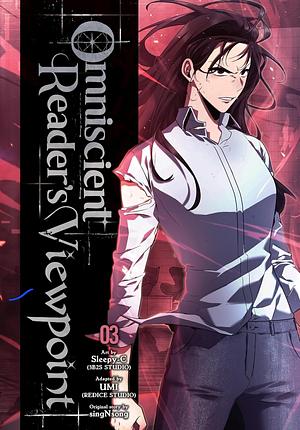
Review – Omniscient Reader’s Viewpoint (light novel), vol 3

Omniscient Reader's Viewpoint

by singNsong

Genres: Fantasy, Horror, Light Novels
Pages: 259
Series: Omniscient Reader's Viewpoint (light novel) #3
Rating: four-stars
Synopsis:

Dokja has been able to step one step ahead in the apocalypse thanks to his knowledge of TWSA, but what if he were to lose that advantage? In the next scenario, he must contend with others like himself—readers! The so-called “Oracles” pose a greater threat than anything Dokja has faced so far, and the most dangerous of all is their leader, a shadowy mastermind pulling the strings behind the scenes, who seems to know too much to be an ordinary reader…

Volume three of singNsong’s Omniscient Reader’s Viewpoint takes us through some of my favourite stuff (which we’re already past in the manhwa translation), which especially includes the point we end this volume on — which I won’t spoil, but just — ahh. It’s such a cinematic, epic moment, and I love it.

The whole volume shows us Dokja having to improvise more, now, with other people and his own actions starting to ripple out and disturb the plot as he knows it. He’s always going to have an advantage because he knows more of the world than anyone, but some of the events are now unfamiliar, and there are other people with a high degree of foreknowledge.

I do find the historical constellations part a bit… mm. It’s hard to follow because I don’t know the history very well, and I don’t know if it maybe makes perfect absolute sense if you do — I assume so, but I don’t have a good sense for it. It is such a great moment, though, as is Sangah’s quick thinking when it looks like Dokja might be forced to hurt her.

All in all, I race through each volume and have a great time, and then mourn and pine for the next one! Which is in July, right? Right?!

Rating: 4/5 (“really liked it”)

Tags: , , , ,

Divider

Review – Mistakenly Saving the Villain, vol 2

Posted August 18, 2026 by Nicky in Reviews / 2 Comments

Review – Mistakenly Saving the Villain, vol 2

Mistakenly Saving the Villain

by Feng Yu Nie

Genres: Fantasy, Light Novels
Pages: 271
Series: Mistakenly Saving the Villain #2
Rating: four-stars
Synopsis:

DOES TIME REALLY HEAL ALL WOUNDS?

After a near-fatal catastrophe, Song Qingshi awakens to find his home, the Medicine King’s Valley, almost unrecognizable. But not to fear. His devoted companion, Yue Wuhuan, remains by his side, ready to guide him through the changes.

Yue Wuhuan seems transformed as well. There are rumors that he’s become a ruined beauty and a madman, but he insists it’s all an act. To Song Qingshi, he seems more stable than ever before. Yet when the volatile and injured An Long storms into the valley, Yue Wuhuan’s carefully spun narrative begins to unravel. Soon, the two are at each other’s throats again.

In a desperate bid to restore peace, Song Qingshi proposes a vacation together. But beneath the surface of this idyllic escape, Yue Wuhuan is still scheming—determined to eliminate anyone who dares sully his beloved “Zunzhu.” And if An Long thinks he can stop him, he’s about to learn just how far Yue Wuhuan will go for love.

Feng Yu Nie’s Mistakenly Saving the Villain ended volume one with the critical injury of Song Qingshi, so volume two opens after years of healing, during which An Long and Yue Wuhuan have been fighting each other on the regular, with Yue Wuhuan concealing Song Qingshi’s condition and An Long knowing something must be the matter.

We get a lot more insight into An Long’s behaviour in this volume, and into his former disagreements with Song Qingshi. I actually have a lot of sympathy for him in this volume, given what we discover about him — he’s a brute, but he’s also genuinely struggling, fighting deep feelings and a sense of not having a place in the world. I kind of hoped that the interlude with Song Qingshi, An Long and Yue Wuhuan going on holiday together would end better, but… the way it did end makes a lot of sense.

As for Yue Wuhuan, it is fascinating to note the ways he’s got stronger, and the deep instability he’s still struggling with. I’m not sure if I hope that he gets fully better or not, because he’d have a long way to go for that and it feels… not entirely plausible, and not like the story’s driving in that direction at all. And given that it’s fiction, there’s something appealing about how unhinged he and Song Qingshi can be about each other: at times Song Qingshi really does match him on that.

(To be really clear, it’s not shaping up to be a super healthy relationship since there’s a lot of stuff going unsaid and I think Yue Wuhuan would happily lock Song Qingshi in a room and just bring him anything he needs, in order to keep him safe from real and perceived threats. One can enjoy this in fiction while knowing that one would have to try to get Song Qingshi to see the truth and act in self-preservation in reality.)

I’m very curious where this is going to go and how issues like Song Qingshi’s cultivation are going to kick in… and where the system is in all this, given that it’s been quite a while without any mention of it. I don’t think it came up at all in this volume!

So yeah, still having a lot of fun, but Yue Wuhuan is a whole bundle of red flags in the shape of a man, and Song Qingshi isn’t actually a whole lot better in some ways. Read with caution if that might trouble you.

Rating: 4/5 (“really liked it”)

Tags: , , , , ,

Divider

Fantasy with Friends: Anachronisms

Posted August 17, 2026 by Nicky in General / 2 Comments

Fantasy With Friends: A Disccusion Meme hosted by Pages Unbound

Monday, Monday, Monday… so, as usual, I’ve got a Fantasy with Friends post for you! All the prompts are hosted at Pages Unbound, if you’d like to join in. This week’s prompt is on anachronisms in fantasy:

Do anachronisms in fantasy bother you? Should fantasy be “similiar” to the time period it’s based on, either in terms of language used or things like invention, fashion, customs, etc.?

I think the question implies an assumption that all fantasy is necessarily copying a historical period and should do so in its entirety, rather than coming up with an aesthetic and historical background of its own, which is interesting! I don’t see fantasy that way: obviously, historical fantasy needs to believably fit into the period it’s set in to work, but otherwise, I don’t see why a fantasy story needs to be copying a given time period with all of its assumptions. If it’s making its own thing, why should things be the same as in our world’s past?

When it comes to something like language, unless the dialogue is written in Anglo-Saxon, a book set in a fantasy setting that’s kind of like Britain in 999AD is just as “anachronistic” whether the protagonist is speaking modern English or weird faux Ye Olde Englishe. Most of the dialogue people think is “appropriate” in a pseudo-medieval setting is far more modern than that (and also super fake and contrived), but people are so lacking in education about how language has developed that they somehow think that a) that’s “Old English” and b) it actually suits the period.

Just gonna say it straight, unless the dialogue of a given “medieval” fantasy novel set in Britain sounds something like this, it’s already anachronistic: “Haþel, by heuen, þyn askyng is nys, and as þou foly hatz frayst, fynde þe behoues. I know no gome þat is gast of þy grete wordes; gif me now þy geserne, vpon Godez halue, and I schal bayþen þy bone þat þou boden habbes.”

(That’s Middle English, from Sir Gawain and the Green Knight.)

Pretty much nothing about the way fantasy novels are written actually sounds anything like “authentic”, and few modern readers can parse sentences like the above, so I don’t personally care when authors choose to avoid faux Ye Olde Englishe in favour of something more familiar. I definitely prefer that over badly done faux archaic phrasing.

(That said, there are also authors who do it well, usually those who’ve considered exactly what they’re doing and are building congruent, sense-making worlds of which that language is a part.)

Moving on from language, often there are assumptions that come with certain levels of technology (“if you’ve got peasants with carts you must have knights and homophobia as well”) that lead to accusations of anachronism as well. Mostly, I think that kind of thing is often used as an excuse for unexamined assumptions (like sexism and racism), and again… if you’ve got a fresh new world where you control all the rules, why should you feel constrained by what “actually happened”?

Sometimes, when writers don’t include sexism and racism in their world, it’s used as a stick to beat them with because it’s not “historical”. Well of course not — it’s fantasy!

I would also gently note that a lot of what we think “actually happened” and things which we think are “true” are not. When it comes to sexuality and gender alone, there are so many assumptions about what the past was like which don’t hold true… and the same is true on almost every topic. I’ve seen readers claim things are “anachronistic” when they’d existed for hundreds of years by the time a given story was set. Your average fantasy reader is a terrible judge of what’s “realistic” for a given “period”, even assuming you grant that fantasy is set in any specific “period” at all.

Overall, I’m personally less worried about anachronism and more about what feels congruent: does your social structure make sense with the other moving parts like, I don’t know, levels of literacy and provision of education? I don’t need it to look exactly like a specific period of history: mixing and matching if you need inspiration is fine, or just coming up with something out of whole cloth, just… try to have it make sense. Don’t, for example, have “Christmas” in a world that doesn’t have Christ, and consider carefully whether the social mores you’re importing make sense without factors like religion and colonialism that have affected our history.

Overall, my grasp on what is historical is not always amazing anyway: I’m terrible with keeping historical periods straight, especially when you add different countries into the mix. So I’m fairly easy to please on that front, even in historical fiction! For me, it just has to make a certain amount of sense, and we’re good.

Tags: , ,

Divider