Tag: SF/F

Review – After the Disabled God of War Became My Concubine, vol 1

Posted October 8, 2026 by Nicky in Reviews / 0 Comments

Review – After the Disabled God of War Became My Concubine, vol 1

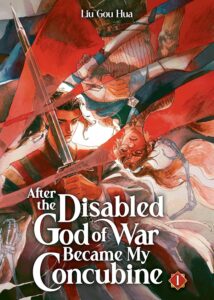
After the Disabled God of War Became My Concubine

by Liu Gou Hua

Genres: Fantasy, Historical Fiction, Light Novels, Romance
Pages: 378
Series: After the Disabled God of War Became My Concubine #1
Rating: four-stars
Synopsis:

A strange thesis becomes one professor’s reality when he’s transmigrated to the past and awakens as a doomed prince in this hit danmei (Boys’ Love)!

When an outrageous thesis hits the desk of esteemed history professor Jiang Suizhou, his initial reaction is pure skepticism. Dubiously sourced, this thesis tells the story of the legendary General Huo Wujiu, a man renowned for his valor—that is, until he was captured. Stripped of his rank and incapacitated, the general suffered further humiliation by serving as a gift and concubine to his enemy’s brother—the cut-sleeve prince. For three grueling years, Huo Wujiu lived as a prisoner until he finally escaped and sought vengeance against those who dared to torment him.

Convinced this story is purely fiction, Jiang Suizhou brands the thesis a failure–does his student think he was born yesterday?! But Jiang Suizhou quickly learns that it was no mere tall tale when he wakes up as the cut-sleeve prince himself!

Now, stuck lording over his concubine and prisoner, Huo Wujiu, Jiang Suizhou must navigate a treacherous imperial court and avoid the general’s future wrath–lest he wind up with his head dangling from the turrets. His only option? Ally himself with Huo Wujiu. Using his vast knowledge of history, the clever professor devises strategies to shield the incapacitated former general, all while treating him with the utmost care. Yet, Jiang Suizhou’s strategy could backfire if Huo Wujiu were to get the wrong idea about his intentions…

I wasn’t entirely sure what to expect with volume one of Liu Gou Hua’s After the Disabled God of War Became My Concubine; it’s not one I’d seen other readers talking about, or seen people posting fic about, or anything like that. It was a bit of an impulse-buy based on the storyline… I’ve read several transmigration type stories now and it’s not quite that that attracted me, but more the fact that essentially the “disabled god of war” of the title is a disabled prisoner of war being humiliated, and how the author managed to make a romance work in that context.

I am pleased to report that it’s fairly slow-burn, and we’re not being expected to believe that everything’s fixed at first sight! Things aren’t even fixed by Jiang Suizhou turning up in the historical prince’s body. Thankfully, he’s not set up to arrive after things have gone wrong already (as per Shen Yuan turning up after Shen Jiu has already been abusing Luo Binghe in The Scum Villain’s Self-Saving System, or Jing Shao’s do-over in The Wife Comes First which comes after he’s already carelessly hurt Mu Hanzhang in bed), so he manages to avert outright atrocities, meaning it all feels a bit more realistic that Huo Wujiu could eventually trust him.

I do know that Huo Wujiu’s injuries are actually going to be healed, despite their extensiveness now, and I’m not entirely sure how I feel about that — magically healing disabilities is an awkward topic, though I don’t know how much Chinese society or Chinese writers have reckoned with stuff around disability. My impression/understanding is “really not much at all”, so that is worth knowing going in. Huo Wujiu manages to be pretty badass from the wheelchair.

Anyway, things proceed slowly but surely, mostly focusing on the political aspects, Jiang Suizhou’s new body’s health (he’s actually pretty frail, essentially chronically ill himself) and only gradually bringing the two of them closer. They’re definitely not confiding in each other yet, even.

I also quite enjoyed that Jiang Suizhou does not really do a lot to hide that he’s no longer the same guy, at least around some members of his household who seem like potential allies. He’s smart: he could probably have figured out how to fool them. But he chooses instead to confide in them enough to make better allies of them, and I’m very curious how that’s going to turn out in the longer run in this story.

All in all, a lot of elements I find interesting, and I’d say the writing/translation feels a touch better than The Wife Comes First, which was my other recent danmei read, which is nice — I’m starting to get a feel for what I like/don’t like in danmei and English translations thereof!

Rating: 4/5 (“really liked it”)

Tags: , , , , , ,

Divider

Fantasy with Friends: Over the Years

Posted October 5, 2026 by Nicky in General / 0 Comments

Fantasy With Friends: A Disccusion Meme hosted by Pages Unbound

Monday means Fantasy with Friends time! All the prompts are hosted at Pages Unbound, if you’d like to join in. This week’s prompt is about fantasy as a genre over the years:

How do you think the fantasy genre has changed over the years? Is there a particular time period of fantasy writing that you particularly enjoy?

I have a pretty good knowledge of some genres/eras within certain genres because I studied them, so I’m a bit scared of this question: it’s not really my area at all! I haven’t brought a lot of my academic practice to the fantasy genre at all, and it feels like my personal knowledge is coloured as much by just growing up and the natural change/growth in my interests as by real trends and changes.

Obviously there’s stuff like the rise of cosy fantasy and romantasy (though there were low-stakes fantasies before the trend, and plenty of romance in fantasy before it became a named subgenre), and the grimdark fantasy that came some years before it — but I think that it’s probably much like fashion, and some things go around and come back in later.

I can’t think of really good rigorous examples, but I also think there are things my generation loved at children that are surfacing in adult fiction. I haven’t thought this through on a serious level, but… is dark academia in fantasy perhaps a response (at least for some of us) to the magical school we may’ve loved as kids, and what’s become of that for many of us? And even if we didn’t love it, was it popular enough to weave its way though our psyches and shape what we want to write and read about anyway? I think it’s likely.

Anyway, to the point about what we enjoy, I really enjoy a lot of cosy fantasy and romantasy: there’s plenty of it that feels a bit cookie-cutter, or not polished, or naive, but that’s the nature of any trend. Standalone books are also a joy — I don’t know if I’m right that there’s been more of that and fewer automatic trilogies, though. But I’m also a fan of older fantasies like Guy Gavriel Kay’s The Fionavar Tapestry, Tad William’s Memory, Sorrow and Thorn… they really had a lot to sink your teeth into. Long story short, perhaps I’m easy to please.

Overall, probably an unsatisfying answer, I’m afraid; I don’t think about things this way, it seems! At least when it comes to fantasy, unless it’s related to Tolkien or Arthuriana, I think I’ve kept my academic life out of it — helped by the fact that I finished my MA over a decade ago now, and switched away from the arts to science for a while.

Tags: , , ,

Divider

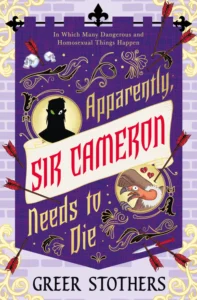
Review – Apparently, Sir Cameron Needs To Die

Posted October 4, 2026 by Nicky in Reviews / 0 Comments

Review – Apparently, Sir Cameron Needs To Die

Apparently, Sir Cameron Needs to Die

by Greer Stothers

Genres: Fantasy
Pages: 383
Rating: one-star
Synopsis:

In this hilarious, off-the-wall queer fantasy romance, a reclusive sorcerer is forced to protect a cowardly knight after a prophecy ties their fates together.

Funny, touching and inventive, this book is perfect for fans of A Marvellous Light and Dreadful.

All his life, Sir Cameron has tried to stay as far away from danger as possible. But when the Church hands down a prophecy to his fellow knights predicting that the only way to defeat their nemesis, the mad sorcerer Merulo, is to kill Sir Cameron, he finds himself in a situation too sticky for even his considerable wiles. Short of ideas, Cameron throws himself on the mercy of the one person who now actually wants him to survive: the mad sorcerer.

Merulo isn't thrilled to be babysitting a spoilt, attention-seeking knight, but fate has tied them together. And transmogrifying Cameron into a vulture is at least a great source of entertainment. Cameron, meanwhile, is on a voyage of self-discovery. It turns out he's really, really into surly sorcerers who lock him up and tell him what to do. Who knew?

As a legion of knights surround their stronghold, led by an angry concussed elf—which definitely isn't in any way Cameron's fault—the sorcerer's poisonous ambitions draw ever closer to fruition. Cameron is quite invested in not dying, but he finds he's also invested in Merulo. And sometimes, supporting the sorcerer you care about means taking an interest in their hobbies. Even if their hobby is trying to kill God.

Even if it might get you killed, too.

I was quite interested in Greer Stothers’ Apparently, Sir Cameron Has To Die from early buzz, though I think the summary I read is not the one on the back cover or the current one on store-fronts: I’d probably have known it almost certainly wasn’t for me if I’d seen it referred to as “hilarious” and “off-the-wall”. That’s really the primary problem with this book for me: I bounced off fairly early on because it’s trying so hard to be funny, and the scatological humour actually isn’t the height of wit that it seems to think it is.

Before we go on, it’s my understanding that I need to point out that I’m writing this review for other readers, not to target Stothers, because apparently they’ve been posting bad reviews on their Tumblr and responding to them. I have found no direct evidence of this myself, but I also haven’t looked for long, and I can definitely tell that Stothers is Very Extremely Tumblr so it doesn’t… surprise me.

I also had some issues with Sir Cameron’s anxiety being treated as a joke and as cowardice. I know that’s the character’s and world’s framing, not the author’s (necessarily), but it just crosses a personal line. Being afraid of dying isn’t cowardice. Wanting to avoid fighting in a war isn’t, in fact, unreasonable (though unless I missed it, I think there was no real explanation there as to why Sir Cameron is a knight at all given he doesn’t want to fight). It was… unpleasant, to read that constantly being viewed as just cowardice, even given the bounds of the setting.

Then there’s everything pointed out in other reviews: weird gender essentialism, unnecessary fetishism about women’s bodies, utter disgust and horror about menstruation, Glenda the cartoon-level bigot who we are forced to spend a fair bit of time with, the “tawny-skinned” female character with her “wild” hair and bulging muscles, attitudes toward disability (and assistive technology)…

And on top of all that, there is zero (zero) chemistry between the characters, even in scenes where the author firmly wants us to believe there is. It’s just awkward and out of the blue.

In fairness, some of this is a “your mileage may vary” sort of thing depending on how you feel about some story/setting choices, some of it is well-intentioned, and I think some of it is just accidental… but the sum of all those parts is not (for me) an enjoyable read, and I definitely understand that it feels like the author is, whether blunderingly or deliberately and with whatever motives, engaging in bigoted stereotypes.

Rating: 1/5 (“didn’t like it”)

Tags: , , , ,

Divider

Fantasy with Friends: Seeing Reality Better

Posted September 28, 2026 by Nicky in General / 0 Comments

Fantasy With Friends: A Disccusion Meme hosted by Pages Unbound

Monday means Fantasy with Friends time! All the prompts are hosted at Pages Unbound, if you’d like to join in. This week’s prompt is about methods of worldbuilding:

Sometimes people talk about fantasy as allowing readers to see or realize things about our real world that they would not otherwise have seen (that is, they argue that fantasy can more effectively help us see reality than realistic fiction or even nonfiction can). Has this happened to you? Is there something you think about differently now because you were initially inspired to by a fantasy story?

I guess my answer is… not really. At least, not anything I could specifically point to.

I’ve definitely had realisations re-enforced by fantasy, for instance (and I’ve written about this before) the whole thing in Le Guin’s A Wizard of Earthsea where Ged learns that he has to turn and face his shadow in order to be free of it. It makes a stunning metaphor for anxiety, honestly, and probably other mental health stuff. Once one comes face to face with what one fears, and looks at it closely, there’s often less to fear than one imagined — and while I don’t think anxiety is my superpower or anything like that (I hate that kind of faux-positivity about my mental health issues), the fact that I have this knowledge does help my everyday life significantly!

Also, despite the fact that it’s blatant Christian allegory, C.S. Lewis’ The Last Battle ends with a man who worshipped Tash being accepted into Aslan’s Country, because though he worshipped Tash, he did good all the same. Again, the series is blatant Christian allegory so I don’t actually think Lewis would be on the Unitarian Universalist train with me, but I suspect all the same that that’s a part of what made me interested in Unitarian Universalism: the suggestion that all those who are good will go to the right place in the end, that perhaps there is no wrong god to worship as long as you live well. It’s a kind view of things, and that’s perhaps inevitably attractive to me.

(I don’t go in for discussing politics or religion much in detail on here, so it isn’t really the place to get into what exactly I believe now; I’ll just leave here the reminder that UUs can believe in more or less a Christian God, or the Muslim Allah, or anything else, or indeed be atheist, agnostic, humanist, etc. You can assume precisely nothing about what I believe in other than the Seven Principles, and I’d rather any comments don’t try to get any deeper than that.)

Otherwise, I can’t think of much… though perhaps when I see other people’s posts I’ll immediately realise there’s so much else I could’ve talked about.

Tags: , , ,

Divider

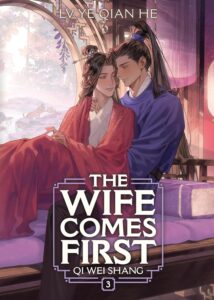
Review – The Wife Comes First, vol 3

Posted September 24, 2026 by Nicky in Reviews / 0 Comments

Review – The Wife Comes First, vol 3

The Wife Comes First

by Lv Ye Qian He

Genres: Fantasy, Light Novels, Romance
Pages: 417
Series: The Wife Comes First #3
Rating: four-stars
Synopsis:

“OVER TWO LIFETIMES, I HAVE ONLY EVER LOVED YOU.”

Welcomed back to the capital with unbelievable rewards, Jing Shao and his princely consort Mu Hanzhang fall into a new routine at home and at court—involving challenging but satisfying duties that Mu Hanzhang takes on with pleasure.

While the two men contend with scheming princes, unexpected visitors, and volatile in-laws, new trouble is brewing. The earlier revenge taken on Mu Hanzhang’s behalf set off a chain reaction that now threatens his father’s clan and his mother’s life. And when a death unearths secrets from the past, Jing Shao may have to use all that he’s gained just to survive the machinations threatening him.

But with his brothers—both blood and sworn—at his side and his wife in his arms, Jing Shao vows that this time, no matter the danger, he’ll find happiness with Mu Hanzhang.

Volume three of Lv Ye Qian He’s The Wife Comes First wraps up the series, bringing Mu Hanzhang and Jing Shao back to the capital and back into the thick of the political plotting. Compared to how slowly the first two books moved, this feels like there are a few time jumps, to give time for all the manoeuvring: it’s not a bad thing, but if you don’t keep track of the weeks/months slipping by in the story, some things seem very sudden!

Mostly, it’s an excellent ending for them, almost tipping into a reprise of Jing Shao’s first attempt… and then, at the last, it’s averted. There are a couple of surprises and twists, one of which (I think all in the extras) I guessed in advance from certain scenes. I can’t really say much about all this since it would be very spoilery at this point.

There are actually a couple of extras, which skewed my perception of how much time was left in the story and made the pacing feel confusing. In themselves, they don’t add a ton (and one is just a silly short from Lil Sunbeam’s point of view), but there’s some cute stuff there.

Sadly, the Right Guardian and Left Guardian don’t follow up on Mu Hanzhang’s veiled hints(?), as far as I can tell…

Anyway, I don’t think this series is super well written, and there are plenty of quibbles with it and needlessly evil concubines, etc, etc (there are some positive female characters, like Ge Ruoyi and Mu Hanzhang’s mother). But I was won over by Jing Shao being a big stupid puppy, and Mu Hanzhang being a clever schemer — for his loved ones’ sake. Definitely one I’m rating on enjoyment more than technical skill, which is worth taking into account.

Rating: 4/5 (“really liked it”)
Tags: , , , , , ,

Divider

Fantasy with Friends: Worldbuilding

Posted September 21, 2026 by Nicky in General / 0 Comments

Fantasy With Friends: A Disccusion Meme hosted by Pages Unbound

Monday means Fantasy with Friends time! All the prompts are hosted at Pages Unbound, if you’d like to join in. This week’s prompt is about methods of worldbuilding:

Ursula K Le Guin has written about “consciously imitating” Tolkien and creating a wider landscape and history for her fantasy world by naming events or places she actually knew nothing about at the time she wrote them (as opposed to Tolkien, who was referencing events already decided in his unpublished work). What do you think of this strategy for creating “plausibility?” Do you think readers can tell when authors are referencing things that have no “real” definition? Can it come across as just making stuff up, or can it work to convince the reader the world is real?

I don’t think Le Guin and Tolkien’s methods are as far apart as they sound, because Tolkien did make things up at some point (he wasn’t writing real history, after all!), and sometimes when asked questions about aspects of the world, he hadn’t worked them out (or hadn’t worked them out fully yet). I think the difference is mostly in approach: Tolkien was deliberately setting out to write his own language and history, and ensuring that all fit together was part of the enjoyment for him. But Ursula Le Guin wasn’t a careless writer, and she didn’t generally write herself into corners with this kind of thing: she didn’t come up with something and later trip over it, or if she did, she wrote herself back out of it again.

That said, I know more about Tolkien’s approach than hers, to be honest, since I’ve studied Tolkien and read his collected letters, etc. I’ve read some of Le Guin’s essays, but by no means all, and I definitely haven’t gone spelunking in work unpublished by her in her lifetime. I can only speak to my experience as a reader, and generally she had guiding principles behind her worlds and then explored those. With her work, and I think in her essays reflecting on that, there’s a sense of her discovering stuff that in her mind was “already there”. Things happened in Earthsea in the back of her mind while she wasn’t watching, which tells me that she wasn’t just making things up to, say, write a story to fit an anthology. She had principles established so that when she did “visit” a certain aspect of her world, things unfolded naturally.

I don’t think all writers are as thorough as Tolkien or as skilled as Le Guin, for sure. I know that when I make something up when I’m writing, I have to put at least a bit of thought into what’s behind it in order to be sure it fits and that it won’t mess anything up later. Sometimes it’s worth it to include something that messes other things up later, though, because the mess is interesting and then editing fixes any continuity issues and smooths the rough edges.

Some writers definitely end up writing themselves into corners by realising in book three that they stated something in book one that no longer makes sense, or by forgetting details they made up previously. It can definitely cause problems like leaving the world-building feeling flat, because nothing leads anywhere, or everything’s just mentioned once in passing.

In the end, it comes down to author skill — and the skill of their editor — in tidying up those loose ends and making sure they’ve breathed enough life into the thing, and in making the reader trust them. I think the important thing is that you need to create a feeling that there’s stuff going on around the story, rather than that the only things which ever happen in your world are somehow all plot relevant.

Tags: , ,

Divider

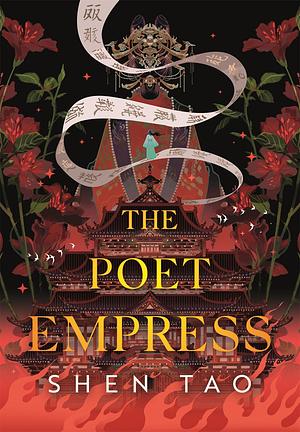
Review – The Poet Empress

Posted September 19, 2026 by Nicky in Reviews / 4 Comments

Review – The Poet Empress

The Poet Empress

by Shen Tao

Genres: Fantasy
Pages: 388
Rating: five-stars
Synopsis:

In the waning years of the Azalea Dynasty, the emperor is dying, the land consumed by famine, and poetry magic lost to all except the powerful.

Wei Yin is desperate. After the fifth death of a sibling, with her family and village on the brink of starvation, she will do anything to save those she loves.

Even offer herself as concubine to the cruel heir of the beautiful and brutal Azalea House.

But in a twist of fate, the palace stands on the knife-edge of civil war with Wei trapped in its center...at the side of a violent prince.

To survive, Wei must harden her heart, rely on her wit, and become dangerous herself. Even if it means becoming a poet in a world where women are forbidden to read—and composing the most powerful spell of all. A ballad of death... and love.

I was a bit wary going into Shen Tao’s The Poet Empress because I’d heard all about how heavy the story was — abuse, violence, sexual assault of a child, torture, more violence… and it’s true, that’s a huge part of this story. I would say that it’s never gratuitous: even when the characters are indulging in gratuitous violence, the details and information we get about it are for a purpose, giving us insights into characters… and sometimes, leading us astray.

Besides that, despite the heaviness of the topic, the chapter length and narration kept things rolling for me pretty briskly, and there was pretty much no point at which I got “stuck” not wanting to proceed because things were too awful.

The thing with this story is that you think it’s going in a certain direction, and it… sort of does, but it also doesn’t, and I don’t want to spoiler too much about that. The way it builds the characters and slowly reveals their history, misdirecting and remisdirecting — I thought it was really well done, because even the ending didn’t quite fall out the way I’d found myself kind of expecting.

I guess that the thing I really found myself wanting to know partway through, that might’ve made the difference to continuing reading, is whether it was going to turn out to be a story in which the female protagonist gets swept off her feet by a violent, awful protagonist, and then it turns out he’s actually a sweet little cinnamon roll. The answer — look away if you don’t want it and want to find out for yourself — is “only kind of”. There are reasons people are the way they are, but it doesn’t excuse their actions, to the reader or to the other participants in the story.

Overall, it ended up more subtle than I’d expected, and also way more readable. I can understand people who don’t stick with it, because wow, some scenes are a lot, and pretty much none of the prominent characters are great people. And some reviewers scare me with their apologism for the actions of a particular character: trauma is not an excuse, folks! It really isn’t!

Rating: 5/5 (“loved it”)

Tags: , , ,

Divider

Review – Omniscient Reader’s Viewpoint (manhwa), vol 2

Posted September 17, 2026 by Nicky in Reviews / 0 Comments

Review – Omniscient Reader’s Viewpoint (manhwa), vol 2

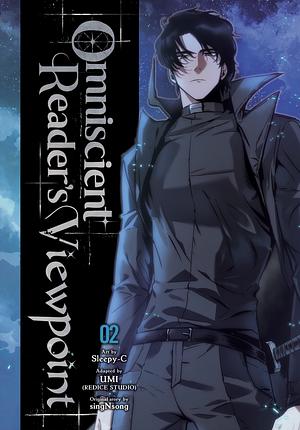
Omniscient Reader's Viewpoint

by Sleepy-C, singNsong, Umi

Genres: Fantasy, Manga
Pages: 240
Series: Omniscient Reader's Viewpoint (manhwa) #2
Rating: four-stars
Synopsis:

Three Ways to Survive the Apocalypse is Dokja's favorite novel. Or it was...until it became reality. He barely survived the chaotic first moments of the new world thanks to his knowledge of the story, but the cruel Scenarios give him no time for rest. Isolated from his group and surrounded by horrific creatures, things look grim for Dokja...until an extraordinary presence approaches. It's time for the only reader of TWSA to meet its protagonist-the Regressor Junghyeok Yu!

The second volume of the Omniscient Reader’s Viewpoint manhwa (adapted from singNsong’s novel by UMI and illustrated by Sleepy-C) introduces us to a bit more of the world, with Dokja meeting Junghyeok, making a deal with the goblin Bihyeong and meeting the next party member, Huiwon. It’s still very introductory steps into the world of ORV, but I’d say by the end of this volume, you’d definitely have a strong grasp on the shape of the story and background of the world.

I really enjoy the way Dokja remembers what he’s read and comes up with (or remembers) creative ways around the difficulties. I feel like this was a bit less well-explained in the manhwa here, but on the other hand, some of the other background stuff has seemed clearer (maybe because it’s a bit simplified/differently translated).

Love the art, looking forward to more, especially while awaiting more of the light novel! Not that the story in vol 2 has caught up to the end of vol 2 of the light novel, so I’ve got quite a bit more of the manhwa to go before I get onto new-to-me stories.

[NB: this post is going up long after I read more of the manhwa and indeed more of the light novel. I just have a long backlog of pre-written reviews that I space out so’s not to spam people.]

Rating: 4/5 (“really liked it”)
Tags: , , , , , ,

Divider

Review – Brimstone Slipstream

Posted September 14, 2026 by Nicky in Reviews / 2 Comments

Review – Brimstone Slipstream

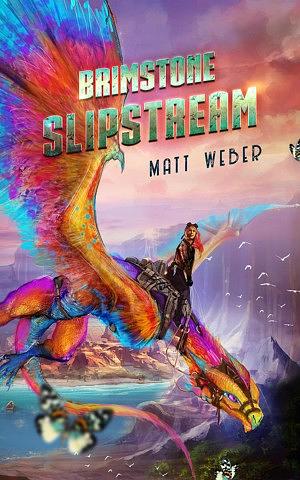
Brimstone Slipstream

by Matt Weber

Genres: Fantasy
Pages: 65
Rating: three-stars
Synopsis:

It's the eve of the biggest dragon race in the city of Yemareir. Zaya Shearwater and her wife, Kiriki, have spent the year shooting up the rankings, and now they're favored to win. But how did a team of women from Yemareir's roughest precincts become the favorites in a sport where most winners buy their victories?

Doctor of Journalism Shenireen Agama wants to know. Through interviews with Zaya, Kiriki, and the ground crew that's become their family, she begins to weave a story. Its threads are love, desperation, biology, and magic – all bound together with the early history of Yemareir, where Zaya and Kiriki's ancestors fled centuries ago to escape the pogroms of a mad king, and where the colonists resettling the ruins of an ancient city have just discovered that it is home to dragons…

Matt Weber’s Brimstone Slipstream is a short story which sets the scene for a full length novel (or possibly a series), but offers in itself quite a lot of world and character building, giving us a picture of one family of racers in a world of semi-illegal underground dragon racing that’s rife with racism and people who try to pay to win.

The format is basically that of a magazine article by a journalist digging into the scene and following a pair of upstart riders who are working together to use a trait normally considered intrinsic to their people, “empathy” (which is sort of… telepathy-ish communication with animals) to give them an advantage at dragon racing. We get the journalist’s-eye view of the subjects of the article, with all their evasions, prickly edges, and the things they won’t say.

I wouldn’t say no to reading more in this world, but it’s also a fairly satisfying story just for its own sake, despite the relatively low page count, with quite a bit of world-building and a good sense of a wider world around the story. You can kinda sense the ending coming (the note “after publication” of the article), because the foreboding is wound through it: they’re doing a dangerous job.

Rating: 3/5 (“liked it”)

Tags: , , ,

Divider

Fantasy with Friends: Fantasy and Tech

Posted September 14, 2026 by Nicky in General / 2 Comments

Fantasy With Friends: A Disccusion Meme hosted by Pages Unbound

Monday means Fantasy with Friends time! All the prompts are hosted at Pages Unbound, if you’d like to join in. This week’s prompt is about technology in fantasy:

What role do you think technology should play in fantasy? Some authors try to avoid it (ex. worlds set in an imagined past before modernization or worlds where wizards simply do not use telephones or television even though they have been invented). Yet other authors try to imagine what a world with both technology and magic would look like (ex. The Legend of Korra, Brandon Sanderson’s Mistborn series). Can magic and technology work well together? What questions does an author have to address to make it work?

In the end, it very much depends on the world and whether things feel like they fit. There are definitely worlds where the two can sit side by side, or where magic and technology are in conflict or synergy in an interesting way — saying that makes me think of Ilona Andrews’ Kate Daniels books, for instance, which features the world flipping between magic and technology regularly. It can be a very fertile way to add depth to the world, introduce obstacles to the plot, and give neat ways to mix the two up together.

Sometimes the two can just co-exist because it’s a fantasy world of the author’s own creation rather than historical fantasy or something. The problem is that it can be tricky to get that to “feel right” to the reader: it’s a regular complaint in Final Fantasy XIV, to talk about a gaming example for a moment. Even though Allagan and magitek technology has always sat alongside magic in that world, sometimes the whiplash is really strong to players, even though I don’t think it’s actually badly done. The expectation that a fantasy world won’t have certain types of technology is strong, and aside from pure plausibility about how elements fit together, authors have to think about whether reader expectations will trip them up.

As with other stuff people feel strongly about like anachronisms, I’m pretty loosey-goosey myself. Put together something that feels coherent, and I’m fine with it!

Tags: , ,

Divider