Tag: SF/F

Review – Mistakenly Saving the Villain, vol 1

Posted August 6, 2026 by Nicky in Reviews / 0 Comments

Review – Mistakenly Saving the Villain, vol 1

Mistakenly Saving the Villain

by Feng Yu Nie

Genres: Fantasy, Light Novels, Romance
Pages: 298
Series: Mistakenly Saving the Villain #1
Rating: four-stars
Synopsis:

A mission gone wrong and a villain in need of serious therapy await in this heart-rending drama—finally available in English!

When medical student Song Qingshi dies and wakes up in a historical fantasy novel, he’s tasked with rescuing the tragic protagonist from a life of misery. There’s just one problem—he has no idea who the protagonist is.

Instead of saving the hero, Song Qingshi accidentally rescues Yue Wuhuan, an enslaved man renowned for his striking beauty and trained in the art of seduction. Now determined to help his traumatized new patient heal, Song Qingshi offers everything he can: Medicine, therapy, emotional support, even a shared bed—strictly for his patient’s well-being, of course.

But Yue Wuhuan wants more than healing. He wants revenge. And most of all, he wants Song Qingshi all to himself.

As enemies close in—and even heaven itself turns against them—Song Qingshi isn’t trying to change the story. He’s just trying to save the one person who needs him most.

Volume one of Feng Yu Nie’s Mistakenly Saving the Villain sets up a pretty fun scenario: a young man (a former medical student) who has died of motor neurone disease ends up transmigrating into the world of a novel, tasked with saving the protagonist….

Problem is, he isn’t genre-savvy at all, and ends up saving a man intended to be a minor antagonist at most, who should have simply died earlier in the story. Without knowing that, and committed to “getting a good grade”, Song Qingshi settles into his new role, blending modern medicine with the cultivation world’s techniques to try to nurse Yue Wuhuan back to health.

The two of them get close as Song Qingshi tries to heal him, but it’s slow going because Yue Wuhuan has suffered a lot of trauma, and has both physical and psychological healing to do. Progress is hindered by Song Qingshi’s friend, An Long, who seems to have ulterior motives, and by the fact that Yue Wuhuan considers himself dirty and tainted from all that has happened to him, and holds back information from Song Qingshi in order to avoid frightening/upsetting him.

It’s fairly dark, due to the aforementioned trauma, and Yue Wuhuan isn’t a straightforwardly good guy: he can be, for Song Qingshi, and he was certainly deeply, deeply wronged… but he’s more than a little unhinged. Mind you, Song Qingshi matches that energy, going to absurd lengths to protect and defend Yue Wuhuan. I enjoy both of them greatly, despite Yue Wuhuan’s sometimes erratic behaviour.

Despite that dark background, it all goes past quite lightly because there’s a touch of humour to it through Song Qingshi’s misunderstandings. I found it a lot of fun to read, and because I happen to know a couple of spoilers due to people comparing it to the love story of Heaven Official’s Blessing, I’m very curious how that’s all going to connect up.

Rating: 4/5 (“really liked it”)

Tags: , , , , , ,

Divider

Review – A Palace Near the Wind

Posted August 5, 2026 by Nicky in Reviews / 4 Comments

Review – A Palace Near the Wind

A Palace Near the Wind

by Ai Jiang

Genres: Fantasy
Pages: 185
Series: Natural Engines #1
Rating: one-star
Synopsis:

Sometimes called Wind Walkers for their ability to command the wind, unlike their human rulers, the Feng people have bark faces, carved limbs, arms of braided branches, and hair of needle threads. Bound by duty and tradition, Liu Lufeng, the eldest princess of the Feng royalty, is the next bride to the human king. The negotiation of bridewealth is the only way to stop the expansion of the humans so that the Feng can keep their lands, people, and culture intact. As the eldest, Lufeng should be the next in line to lead the people of Feng, and in the past, that made her sisters disposable. Thankful that her youngest sister, Chuiliu, is too young for a sacrificial marriage, she steps in with plans to kill the king to finally stop the marriages.

But when she starts to uncover the truth about her peoples' origins and realizes Chuiliu will never be safe from the humans, she must learn to let go of duty and tradition, choose her allies carefully, and risk the unknown in order to free her family and shape her own fate.

A powerfully imaginative, compelling story of a young woman seeking to save her family and her home, as well as a devastating meditation on the destruction of the natural world for the sake of an industrial future.

I hadn’t heard anything about Ai Jiang’s A Palace Near the Wind before I picked it up, so I didn’t really know what to expect, but I thought the early descriptions of the Feng people and their lives seemed intriguing, and a novella tends to be readable even if I end up not liking it.

Buuut despite being a novella, I found it really dragged. There’s a fascinating world here that’s sadly under-explained: I get that the main character doesn’t really understand what’s going on, but the stuff she did understand/believe wasn’t clear enough to me. Things like… why does Lufeng want her sisters back so badly if they didn’t actually like her? Why were they ‘sacrificed’ and she was held back, only to be sent now as the story opens? How does her body work, what does she look like? If even I wanted a bit more of that kind of detail, as someone who can’t picture anything, I imagine it must stand out a lot more to people trying to form a mental picture.

The main problem was really that nothing could shock or surprise me, because I didn’t know what to expect. I didn’t get emotional about anything because I didn’t really have a stake in it. There’s a lot here, but it’s like viewing it through smudged smoky glass: it’s hard to grasp what’s actually happening and what it means.

I don’t think I’ll read the follow-up, personally; I found it a struggle to get through this novella, so I don’t think it’d be a good use of my time to try to read more, even if it contains answers to some of my questions.

Rating: 1/5 (“didn’t like it”)

Tags: , , ,

Divider

Fantasy with Friends: Fantastical Sidekicks

Posted August 3, 2026 by Nicky in General / 6 Comments

Fantasy With Friends: A Disccusion Meme hosted by Pages Unbound

Start of a new week, and time for Fantasy with Friends! All the prompts are hosted at Pages Unbound, if you’d like to join in. This week’s prompt is about fantastical companions:

Who are some memorable fantastical sidekicks? Animal familiars or anything else that fits the prompt welcome!

Prompting about “animal familiars” mostly makes me think of Nighteyes in Robin Hobb’s Realm of the Elderlings books, mostly. Nighteyes is a great character, deeply loyal, sometimes quite funny, and providing a great foil to Fitz’s wavering and uncertainty. Life’s a lot more simple for Nighteyes, not because he is simple, but because he doesn’t see such a need to complicate things.

I’m also for some reason thinking of the fire demon Calcifer, in Howl’s Moving Castle: snarky, curious, not half so devilish as he’d like to make out. Admittedly some of his lines in the (very different, but still fun) Studio Ghibli adaptation are the most memorable, when Sophie bullies him into letting her cook on him: “Here’s another curse for you: may all your bacon burn!”

And of course, the best sidekick of all has to be Samwise Gamgee. No notes.

In more recent reads, though, I’m thinking of Mu Qing and Feng Xin in Heaven Official’s Blessing — they’re old friends of Xie Lian’s, or rather, his former bodyguard and his former servant, whom he considered as friends (it’s a little more complicated for them, given the status difference when they were humans and when they served as his deputies when he ascended). As themselves or in their disguised forms, they back him up and follow him around loyally, even despite the mess between them — and while a lot of people really dislike Mu Qing, I rather like the fact that he’s prickly and quick to take offence (but even quicker to give it). He’s by no means perfect, but he’s still a friend who cares deeply, and it’s clear that he takes his role as a martial god seriously and takes care of his worshippers.

And in Grandmaster of Demonic Cultivation, one really has to give a nod to Wen Ning. He’s faultlessly loyal to Wei Wuxian, who was kind to him and brought him back from death to be with and protect the remainder of the Wen family. He stays with Wei Wuxian through a lot of horrors, for both of them, when the whole world is against them, and stands up for Wei Wuxian and tries to act in his best interests no matter what. The way he gets angry and tells Jiang Cheng about a certain secret in order to show him how terribly he’s treated Wei Wuxian is just, aaaah!

I could keep going, but I’ll stop here, ahaha.

Tags: , , ,

Divider

Review – Brigands & Breadknives

Posted July 28, 2026 by Nicky in Reviews / 10 Comments

Review – Brigands & Breadknives

Brigands & Breadknives

by Travis Baldree

Genres: Fantasy
Series: Legends & Lattes #3
Rating: four-stars
Synopsis:

Fern has weathered the stillness and storms of a bookseller's life for decades, but now, in the face of crippling ennui, transplants herself to the city of Thune to hang out her shingle beside a long-absent friend's coffee shop. What could be a better pairing? Surely a charming renovation montage will cure what ails her!

If only things were so simple...

It turns out that fixing your life isn't a one-time prospect, nor as easy as a change of scenery and a lick of paint.

A drunken and desperate night sees the rattkin waking far from home in the company of a legendary warrior surviving on inertia, an imprisoned chaos-goblin with a fondness for silverware, and an absolutely thumping hangover.

As together they fend off a rogue's gallery of ne'er-do-wells trying to claim the bounty the goblin represents, Fern may finally reconnect with the person she actually is when there isn't a job to get in the way.

I hesitated about starting Travis Baldree’s Brigands & Breadknives for a while: the first book came at a perfect moment for me and was delightfully cosy, but the second book (the prequel) didn’t quite hit the same spot, so I wasn’t sure where this one would fall. Ultimately, I didn’t like it as much as I like Legends & Lattes, but I think the choice to avoid sticking too close to the template of the first one and go for a less cosy, more quest-like adventure brought with it a breath of fresh air.

Which is not to say that it abandoned one of the things I like a lot about Legends & Lattes: the book follows Viv as she tires of being a mercenary and turns to something else that’s calling her more, and that’s essentially what’s happening for Fern here as well. Baldree could’ve written essentially the same story again, with Fern settling into the bookshop next door to Viv and finding contentment in a change of pace and location, but instead he chose something truer to the spirit of the original: Fern’s lost, and her relationship to her work has changed, and so she ends up setting out to seek something new.

There are elements of the way things turned out that I’d predicted, but also some differences — which I won’t say too much about, to avoid spoilers! I liked that it somewhat ducked my expectations, but in a way that beautifully made sense of everything.

Overall, I didn’t love it as much as Legends & Lattes, but I did enjoy it a lot. The characters are fun (I love Zyll most of all), we get to see more of the world, and we do see glimpses of Viv, Tandri, et al.

One sour note: a character declares they don’t go by a particular name anymore, and everyone continues to use it. It doesn’t matter why someone wants to change their name, even if you think it’s silly. If the name is upsetting for them or doesn’t fit with who they are in any way, then the right thing to do is accept that change. I didn’t enjoy this element being continuously ignored and used for humour, at all. Names are important. It wasn’t funny.

Rating: 4/5 (“really liked it”)

Tags: , , ,

Divider

Fantasy with Friends: Witches in Fantasy

Posted July 27, 2026 by Nicky in General / 4 Comments

Fantasy With Friends: A Disccusion Meme hosted by Pages Unbound

Beginning of a new week, and as usual, I’ll mark it with a Fantasy with Friends post! All the prompts are hosted at Pages Unbound, if you’d like to join in. This week’s prompt is on witches in fantasy:

What are some interesting witches in fantasy? Is there a certain portrayal of a character that makes them a “witch” vs. a “sorceress” or other magic worker, in your opinion?

As ever, as soon as I’m asked a question like this, my brain goes completely blank. So let’s have a think: there are various ways witches get into fantasy stories, and different shapes they come in, which maybe will help me think of some examples! There are magical worlds where witches are a part of a wider magical landscape and everybody knows about them; one example that I’ve got started with but not finished is Samantha Birch’s Cat Dragon, for instance. There’s witches-as-known-entities, which Thorn is at the start of An Ancient Witch’s Guide to Modern Dating, and witches who are mostly secret among “normal people”, which she essentially becomes when she enters the modern world. And there are good and evil witches in fairytales.

I think “sorceress” is somewhat more often used when female characters have more power and agency than your standard witch — it has a bit more authority and a ring of scariness in a lot of worlds, and for me that’s probably the dividing line in a lot of cases. Witches might also be called sorceresses in a more formal context: I think there’s more “court sorceresses” than “court witches”, and more “hedge witches” than “village sorceresses”, in general. I suppose I might also associate it with something more formal: anyone can be a witch, but a sorceress has done a degree (so to speak).

Overall I don’t think there’s a super solid consensus on the difference between “witch” and “sorceress” and some of the other magic-workers: sometimes a witch is just what you call a female wizard, sometimes it’s a derogatory term, sometimes it mostly just means a weird older lady who knows her herbs.

I think a favourite exploration of women’s magic and what makes a witch or wizard would be Ursula Le Guin’s Earthsea books. I didn’t love it as a teen, but it all grew on me as I revisited, and realised what she was doing in The Tombs of Atuan and especially in Tehanu: re-examining the assumptions she’d made herself in writing A Wizard of Earthsea and making it (much as I think it is beautiful and important) way too much of a sausage fest. She wrote some fairly typical fantasy in that book, not at all unusual for its day in terms of the way she portrayed men and women… and then she came back to it and insisted on not sweeping it under the rug but interrogating it.

Pretty sure there’s a big space somewhere in here where I should discuss Discworld’s witches, as well, but sadly I never quite got on with the books in the series I tried to read, and haven’t yet had chance to go back to it after finding I did enjoy Going Postal… so I’ll have to leave it here.

Tags: , ,

Divider

Review – Find Me Where It Ends

Posted July 23, 2026 by Nicky in Reviews / 4 Comments

Review – Find Me Where It Ends

Find Me Where It Ends

by Cassandra Khaw

Genres: Fantasy
Pages: 128
Rating: three-stars
Synopsis:

Antigone can see death coming. It always takes the form of a black dog, nipping at the heels of the soon-to-be-departed.

When Antigone's own black dog appears on her doorstep, she isn't frightened. In fact, she welcomes her death inside, and it quickly becomes her closest companion. Having death at her side is almost a comfort. But it also forces Antigone to reckon with the life she's lived.

Sometimes we live best when we're dying.

I received a copy of this book for free in exchange for an honest review. This does not affect my opinion of the book or the content of my review.

It’s tough for me to review Cassandra Khaw’s Find Me Where It Ends, because the novella as a whole is probably something I shouldn’t have read. You might think that this is all a pretty obvious metaphor about suicide: someone knows they’re going to die at some point in the next few days, months or years because they met their black dog, and then they invite that dog in and pet it, welcoming it into their life.

Well… yeah, but also, it’s not a metaphor: the whole book is just plain about suicide, and the metaphor is honestly the least of it. I’m going to have to discuss suicide and mental health a bunch of times in this review in order to grapple with the novel, and though I’m trying to be fairly matter-of-fact, I’d say if you have any triggers around that… maybe you’d better not read my review, either.

So… let’s get into it. Antigone is the main character, and she meets her black dog. She knows it means she’s going to die because that always happens to women of her family: okay so far. Problem is, the dog doesn’t mean “you’re going to die tomorrow” or “you’re going to die within two weeks”. It just means “you’re going to die” — and in Antigone’s case she has conflicting information from divination, which let her know long ago that she would have a long life (though, perhaps crucially, she stopped the process of investigation before learning what would kill her).

However, she treats the arrival of her dog as a sign of absolutely impending doom, despite those two pieces of information and that… does and doesn’t make sense to me. It’s not very logical, which is why it doesn’t totally make sense. But in another sense, it’s familiar: I have anxiety, sometimes quite serious anxiety, and I can easily imagine (don’t really have to imagine) getting this one signal of death, weighing it against knowing myself to be healthy, and deciding I’m going to die and getting terrified. In this situation, I can definitely imagine myself taking the arrival of my black dog as being a sign that I was developing some long, slow, horrible illness that would lead to my death in many years after a lot of misery.

So… while I initially felt like the setup didn’t quite work for me, on reflection it does make a lot of sense. When it comes to anxiety/depression, rationality doesn’t help (at least, not without a lot of work in helping yourself apply it), because it feels less true. It might be pretty fair to say this novel is not only about suicide or depression, but also about anxiety.

The novel turns over the thought of suicide in a few ways: Antigone’s mother saw her black dog and immediately decided to commit suicide, and after the arrival of her dog, Antigone deals with a woman who is haunted by the ghost of her abusive mother, locked into a horrible cycle with her. When that woman refuses to let Antigone exorcise the ghost and then ends up killing herself, her daughter says that if her own mother comes back to haunt her, she’ll kill herself. And then, of course, Antigone decides to kill herself, held back only by a promise to a friend to try to live a few days more.

Like I said, it’s not a metaphor. The suicide part is text, and it’s throughout the whole story. The tension in the book becomes about whether Antigone will choose to live or not, with the friends and family around her reacting (sometimes in unhelpful ways) to her despair.

Thinking it over now at a distance of a few days, I think it’s well done and well written. I think the feelings Antigone has make a lot of sense, and the glimmer of hope at the end feels earned and real, if fragile. I’m still not sure I should personally have read it, because while my reactions to my fear aren’t the same as Antigone’s, the fear of uncertainty is something that strikes deep for me. It was certainly not a comfortable read.

Rating it was a struggle; I normally rate on how much I like a book, but that feels far too complicated with this novella. In the end I settled somewhere between my appreciation for the rumination Khaw’s doing here, and the craft that went into it, and my discomfort with the experience of reading it. I’d have given it 1/5 (“didn’t like it”) right after reading, but it is something that settled a little given time.

Rating: 3/5 (“liked it”)

Tags: , , ,

Divider

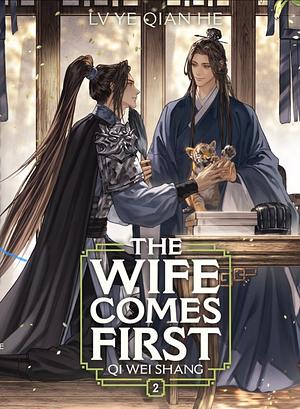
Review – The Wife Comes First, vol 1

Posted July 22, 2026 by Nicky in Reviews / 2 Comments

Review – The Wife Comes First, vol 1

The Wife Comes First

by Lv Ye Qian He

Genres: Fantasy, Light Novels
Pages: 396
Series: The Wife Comes First #1
Rating: four-stars
Synopsis:

As his life flashes before his eyes, self-obsessed Prince Cheng has a moment to reflect on something curious. Despite knocking at death’s door, only one person remains by his side: his all-but-abandoned prince-consort, Mu Hanzhang. Except, rather than celebrate that fact, Prince Cheng can only wonder… Why, after everything, is Mu Hanzhang still with him?

After all, Prince Cheng spent most of his life philandering and mastering political intrigue. Meanwhile, Mu Hanzhang had to discard his dreams of taking the Imperial Examination to become a minister, and was instead coerced to serve as male wife to a cruel prince!

Granted a second chance, Prince Cheng is miraculously reborn, waking up the morning after his wedding. As he does, the prince makes another vow: the wife comes first, the state second, and the husband last.

Where to start? Well first, he must kneel outside Mu Hanzhang’s bedroom door and beg to be let in, of course! Then again, after the sacrifices Mu Hanzhang’s had to make, will he even be willing to forgive his new husband?

I hadn’t heard much about Lv Ye Qian He’s The Wife Comes First before picking up volume one, but I was quickly hooked by the concept: it opens with Jing Shao’s death, with the body of his neglected but loyal first wife (his only male wife, Mu Hanzhang) in his arms, and then his awakening beside that same wife on their wedding night.

It starts in a bit of an uncomfortable place, truth be told: the wedding night didn’t actually go well, and Jing Shao injured Mu Hanzhang pretty badly. It’s not entirely clear how consensual that all was from the narrative: Mu Hanzhang doesn’t consider that he can say no, while Jing Shao was drunk… but I will say that in the rest of the novel, when Mu Hanzhang shows reluctance or says no, Jing Shao listens and does only what Mu Hanzhang is comfortable with (albeit maybe with a bit of pleading and cajoling). It’s all a bit difficult because of the setting: both of them were forced into the marriage, and it’s unclear how far either of them would’ve been able to meaningfully consent in the circumstances.

Personally, my read was that Mu Hanzhang would’ve been unlikely to give an outright no, and Jing Shao would likely have heeded it if he had — but it is ambiguous because it happens off-screen, and Jing Shao’s behaviour in hurting Mu Hanzhang (though later shown to be due to ignorance, at least in part) isn’t great, so keep all that in mind.

I would also note that there is some significant violence against women, largely off-screen, including Mu Hanzhang ordering for someone to be beaten to death for betraying him and Jing Shao. It isn’t treated as horrifying, just completely matter-of-fact — it’s almost easy to miss for how unremarkable it is. Most of the female characters are scheming and/or nasty, aside from one of Jing Shao’s servants (who works to protect Mu Hanzhang from the empress’ scheming) and Mu Hanzhang’s mother. Part of that is pretty much compelled by the plot: if only Mu Hanzhang stood by Jing Shao at the end, his other wives/concubines necessarily couldn’t stick by him… but it isn’t great.

That said, a lot of the rest is really sweet, and I actually really enjoyed it — for the number of words I’ve spent explaining these factors, they’re background to the story rather than the most prominent thing. Jing Shao quickly becomes fascinated with Mu Hanzhang, who is more reserved but quickly begins to have feelings for his husband as well, regardless of his fears around sex. The whole concept of “gentleman wives” (mandatory for the younger sons in certain families) and their gatherings is a nice touch, rather than just having Mu Hanzhang be some kind of exception. I also enjoyed that Jing Shao actually cares deeply about his elder brother, and we see their relationship grow as a result of his understanding (from his past life) that his brother cares for him.

Soo… overall, I enjoyed the relationship development and the court intrigue (and Mu Hanzhang’s scheming mind), and ended up flying through the book. I’m very curious to see how their relationship develops, and how the two of them manage to avoid the bad outcome that we see at the start, especially since Mu Hanzhang knows nothing about it (as least as far as we know, and the third person limited narrative seems to confirm that: Jing Shao is presumably the only one who got the “do-over”).

Rating: 4/5 (“really liked it”)

Tags: , , , , ,

Divider

Fantasy with Friends: Tropes in Children’s Fantasy

Posted July 20, 2026 by Nicky in General / 4 Comments

Fantasy With Friends: A Disccusion Meme hosted by Pages Unbound

Happy Monday! Time for Fantasy with Friends: all the prompts are hosted at Pages Unbound, if you’d like to join in. This week’s prompt is about tropes in children’s fantasy:

Is there a common trope or concept you see in children’s fantasy stories that you think would be fun to see more of in adult fantasy?

I don’t actually read children’s fantasy or YA these days — at least not very often, except maaaaaybe a bit in graphic novel form — so I’m a little bit stumped here. If I think back to the tropes and concepts I loved in fantasy when I was a kid, I think a lot of it is being done in adult fantasy: I think fondly about stuff like The Worst Witch in the School, but then we have Emily Tesh playing around with a magic school in The Incandescent, and Caitlin Rozakis doing younger kids in a magic school in The Grimoire Grammar School Parent Teacher Association, for instance. Maybe I’d love a bit less dark academia and more “holy crap I’m attending a magical school/university”?

As for portal fantasy, that’s always been around, I think, and e.g. Seanan McGuire’s playing around with it a lot in Every Heart a Doorway et al, and again in Over the Woodward Wall etc. Guy Gavriel Kay’s Fionavar books are a bit dated now, but lovely; more stuff that takes portal fantasy seriously and isn’t trying to be meta with it might be nice.

I suppose Brian Jacques’ Redwall books also count as fantasy and I loved them, but the plots weren’t super unique, only the fact that they were all animals. So I guess I don’t see a lot of that and I’d kinda like to: there is stuff like The Voyages of Cinrak the Dapper and, though this is mystery rather than fantasy in every other sense, Juneau Black’s Shady Hollow books. So maybe we can see a bit more of that?

Kinda curious what other people will answer for this question, and what I’ve failed to think of!

Tags: , ,

Divider

Review – Strange Animals

Posted July 16, 2026 by Nicky in Reviews / 12 Comments

Review – Strange Animals

Strange Animals

by Jarod K. Anderson

Genres: Fantasy
Pages: 320
Rating: four-stars
Synopsis:

After a series of inexplicable encounters upends his life, Green finds himself alone and terrified in the Appalachian mountains, full of questions about the transformation he’s undergoing and the impossible creatures he’s starting to see.

When he meets a hermit named Valentina, he realizes that something more than chance has brought him to her door. For she has devoted centuries to researching the hidden world of cryptids that Green is only now beginning to perceive.

As Green begins his studies beneath her watchful eye, he comes face to face with time-stopping giant moths, cyclops squirrels, and doorways to elsewhere. Along the way come clues about his own nature and the powerful beings who led him here—and, most wondrous of all, a sense of fulfillment like nothing he’s felt before.

But Green’s new happiness promises to be short-lived, because alongside these marvels lurks a deadly threat to this place he’s already come to love.

I was very curious about Jarod K. Anderson’s Strange Animals after I read other bloggers’ reviews, so I started it pretty quickly after getting my copy (which isn’t always the case, ahaha). I had some ideas about what was going on from the reviews, but I don’t know that I really expected the things that actually grabbed me.

The story teases around the edges of horror fiction at the start, with Green’s first encounter with what he’ll discover are in fact cryptids, his unease leading into terror. I felt it resolved more straight-forwardly into feeling like a fantasy after he meets Valentina: the fact that she somewhat understands what’s going on, or at least offers a framework to understand it, and the way Green learns to shift his perspective toward study helps to take some of the fear out of it.

The part that really got me hooked was when Green is asked to study the rag moth. Sure, the part where he falls asleep and wakes up surrounded was uneasy again, but his slow easing into an attitude of curiosity and study was fascinating, and the creature itself is a fascinating idea. After that, I was eager for Valentina to teach him more and show him more of the world he’s only beginning to learn to see and understand.

There was a certain amount of predictability to how it all works out, but not in a bad way: it was satisfying to see Green figure it out and stop feeling lost and passive and scared, and instead find it in himself to act.

I’d have loved to know more about Valentina and Catskill, seen more and more cryptids, and learned more about what Green is exactly, but I also appreciated this for what it was and found it very satisfying.

Rating: 4/5 (“really liked it”)

Tags: , , ,

Divider

Review – Radiant Black, vol 1

Posted July 14, 2026 by Nicky in Reviews / 0 Comments

Review – Radiant Black, vol 1

Radiant Black

by Kyle Higgins, Cherish Chen, Marcelo Costa, David Lafuente

Genres: Fantasy, Graphic Novels
Pages: 192
Series: Radiant Black #1
Rating: two-stars
Synopsis:

Visionary writer KYLE HIGGINS (Mighty Morphin Power Rangers, Ultraman) and artist MARCELO COSTA reinvent super heroes for a new generation! Nathan Burnett has just turned 30, and things aren’t great—he’s working (and failing) at two jobs, his credit card debt is piling up, and his only move…is moving back home with his parents.
But when Nathan discovers the ethereal, cosmic RADIANT, he's given the power to radically change his fortunes...unless the Cosmic Beings who created them succeed in taking them back by any means necessary. Oh, and did we mention there's a RED RADIANT who wants Nathan dead? The next must-read comic book series STARTS HERE.
Collects RADIANT BLACK #1-6

The first volume of Radiant Black (Kyle Higgins et al) offers a fairly unsurprising superhero origin story: dead-end guy ends up back with his parents, stumbles into something that gives him powers, and quickly discovers it’s linked to aliens and he needs to save the world.

Where it varies a bit is in giving us a few pages of the story the guy (Nathan) is trying to write, which I found interesting… and the fact that the hero switches partway through the story, as Nathan ends up in a coma.

The setup is fairly meh, as far as it goes, and I definitely wasn’t motivated enough to try to “translate” the alien symbols or anything, but I am kinda curious about the switch between Nathan and Marshall works out, whether Nathan still ends up with powers, etc. I’m not that motivated to read the next volume, but… maybe?

As for the red Radiant, nice motive, still theft, bodily harm and a minimum of manslaughter.

Rating: 2/5 (“it was okay”)

Tags: , , , , , , , ,

Divider