Tag: Ursula Le Guin

Top Ten Tuesday

Posted November 11, 2014 by in General / 28 Comments

This week’s Top Ten Tuesday prompt from The Broke and the Bookish is “top ten characters you wish would get their own book”.

  1. Verity Farseer (Realm of the Elderlings, Robin Hobb). Or maybe his wife, Kettricken. Either way, they’re both great characters, I love the idea of “Sacrifice”, and I wish we’d seen more of Verity being awesome. I don’t think there’s really space for a Verity book in the series, and arguably his crowning achievements are in the Fitz books anyway, but for dreaming about, there’s all the time before Fitz is born, or the time Verity spends alone in the mountains before Fitz and company catch up.
  2. Faramir (Lord of the Rings, J.R.R. Tolkien). I had the biggest literary crush on Faramir; I think he’s one of the strongest characters we see in Middle-earth. He’s as worthy as Aragorn in his way — both consciously resist the Ring — and he had pretty short shift from his father. He deserves more!
  3. Jane Drew (The Dark is Rising, Susan Cooper). Arguably Greenwitch is her book, but it’s so short! She’s the only girl in the Six, and it’d be great to see more of her.
  4. Susan Pevensie (The Chronicles of Narnia, C.S. Lewis). She deserved more than being dismissed as too interested in “lipsticks and nylons”. As of The Last Battle, she’s still alive and there’s room for redemption or reinterpretation of what’s going on with her. I don’t think Lewis could ever have really handled her with subtlety, but you can dream…
  5. Ysanne (The Fionavar Tapestry, Guy Gavriel Kay). We only briefly see what Ysanne is like and get hints of her history. A story set entirely within Fionavar that ties up some of that would be lovely.
  6. Mel (Sunshine, Robin McKinley). There’s so much mystery around that character that was never resolved. It adds an interesting background to Sunshine, but I think everyone wants to know more about him.
  7. Jasper (A Wizard of Earthsea, Ursula Le Guin). He’s just a plot element, really, to set Ged on his path. He vanishes out of the story and we never really know why he leaves Roke, whether he ever gains some redemption. He’s presented a little too simplistically — I want to know more, even though he’s not a pleasant character.
  8. Calcifer (Howl’s Moving Castle, Diana Wynne Jones). Because Calcifer.
  9. Anafiel Delaunay de Montrève (Kushiel’s Dart, Jacqueline Carey). We know a little about his past, and enough about him to sketch in what we need to know, but I’d like to get to know the character close-up, rather than through Phèdre’s eyes.
  10. Prim (The Hunger Games, Suzanne Collins). We see her through Katniss’ eyes, but it’d be fun to know what Prim’s thinking, what drives her — what little rebellions are in her, against Katniss and for her, as they’re growing up and Katniss is doing all this self-sacrificing. She’s presented as pretty much totally cute, but there’s gotta be more complex things going on.

What about you guys?

Tags: , , , , , , , , ,

Divider

Top Ten Tuesday

Posted November 4, 2014 by in General / 6 Comments

This week’s theme is “Top Ten Books I’d Like to Reread”, which is a topic just made for me — the first one in a while I think I could talk for ages about — because I love rereading. Honourable mentions in advance to Chalice and The Hobbit, both of which I already reread recently! And I’m just going to leave it unsaid that I want to reread The Dark is Rising books, since I do that every year.

  1. Seaward, Susan Cooper. I’ve been meaning to reread this for a while. Heck, by the time this post goes live, I might’ve got round to it already. It’s beautifully written, a bit more mature than The Dark is Rising, and I love the characters a lot. I read it right through the day I got it, I think, at Christmas a couple of years ago. And then I made my partner read it, and my mother, and… everyone else I could get my hands on, really.
  2. The Lions of Al-Rassan, Guy Gavriel Kay. I think this might be the next book in my chronological-by-publishing-date reread of GGK’s work. I think it’s my mother’s favourite of GGK’s books, and my partner loves it too; I remember liking it, though it wasn’t my favourite, but it’s one of the few I’ve only read once so far (along with Under Heaven, which is too new for me to have reread yet).
  3. Sunshine, Robin McKinley. This is another I might’ve got round to already by the time this post goes live, because I’m tearing a streak through Robin McKinley’s work lately. Sunshine is one of my favourites; the world-building, the characters and their relationships, all the talk about food… And also, vampires done right, so that they’re genuinely fucking freaky, even Our Hero.
  4. Kushiel’s Dart, Jacqueline Carey. And pretty much everything by Carey, actually. I love the richness of her writing, and the intrigues of the court in Terre D’Ange. Honestly, if it wasn’t for all the sex and BDSM in the book, I’d recommend it to everyone, because the actual world-building is really cool. But I’m aware it’s not something everyone can be comfortable with.
  5. The Fire’s Stone, Tanya Huff. I could swear I’ve already talked about wanting to reread this somewhere on the blog, but I can’t find it. I did start a reread recently, but then got interrupted. I’m particularly curious because just before I first read this, my partner and I were working on an original world/plot that was very, very similar in many ways. And I’m looking forward to the relationship between the three main characters, and the way the situation turns out for them all. It’s sweet, feel-good stuff.
  6. The Winter King, Bernard Cornwell. I’ve always loved the way Cornwell handles the legends. Okay, some of his characters really don’t fit with the legends, and I do like the legends, but at the same time he has one of the most likeable versions of Galahad, and a really interesting take on the magic/reality stuff where the narrator can view it as magic and we can dismiss it as trickery, or maybe not quite.
  7. The Thief, Megan Whalen Turner. And the rest of the series. It’s easy to read, fun, and does interesting things with the character, the world, etc. I’m less a fan of the most recent book, but I’m still going to try rereading it.
  8. The Tombs of Atuan, Ursula Le Guin. The whole series, really, but this one is my favourite. It marks a separation from the world of the first book, which is fairly conventional fantasy, and begins to shape a place for women and a different view of the world that’s more in line with Le Guin’s own beliefs. And she’s so good at writing the small clear moments of quiet that really shine (Ged’s hand and the thistle).
  9. Assassin’s Apprentice, Robin Hobb. It’s been a long time, and I miss Fitz, Nighteyes and Verity. (My mother never liked Verity nearly as much as I do, but I find him one of the most genuine characters of the lot — not subtle, not perfect for his job, but doing what he can and making good despite the difficulty.) And there’s a new Fool trilogy now, which I even got an ARC for originally, so I want to reread everything to get back up to speed for it.
  10. Sorcerer’s Treason, Sarah Zettel. I remember these being good books, using a less typically Western fantasy setting, with a lot of Russian influence and I think later Asian? I remember finding it very different, at any rate, and I do like Zettel’s work. So, soooon. I hope.

Any of these your own special favourite? Let me know! I comment back to everyone who comments here, both on my post and on your own if you’ve done one.

Tags: , , , , , , , , , , , ,

Divider

Top Ten Tuesday

Posted September 30, 2014 by in General / 0 Comments

This week’s Top Ten Tuesday is “Top Ten Books That Were Hard For Me To Read”. Which… it should be an easy one for me, because I get embarrassment squick really easily, and there are various topics that don’t do my brain any good. My mind’s gone blank as I type this, but let’s see what I can do.

  1. Assassin’s Quest, Robin Hobb. Stop hurting Fitz! That’s pretty much a universal in Hobb’s books, but still. The books are great but oh my god, stop hurting Fitz.
  2. Hold On, Alan Gibbons. I read this way back because my sister asked me to. Both of us were bullied pretty badly in school, so it was difficult to read both because it’d happened to me, and because I knew it was still happening to my sister.
  3. Harry Potter and the Philosopher’s Stone, J.K. Rowling. Yeah, I doubt this one is going to show up on many other people’s lists. But it’s true. I’ve studied it 2-3 times in English Lit, and between that and the massive hype, I have difficulty picturing myself enjoying it now. Or I did: I think I’m starting to feel like giving the series another go now.
  4. Good Omens, Terry Pratchett and Neil Gaiman. Solely because I read it too much.
  5. The Mermaids Singing, Val McDermid. Rape, torture, gore, violence, suicide, all kinds of triggers. It upset me very much back when it was a set text for a Crime Fiction module, to the point where I actually requested in the end of term feedback that the lecturer put a warning about it on the syllabus, particularly for the benefit of people who have been raped or have the kind of gender issues described. (The lecturer said no and called me a fragile flower in front of the entire lecture hall, but that’s another story.)
  6. The Farthest Shore, Ursula Le Guin. I never used to like going past the first two books of the Earthsea series. I didn’t like how Le Guin developed the world, and the way her concerns within the world changed from fairly typical fantasy tropes to something much more examined. I’d like them better now, I think, particularly now I’ve read the final book and seen how it all comes together.
  7. The Double Helix, James Watson. I have actually enjoyed more recent work by Watson, but this memoir of the discovery of the structure of DNA drove me nuts. He’s so dismissive and awful about Rosalind Franklin and her achievements, with numerous comments on her appearance and how a bit of makeup would improve her. Ugh.
  8. The Innocent Mage, Karen Miller. I loved what Miller did with building up characters, even with world-building. But it was so slow, and her villain was practically a cartoon. I expected him to say “mwahahahaahaaa!” any moment.
  9. An Evil Guest, Gene Wolfe. Gene Wolfe is a really clever writer, but this book seemed like a mess. I can’t even really remember much about it; I certainly didn’t enjoy it. Sadly!
  10. Revealing Eden, Victoria Foyt. It may be possible to do justice to this idea, in the hands of a very good writer. Flipping racism around so that white people are the ones without privilege… it could make for a really interesting story, I guess. But oh man, did Foyt not think it through.

Looking forward to seeing what other people pick!

Tags: , , , ,

Divider

Top Ten Tuesday

Posted July 29, 2014 by Nicky in General / 10 Comments

This week’s Top Ten Tuesday is “how many books do you own the most from”. I’m gonna be totally unscientific here and just take some wild guesses.

  1. Jo Walton. I own all her books, often in several formats. I think this one’s a safe bet.
  2. Ngaio Marsh. I have all those omnibuses. Omnibii?
  3. Robin Hobb. I’ve been reading everything she writes since I was, uh, thirteen ish?
  4. Guy Gavriel Kay. Again with the multiple formats.
  5. Ursula Le Guin. I don’t own everything she’s done, and I don’t usually have multiple copies, but I think she might still outnumber eveeeryone else. She’s just so good, I’m willing to try anything she’s done.
  6. Steven Brust. This is Jo Walton’s fault. I haven’t even read most of them yet.
  7. Tanya Huff. This is a guess, but I’m pretty sure I’m right. I’ve bought most of her books, though I haven’t read them all yet.
  8. J.R.R. Tolkien. Everything bar the twelve volume history of Middle-earth, I think. Multiple editions.
  9. The Gawain-poet. Whoever he (or she?) was. I own so many translations — probably at least nine?
  10. The Beowulf-poet. I’m not quite as big a fan as I am of the Gawain-poet, but still. I’ve got a facing translation one, Heaney’s, Tolkien’s… the list goes on.

So, what about everyone else? Strangely, Dorothy L. Sayers does not make the cut, because I borrowed my copies to read.

Tags: , , , , , , , ,

Divider

Throwback Thursday

Posted June 6, 2014 by Nicky in General / 12 Comments

Love the idea of this one, hosted here. The idea is to share a couple of the books that have been waiting on your shelves for a while, as opposed to something like Stacking the Shelves, where you share books you’ve just picked up. So here’s three I’ve picked for this week.

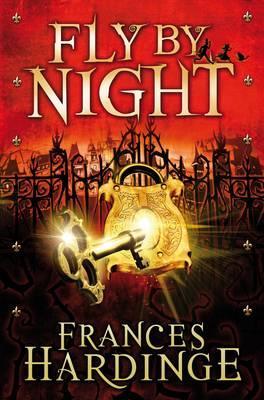
Cover of Fly by Night by Frances Hardinge

Fly by Night, Frances Hardinge

A breath-taking adventure story, set in reimagined eighteenth-century England. As the realm struggles to maintain an uneasy peace after years of cival war and tyranny, a twelve-year-old orphan and her loyal companion, a grumpy goose, are about to become the unlikely heroes of a radical revolution.

I’ve had this on my list for ages, since the first book by Frances Hardinge I read (which was A Face Like Glass, and absolutely excellent). I’ve nearly picked it up so many times since, but I keep wanting to pick the right time so I really get to savour it.

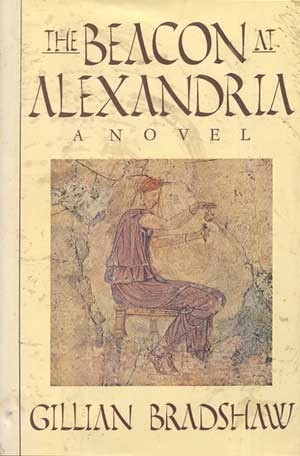
The Beacon at Alexandria, Gillian Bradshaw

In the Fourth Century A.D., independent and determined young Charis is forbidden to become a doctor because she is a woman. Disguising herself as a eunuch she flees Ephesus for Alexandria, then the center of learning. There she apprentices to a Jewish doctor but eventually becomes drawn into Church politics and is forced once again to flee. She serves as an army doctoCover of The Beacon at Alexandria by Gillian Bradshawr at a Roman outpost in Thrace until, kidnapped by barbarian Visigoths, she finds her destiny to heal and also to be a woman and a wife.
I wouldn’t be sure about that “finding her destiny” part, normally, but I tend to trust Gillian Bradshaw — I’ve really enjoyed most of her work that I’ve read so far. She seems to do a lot of work on her settings, although as I think on it, she tends to focus more on male characters.

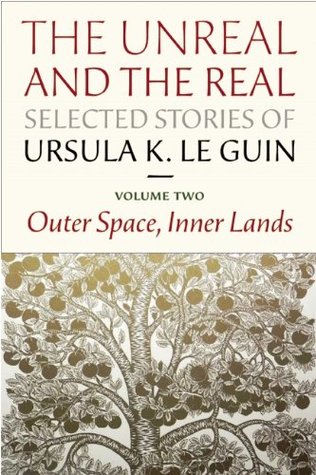
The Unreal and the Real: Selected Stories, Vol. 2: Outer Space, Inner Lands, Ursula Le Guin

Cover of The Unreal and the Real by Ursula Le GuinOuter Space, Inner Lands includes many of the best known Ursula K. Le Guin nonrealistic stories (such as “The Ones Who Walk Away from Omelas,” “Semley’s Necklace,” and “She Unnames Them”) which have shaped the way many readers see the world. She gives voice to the voiceless, hope to the outsider, and speaks truth to power—all the time maintaining her independence and sense of humor.

Companion volume Where on Earth explores Le Guin’s satirical, risky, political and experimental earthbound stories. Both volumes include new introductions by the author.

I’m looking forward to both volumes of this, but particularly to volume two. Ursula Le Guin has been a huge influence on me and this sounds like a pretty definitive collection. I’ve probably read a lot of them before, though not all. If you’ve never read ‘The Ones Who Walk Away from Omelas’, I definitely recommend that one if you’re okay with discomforting ethical dilemmas.

Tags: , , , ,

Divider

Top Ten Tuesday

Posted May 20, 2014 by Nicky in General / 4 Comments

I haven’t done the Top Ten Tuesday thing for a while, a meme hosted by The Broke and the Bookish, but I like this topic — top ten books about friendship.

  1. A Wizard of Earthsea, Ursula Le Guin. The friendship between Ged and Vetch, the quiet solid thereness of it… you know for sure that Vetch would never let you down if he could help it.
  2. The Lord of the Rings, J.R.R. Tolkien. I actually thought of this because they’ve got it in their list, but it’s still true. Frodo and Sam, Legolas and Gimli… even, in a way, Frodo and Gollum, because Frodo manages to reach out with pity and sympathy to Smeagol.
  3. The Prize in the Game,Jo Walton. Ferdia and Darag. “Your name in my heart,” indeed. (Okay, there’s romantic aspects to that, but I think first and foremost they’re friends.)
  4. The Grey King, Susan Cooper. Bran and Will. The way they fit together, understand each other better than anyone else, and the way they still hurt each other because neither of them is perfect.
  5. Captain Marvel, Kelly Sue DeConnick. Carol and Steve! Carol and Jessica! Carol and Monica!
  6. Captain America: The Winter Soldier, Ed Brubaker. Steve and Bucky. Just, Steve and Bucky. I know this is a movie quote but, “I’m with you till the end of the line.”
  7. The Summer Tree, Guy Gavriel Kay. Paul and Kevin, primarily, although all the bonds between the group are great. Kim and Jennifer, particularly. Just the way there are these deep loves that come entirely out of friendship. Guy Gavriel Kay is also pretty good at this in other books, too, like Tigana.
  8. The Universe Versus Alex Woods, Gavin Extence. Alex and Mr. Peterson. So unlikely, and yet Extence made me believe in it.
  9. Sword at Sunset, Rosemary Sutcliff. Arthur and Bedwyr. Ouch, ouch. “I could have cried out to him, as Jonathan to David, by the forbidden love names that are not used between men; I could have flung my arms around his shoulders.”
  10. Good Omens, Neil Gaiman. Crowley and Aziraphale. Because of course.

I am a little bothered by the fact that almost all of those are male friendships. It’s partly a function of the books I’ve loved since I was a kid, before I was really choosy in any way about what I read, but still. Rec me your books with female friendship!

Tags: , , , , , , , , , ,

Divider

Review – Travel Light

Posted January 3, 2014 by Nicky in Reviews / 4 Comments

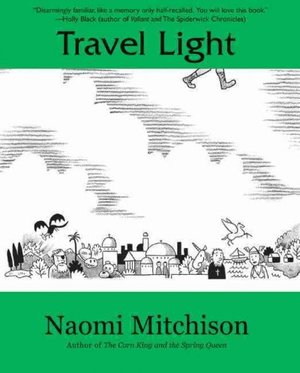
Cover of Travel Light, by Naomi MitchisonTravel Light, Naomi Mitchison

I came across this because of Amal El-Mohtar’s NPR review; the idea of a book in dialogue with Tolkien, by one of the women around him who he encouraged and listened to, definitely appealed: I think just recently I was asking if anyone’s written anything about Tolkien’s female students, about whom I know very little except that I’m sure I have been told they existed. (Time for a woman to write a biography of Tolkien? Move over, Humphrey Carpenter, Tom Shippey?)

And this book delivered. It is rather slight — it’s short, and on first glance, rather fable-like. Naomi Mitchison resisted any urge to insist on a moral, though: while there are religious people in the story, and Hella’s travelling light seems a virtue in her, there are good people who struggle with faith, good dragons who keep out of the gods’ way, and though for a while it looks as though there might be a moral about Christianity in there, then there’s also a bit of a wry look at the church in Constantinople, and it ends with some more Norse mythology. I don’t think she honestly ever pushes any moral except finding your way through life and being good to people and creatures, and in the meantime she has an intriguing wander through different cultures and traditions.

Mitchison is a lot less sure than Tolkien about the period and the people she wants to write about, I think. Tolkien talked about creating “a mythology for England”, and I’ve argued elsewhere that Susan Cooper succeeds, but I don’t think Mitchison is as rooted in a place, an idea. Like her protagonist, she’s willing to wander. I wonder what a difference it’d have made to genre fiction now if Mitchison had a greater role, and Tolkien a lesser? Maybe we’d have less to worry about from the constant onslaught of medieval European fantasy.

It won’t scratch the same itch as The Hobbit and Lord of the Rings, for sure. It’s a different sort of story — if you’re a fan of Le Guin, perhaps, it’s more like the stories of Earthsea. Or it’s like a more fantastical, more female Rosemary Sutcliff. Don’t read it for The Hobbit 2.0 — it’s something all its own.

Oh, and it can be quite amusing, too: Dragon Economics 101…

Tags: , , , , , ,

Divider

An update on my reading list

Posted December 21, 2013 by Nicky in General / 2 Comments

So! I have been somewhat successful since 8th December in finishing some books from the currently reading stack. I’ve managed to finish the following books:

  • Alan Bradley, A Red Herring Without Mustard.
  • Geraldine Brooks, Year of Wonders.
  • Adam Christopher, Hang Wire.
  • Ursula Le Guin, The Left Hand of Darkness.
  • Patricia A. McKillip, Alphabet of Thorn.

5/50. So I get £5 from my mother, woo! But, on the other hand, I’ve remembered a few books that I missed off the original list, and some that I’ve started since…

  • Chris Wooding, Retribution Falls.
  • Sarah Addison Allen, Garden Spells.
  • Karen Lord, The Best of All Possible Worlds.
  • Susan Cooper, The Dark is Rising.
  • James Renner, The Man from Primrose Lane.

So… we’re still running about even. And it’s about to be Christmas and I know I’m getting books, not to mention the books I’ve bought during the last few days (oops).

And let’s not even talk about the number of books I’ve started but also finished since I made that list. (Again. Oops.)

Tags: , , , , , , , , , ,

Divider

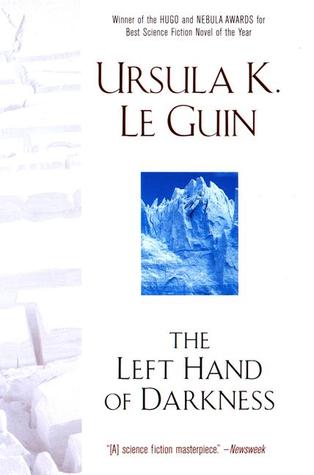
Review – The Left Hand of Darkness

Posted December 13, 2013 by Nicky in Reviews / 8 Comments

Cover of The Left Hand of Darkness, by Ursula Le GuinThe Left Hand of Darkness, Ursula Le Guin

Reread this for my SF/F class on Coursera. I loved it more, this time: read it slowly, appreciated the details, just as the professor suggested. Partially because, of course, I knew it would be rewarding with Ursula Le Guin. I don’t think I was ready for this book when I read it before: the fierce joy and love in some parts of it, the devastation, the making-strange of familiar things and the making familiar of strange things.

Some parts were… maybe less subtle than I thought Le Guin would be. All the stuff about Orgoreyn seemed fairly obviously a commentary on the relations between the US and Russia; the portrayal of Karhide was more subtle, but the Voluntary Farm seems a fairly naked commentary on the gulags. I expected more subtlety, really.

I do love the world Le Guin builds. I was impatient with it last time, but having experienced more of her work, all the detail and background is part of the picture, part of the creativity, not ancillary to the plot.

Don’t read this if you’re not ready to be shaken up about gender, but really, that isn’t the important thing about it. The real importance of it is not the way Le Guin plays with and reflects on gender (Tehanu would be equally important for that, I think), but the way she thinks about dualism/wholeness, the imagery of Yin and Yang which her whole story invokes.

Tags: , , ,

Divider

Review – Alphabet of Thorn

Posted December 12, 2013 by Nicky in Reviews / 2 Comments

Cover of Alphabet of Thorn, by Patricia A. McKillip, art by Kinuko CraftAlphabet of Thorn, Patricia A. McKillip

Firstly, I think I’ve mentioned this before, but oh I love the cover art so much. It’s done by Kinuko Craft, who has also illustrated at least some of Juliet Marillier’s covers, so that explains why it seemed familiar.

Alphabet of Thorn is beautifully written. It’s one of those books where it’s less about making things happen, and more about watching them happen — there is some degree of “stopping things happening”, but mostly people fall in love, and do magic, and learn things about themselves, and work in the slow silent world of manuscripts and translation, and… It’s not really about the plot, I think, but more about the characters and the world; less about things happening than about people in a situation. I don’t know if I can describe it — but all the same, I hope it’s clear that I loved it.

The mythical parts of the story, the floating school of magic, all of it felt — not real, but true, to me. It all worked seamlessly as a world, as a story. It also felt in some ways like something Ursula Le Guin could write (which is a very high compliment in my world): the Floating School is a cousin to the school on Roke.

If you’re not a fan of McKillip’s style and plotting, I don’t think this one could change your mind. But I do think it’s gorgeous.

Tags: , , , ,

Divider