Posted March 24, 2026 by Nicky in Reviews / 0 Comments
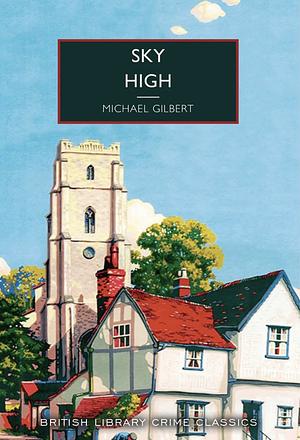
Sky High
Genres: Crime,
Mystery Pages: 254
Series: British Library Crime Classics Rating: 
Synopsis: In the village of Brimberley, the worst thing on the horizon seems to be the chance of being outshone by the rival village choir of Bramshott. But that is until Brimberley’s lead tenor is blown up in his home by an explosion that rocks the whole community. As an amateur coalition of the motorcycling choir leader Liz, her ex-commando son and a retired general begins to piece together this strange crime, mystery upon mystery compounds in a case involving dark secrets buried in the turmoil of the Second World War, parochial grudges, a burglar whose reputation borders on the mythical, and a volatile killer poised to strike again.
First published in 1955, this classic village mystery with elements of WW2 spy fiction showcases Gilbert’s ingenious plotting and ability to blow the reader’s assumptions sky high.
I was a little worried that Michael Gilbert’s Sky High would be kind of grim, since the last book of his I read was really grim in a weird way (it was so matter-of-fact about prisoner of war camps). This one is also rather haunted by war, admittedly, and there is a certain melancholy matter-of-factness about matters of war, since many of the characters were soldiers or related to soldiers, and one of the main characters was in Palestine, etc.
That said, it doesn’t have quite that same dark feel, in part because one of the other main characters (his mother, actually) is a comfortably middle-aged woman who manages the choir, rides a motorbike, and has a gift for amateur detection. It practically takes a village to untangle exactly what’s happened, though, with each character contributing their own skills.
In the end, I was surprisingly sad about who the culprit turned out to be, and surprisingly invested in it not being any of the characters I liked — I hadn’t realised I was getting attached. There are some tense moments, too, which feel really well done. I couldn’t help wincing to myself as Tim worked out what was bothering him in the final scenes, bracing myself for the possibility the author wasn’t going to let him figure it out in time.
Overall, I liked this a lot more than I’d expected; the mystery was solid, we had most of the pieces to work it out, and I cared more than I realised.
Rating: 4/5 (“really liked it”)
Tags: book reviews, books, British Library Crime Classics, crime, Michael Gilbert, mystery
Posted March 12, 2026 by Nicky in Reviews / 2 Comments
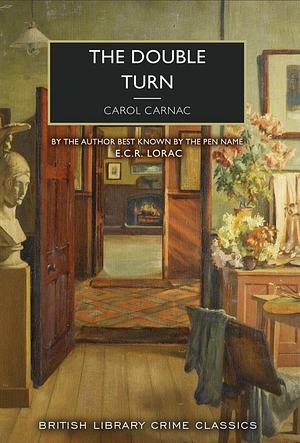
The Double Turn
Genres: Crime,
Mystery Pages: 220
Series: British Library Crime Classics Rating: 
Synopsis: At Firenze, the reclusive artist Adrian Delafield’s Florentine enclave in St John’s Wood, the whispers of an impending tragedy are growing louder. The tension between the fanatical zealot of a housekeeper Miss Trimming and Delafield’s sister Virgilia is just shy of fever pitch, when a cold morning at the house finds Trimming and Adrian sprawled at either end of the staircase – upstairs, an injury; downstairs, death.
The windows and doors were all locked from the inside, and yet Inspector Julian Rivers, trained to see the malice behind deadly accident, suspects that a murderer had a hand in the fell deed. But if this is true, Rivers is faced with both the inexplicable puzzle of motive, and the task of untangling an impossible crime in Carnac’s compelling and twisting 1956 mystery exploring the demands of kinship, art-world secrets and religious mania.
Carol Carnac, AKA E.C.R. Lorac, is one of my favourite finds through the British Library Crime Classics series. I reliably enjoy her sense of place and ability to create characters I really root for, though I generally prefer her work under the name E.C.R. Lorac — I think because all of those I’ve read have starred Macdonald, and he’s such a humane sort of detective that it makes everything just a little comfier. I’m less fond of the detectives in The Double Turn, Lancing and Rivers: I’ve no reason to believe they’re meant to be any less decent than Macdonald, but they just don’t get the same fondness from me. I didn’t quite understand their frustration with one of the (innocent) characters, for example.
I still enjoyed The Double Turn as a mystery, though; I’m not sure if it was fair play, as the solution eventually partly hinged on a small detail that I can’t remember being mentioned previously (though there were other clues that could lead you in the right sort of direction, and there was a major one I didn’t pay enough attention to). I did realise that it was likely to end up being a character I didn’t want to be implicated, because Lorac’s so good at that, at creating people with massive flaws who nonetheless also have admirable qualities… but that’s more of a meta-clue.
In the end, it left me feeling a bit sad, to be honest. The way it ends doesn’t feel entirely like justice or everything being set to rights, because you can’t undo the harm done, and the victim wasn’t likeable but was in some ways admirable, and either way obviously didn’t deserve to be murdered in that way — and there was collateral damage too. It’s just… ugh.
All in all, not a favourite of Lorac’s; plenty of worthy aspects, but not my personal cup of tea.
Rating: 3/5 (“liked it”)
Tags: book reviews, books, British Library Crime Classics, Carol Carnac, crime, E.C.R. Lorac, mystery
Posted January 5, 2026 by Nicky in Reviews / 0 Comments

Still Waters
Genres: Crime,
Mystery Pages: 237
Series: British Library Crime Classics Rating: Synopsis: Trouble is brewing once more for the Hoggetts and their friend Chief Inspector Macdonald in Lunesdale, deep in the Lancashire fell country. The treacherous slopes and still waters of a quarry pool have become the backdrop for strange happenings by night, and after an architect surveying the area is nearly hoisted into the cold waters by an unseen assailant, the suspicions of local farmers become a matter for the CID. Lorac’s authentic writing of the Lunesdale countryside is paired with a twisting plot in this classic of Lake District crime fiction, first published in 1949.
E.C.R. Lorac’s Still Waters is another return to Lunesdale for Macdonald. It’s a bit surprising that there are several books sharing the same setting and characters, because a lot of the other books are pretty disconnected, with just Macdonald and Reeves recurring. In this one, the Hoggetts are almost the stars, particularly Giles.
It’s pretty suspenseful actually; there are a couple of tense chapters at the end where Macdonald, Reeves and several others are staking out an area to figure out what’s going on and (hopefully) catch the criminals. I’d figured out what was going on already (it’s a fair-play mystery, pretty much) but it was still really tense because it wasn’t clear whether something would go wrong, whether they’d get their guy, etc. I don’t mind having figured things out anyway, but that definitely didn’t defuse any of the tension here.
It makes fun use of the setting, which Lorac knows well because she eventually settled in the area she based the story on, and apparently it was checked by a police officer as well, which shows she did her research.
One note: one of the characters is deeply anti-Welsh. He’s corrected/ignored by other characters, but the Welshman is still very much viewed as a “foreigner” and with automatic suspicion, which is a bit uncomfortable, if not surprising.
Rating: 4/5 (“really liked it”)
Tags: book reviews, books, British Library Crime Classics, crime, mystery
Posted December 29, 2025 by Nicky in Reviews / 0 Comments
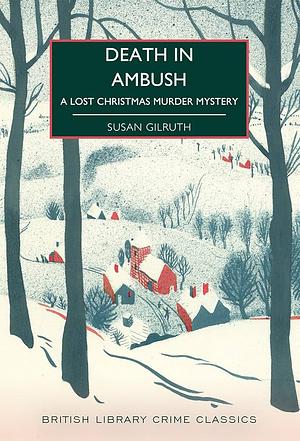
Death in Ambush
Genres: Crime,
Mystery Pages: 288
Series: British Library Crime Classics Rating: Synopsis: In a tranquil Kentish village, Dr Sandys and his wife are preparing for Christmas with their guest, Liane ‘Lee’ Crauford. Festivities start badly when their party is spoiled by an enigmatic widow new to the village, and the atmosphere hits rock bottom when the pompous local nobleman and ceramic-collector Sir Henry Metcalfe unexpectedly dies. Sensing potential villains among Metcalfe’s circle, Lee teams up with Detective-Inspector Hugh Gordon to discover the killer playing merry hell with her holiday in this lost vintage mystery, republished for the first time since 1952.
Susan Gilruth is a new-to-me author not previously published in the British Library Crime Classics series, and Death in Ambush is their Christmas-themed entry for the year. It’s set at Christmas, and there’s some Christmas presents and such at the end, but it doesn’t feel that festive, really; it’s mostly a mystery that happens to be set at Christmas.
Overall, I didn’t fall in love with it, especially because I found it kind of obvious after a certain point, but it was fun enough. The introduction notes a rather weird aspect of it: a fair bit of flirting and romantic tension between the police detective and the POV character, who is married (and whose husband does not appear). Not an element I’ve seen a lot!
It was fun enough, but reminded me more of modern stuff like the Daisy Dalrymple books somehow. I’d read more of Gilruth’s books if they get reissued in this series, but probably not seek them out otherwise.
Rating: 3/5 (“liked it”)
Tags: book reviews, books, British Library Crime Classics, crime, mystery, Susan Gilruth
Posted December 2, 2025 by Nicky in Reviews / 2 Comments
As If By Magic
Genres: Crime,
Mystery,
Short Stories Pages: 349
Series: British Library Crime Classics Rating: Synopsis: Impossible crime stories have delighted readers since the invention of detective fiction as puzzle-lovers sought more cerebral entertainment. Following on from Miraculous Mysteries, CWA Diamond Dagger Award-winning crime writer Martin Edwards brings together a whole new casebook of mystifying locked room mysteries and impossible crimes. Featuring more great stories by John Dickson Carr, Julian Symons and Margery Allingham alongside newly rediscovered writers, this selection of stories will bring you more insight into one of the most celebrated and dazzling sub-genres of detective fiction.
I’m not always one for locked room mysteries, I must admit, but the latest British Library Crime Classics collection, As If By Magic, was actually pretty fun. It’s edited by Martin Edwards and has the usual format of short introductions before each story, though this one is opened and closed by a John Dickson Carr story. That feels only appropriate given his influence on the genre!
There is a repeat story that’s used in another collection (“The Coulman Handicap” is in a different British Library collection, not sure which), but otherwise they were all new to me, and there were some ingenious ones. Also far-fetched, of course, but that’s part of the territory with locked room mysteries. It was especially bad with (spoilers for one story ahead) the one where a pistol was shot into a tree and then the bullet fired itself at a man two hundred years later when he burned wood from that tree — though I did kinda enjoy that that one, of course, wasn’t a crime at all.
Overall, pretty fun, though that final Carter Dickson (John Dickson Carr) story does strike quite the macabre note, sheesh!
Rating: 4/5 (“really liked it”)
Tags: book reviews, books, British Library Crime Classics, crime, Martin Edwards, mystery, short stories
Posted November 29, 2025 by Nicky in Reviews / 0 Comments
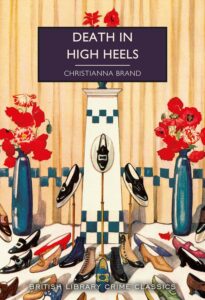
Death in High Heels
Genres: Crime,
Mystery Pages: 253
Series: British Library Crime Classics Rating: 
Synopsis: The pursuit of fashion is a matter of life and death in the debut novel from Christianna Brand, one of the Queens of Golden Age crime fiction. Life in the West End dress shop Christophe et Cie is hard enough with all the pressures of delivering Frank Bevan’s business vision – and then comes murder, delivered by oxalic acid, transforming the boutique into a crime scene. Featuring a colourful cast of designers, models, shop floor assistants and the fresh-faced Inspector Charlesworth, this 1941 mystery brims with Brand’s signature wit and ruthless twists.
I did end up finishing Christianna Brand’s Death in High Heels, but goodness, there’s just something so mean about her work that I can’t enjoy. She does usually have a couple of gooey-sweet female characters who are absolute angels (which doesn’t 100% preclude them being the killer), but she can be so vicious about characters she wouldn’t have liked in person: gay men, unattractive women, lower class women, etc. It doesn’t help that she wrote Death in High Heels as a way of getting back at a woman she worked with. Boy, it shows.
The mystery itself was obviously going to work out a particular way, the “how” just remained, and it spent a frankly annoying amount of time trying to get there. I don’t particularly enjoy Charlesworth as an investigator in general, but boy, he was annoying. Strange times when I long for Inspector Cockrill…
I know the editor of this series rates Brand highly, but I really don’t agree.
Rating: 2/5 (“it was okay”)
Tags: book reviews, books, British Library Crime Classics, Christianna Brand, crime, mystery
Posted November 26, 2025 by Nicky in Reviews / 0 Comments
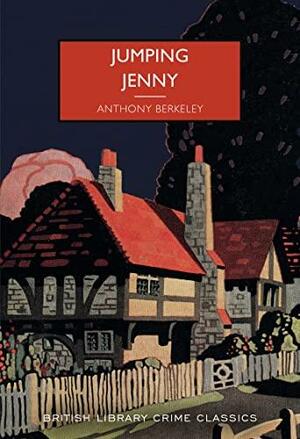
Jumping Jenny
Genres: Crime,
Mystery Pages: 240
Series: British Library Crime Classics Rating: Synopsis: At a costume party with the dubious theme of "famous murderers and their victims," the know-it-all amateur criminologist Roger Sheringham is settled in for an evening of beer, small talk, and analyzing his companions. One guest in particular has caught his attention for her theatrics, and his theory that she might have several enemies among the partygoers proves true when she is found hanging from the "decorative" gallows on the roof terrace.
Noticing a key detail that could implicate a friend in the crime, Sheringham decides to meddle with the scene and unwittingly casts himself into jeopardy as the uncommonly thorough police investigation circles closer and closer to the truth.
Anthony Berkeley’s Jumping Jenny shows both his playfulness with the expectations of the genre and his tendency toward misogyny, making it an interesting read that’s also pretty darn frustrating. The man had a problem with women, and a fetish about spanking them to “fix” them, and this wasn’t quite as obtrusive as in some of his books, but did flit in and out of the story.
It doesn’t help that I don’t like Berkeley’s “detective”, Roger Sheringham, at the best of times — and here he’s suspecting everyone of murder except the right person, and trying to shield everyone from looking like murderers, while getting everything absolutely wrong and making everything worse. The structure amuses for a while, but it starts to really get frustrating.
In the end, “interesting but not enjoyable as a whole” would be my verdict, even without Berkeley’s misogyny.
Rating: 2/5 (“it was okay”)
Tags: Anthony Berkeley, book reviews, books, British Library Crime Classics, crime, mystery
Posted November 4, 2025 by Nicky in Reviews / 2 Comments
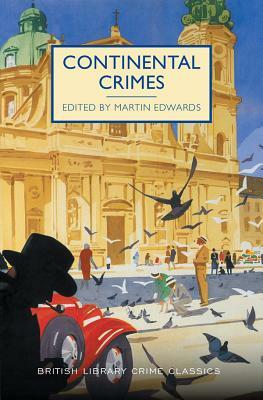
Continental Crimes
Genres: Crime,
Mystery,
Short Stories Pages: 352
Series: British Library Crime Classics Rating: Synopsis: A man is forbidden to uncover the secret of the tower in a fairy-tale castle by the Rhine. A headless corpse is found in a secret garden in Paris--belonging to the city's chief of police. And a drowned man is fished from the sea off the Italian Riviera, leaving the carabinieri to wonder why his socialite friends at the Villa Almirante are so unconcerned by his death.
These are three of the scenarios in this new collection of vintage crime stories. Detective stories from the golden age and beyond have used European settings--cosmopolitan cities, rural idylls and crumbling chateaux--to explore timeless themes of revenge, deception, murder and haunting.
Including lesser-known stories by Agatha Christie, Arthur Conan Doyle, G.K. Chesterton, J. Jefferson Farjeon and other classic writers, this collection reveals many hidden gems of British crime.
Continental Crimes is a collection of classic/Golden/Silver Age crime stories from British writers but set in Europe, and is edited as usual by Martin Edwards. It actually contains a Christie story, which is rare for the series (though Parker Pyne is a fairly meh detective), along with a non-Holmes Arthur Conan Doyle… but. I’m afraid it got a bit boring, and e.g. the Reggie Fortune story chosen was almost incoherent and had an absolutely infuriating number of random exclamations from Reggie (“my aunt!” etc etc).
It’s a fun idea for a collection, and they weren’t all duds, but the overall effect is fairly uninspiring. Despite the convincing line-up of authors, the stories just don’t sparkle, so it feels pretty stodgy.
Might be better reading one at a time/spacing them out, or just dipping in for the ones that sound interesting.
Rating: 2/5 (“it was okay”)
Tags: book reviews, books, British Library Crime Classics, crime, Martin Edwards, mystery
Posted October 20, 2025 by Nicky in Reviews / 2 Comments
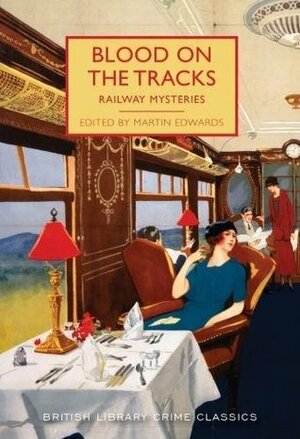
Blood on the Tracks
Genres: Crime,
Mystery,
Short Stories Pages: 288
Series: British Library Crime Classics Rating: Synopsis: “Never had I been given a tougher problem to solve, and never had I been so utterly at my wits’ end for a solution.”
A signalman is found dead by a railway tunnel. A man identifies his wife as a victim of murder on the underground. Two passengers mysteriously disappear between stations, leaving behind a dead body.
Trains have been a favourite setting of many crime writers, providing the mobile equivalent of the “locked-room” scenario. Their enclosed carriages with a limited number of suspects lend themselves to seemingly impossible crimes. In an era of cancellations and delays, alibis reliant upon a timely train service no longer ring true, yet the railway detective has enjoyed a resurgence of popularity in the twenty-first century.
Both train buffs and crime fans will delight in this selection of fifteen railway-themed mysteries, featuring some of the most popular authors of their day alongside less familiar names. This is a collection to beguile even the most wearisome commuter.
Blood on the Tracks — edited by Martin Edwards, as usual for the British Library Crime Classics series — is a collection of stories on an apparently very specific theme: railway mysteries. And yet there’s plenty, and several novels as well that one can point to (more than one by Agatha Christie alone, as I recall!), so it’s definitely a worthy theme.
As ever, there were some stories that spoke more to me than others, but overall it’s a collection I enjoyed, including the Holmes pastiche by Knox (despite being often wary of Holmes pastiches). Reading E. Bramah’s story featuring Max Carrados made me almost resolve to write to the lecturer back at university who refused to include more diverse characters like disabled detectives/characters in the course material (“what’s next, animal detectives? This would be really scraping the barrel”) — Max Carrados being, of course, totally blind. These collections are really fun for how they dig for forgotten stories and bring them back to light.
Overall, one of the most fun collections; not just interesting because I’m interested in the genre, but with stories I enjoyed in and of themselves.
Rating: 4/5 (“really liked it”)
Tags: book reviews, books, British Library Crime Classics, crime, Martin Edwards, mystery, short stories
Posted August 23, 2025 by Nicky in Reviews / 0 Comments
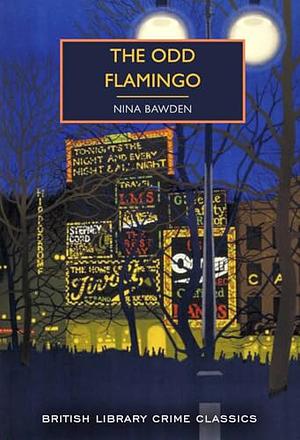
The Odd Flamingo
Genres: Crime,
Mystery Pages: 256
Series: British Library Crime Classics Rating: Synopsis: Rose has news for Celia – she is due to have a baby by Celia’s husband, Humphrey. Soon after, the seeds of scandal bear a criminal fruit when a body is discovered in Little Venice along with Rose’s handbag. Celia drafts in an old flame, Will, to root out the truth from suspicions of murder and blackmail, as the evidence starts to converge on the patrons and strange goings-on of the seedy Chelsea club, ‘The Odd Flamingo’. First published in 1954, this was one of two gritty and atmospheric crime novels written by the accomplished children’s author Nina Bawden.
I knew of Nina Bawden because I read Carrie’s War in university — I think for the children’s literature class I took? I hadn’t expected to see a book by her from the British Library Crime Classics series, that’s for sure.
The Odd Flamingo turns out to be a noir-ish and rather grubby story, in which few (if any) people are genuine or trustworthy. Bawden carefully gives us the hero worship the main character has for his friend Humphrey, and his idealisation of a young girl, Rose, who seems fresh and innocent… and then carefully spends the whole book tearing it down.
It’s pretty weird as a mystery/crime novel, because the main character doesn’t really get very far in solving anything, and the interest (depending on your tastes) is more on the character studies. I found it overall pretty unpleasant, and while I could admire the craft, it wasn’t what I usually hope for in classic crime. (Which is fair enough for the series, to be clear: even “classic crime” as a concept contains multitudes!)
It’s an interesting read, but not one I enjoyed in and of itself.
Rating: 2/5 (“it was okay”)
Tags: book reviews, books, British Library Crime Classics, crime, mystery, Nina Bawden
