Tag: J.R.R. Tolkien

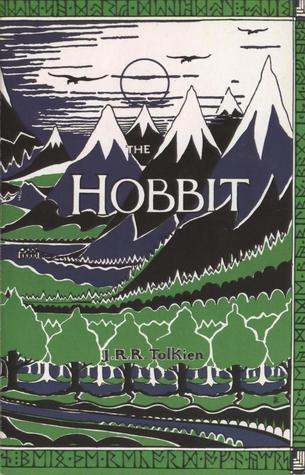
Review – The Hobbit

Posted September 24, 2014 by in Reviews / 9 Comments

Cover of The Hobbit, by J.R.R. TolkienThe Hobbit, J.R.R. Tolkien

Yesterday — or, by the time this goes live on my blog, the day before yesterday, the 22nd — was Bilbo and Frodo’s birthday, so naturally that constituted the final bit of excuse I needed to reread Lord of the Rings. And it never quite feels right without starting with The Hobbit. It doesn’t have quite the same cleverness that I enjoy with Lord of the Rings — Tolkien hadn’t come up with, or didn’t see the need to explain, his complicated text provenances, for example — but I still enjoy the narration, the sense of being told a story, and the fact that he expects you, dares you, to be on the ball. As a kid, I didn’t notice some of the flaws in Bilbo’s plans at all, but Tolkien’s narration gives you the benefit of the doubt there. Self-deprecating, almost.

I think the reason I dislike the Hobbit films so much is because they are adapting the book I love to blend with the films they’ve made already. I can see why they’re doing that, and why people enjoy it, but I don’t feel the desperate need to rationalise the difference between the tones of the two books. I like my dwarves goofy, the hero’s journey a little less blatant; I like that Bilbo makes his way through all the adventures because he’s a hobbit, with hobbit-sensibilities, not just a hero in hobbit form. I love that hobbits are basically Tolkien taking aspects of himself and letting them run around in this fantasy world without the illusion that of course he’d be the heroic type. It’s still wish fulfilment, but it’s a kind of wish fulfilment where the hero probably would be better off as a grocer or something else quiet, and manages despite that.

I mean, I bet a very small percentage of self-insert fanfics have the sense to admit that in reality, they’re more like the hobbits than the typical heroes. I really enjoy that Tolkien quite blatantly did that with his layers of authorship and the characteristics of hobbits as a race, and didn’t give in to the urge to over-romanticise it — while still making hobbits endearing, funny, brave, worth reading about, still pulling out aspects of character from even the most countrified bumpkin that could make them a hero.

And, let’s be honest, I just don’t understand people who don’t see the skill in Tolkien’s writing, in the way he builds up the world. Even here, where it isn’t taking the main character very seriously, he still takes the world seriously, shadowing it with the threat of the Necromancer, the Ring, the great alliances of the orcs — hinting at twisted dwarves and the complicated history of the elves, deftly bringing in little bits of lore so that they’re natural when we come to them in The Lord of the Rings. Not because he was planning it, but because he knew his world and knew how to show it to the reader.

Rating: 5/5

Tags: , , ,

Divider

Seven Deadly Sins (of reading)

Posted August 10, 2014 by Nicky in General / 4 Comments

Quite like this meme which I lifted from Leah @ Uncorked Thoughts.

GREED – What is your most inexpensive book?

Well, aside from all the freebies, bookmooched stuff, etc, I think it’d have been something from a charity shop. I have a copy of Raymond E. Feist’s Magician that cost me 20p, for example. (Why I bought it when I already own it in paperback and ebook is a mystery I’ll leave for you to ponder.)

WRATH – What author do you have a love/hate relationship with?

Philip Palmer. The books of his I’ve loved, I’ve really loved (despite having giant problems with them, in some cases). And then two of his other books were so meh I wanted to shake him.

GLUTTONY – What book have you devoured over and over with no shame?

The Lord of the Rings, of course. Well, and The Hobbit; they come as a pair for me, really, but I’ve probably read The Hobbit more, since Mum wouldn’t let me read LOTR until I was old enough to appreciate it. I could pretty much start it again once I’ve finished it; it’d have to go with me to a desert island.

SLOTH – What book have you neglected reading due to laziness?

An awful lot of books. One example… Juliet Marillier’s Daughter of the Forest. I’ve had it on my shelves for ages now.

PRIDE – What book do you talk most about to sound like an intellectual reader?

I don’t think I do that much. Maybe Tolstoy’s War and Peace? Which I honestly do love, though. I’d rather show you how smart I am by telling you all about how Tolkien used his sources in The Lord of the Rings, for all that it’s looked down upon by some “intellectuals”. He was a clever, clever man.

LUST – What attributes do you find attractive in male or female characters?

In any characters, male, female or otherwise, it’s compassion and loyalty. I am gaga for the stupidly loyal ones.

ENVY – What book would you most like to receive as a gift?

Other than a first edition of LOTR? Honestly, I’m not too acquisitive about books in that sense — I’m not envious of the books other people have, generally. Sometimes there’s an ARC that makes me flail — like, I missed out on Kim Curran’s Delete when it was on Netgalley, since I expected to be able to buy it soon after, except then there was Strange Chemistry’s demise… Now I’m jealous of everyone with a copy.

Tags: , , ,

Divider

Top Ten Tuesday

Posted July 29, 2014 by Nicky in General / 10 Comments

This week’s Top Ten Tuesday is “how many books do you own the most from”. I’m gonna be totally unscientific here and just take some wild guesses.

  1. Jo Walton. I own all her books, often in several formats. I think this one’s a safe bet.
  2. Ngaio Marsh. I have all those omnibuses. Omnibii?
  3. Robin Hobb. I’ve been reading everything she writes since I was, uh, thirteen ish?
  4. Guy Gavriel Kay. Again with the multiple formats.
  5. Ursula Le Guin. I don’t own everything she’s done, and I don’t usually have multiple copies, but I think she might still outnumber eveeeryone else. She’s just so good, I’m willing to try anything she’s done.
  6. Steven Brust. This is Jo Walton’s fault. I haven’t even read most of them yet.
  7. Tanya Huff. This is a guess, but I’m pretty sure I’m right. I’ve bought most of her books, though I haven’t read them all yet.
  8. J.R.R. Tolkien. Everything bar the twelve volume history of Middle-earth, I think. Multiple editions.
  9. The Gawain-poet. Whoever he (or she?) was. I own so many translations — probably at least nine?
  10. The Beowulf-poet. I’m not quite as big a fan as I am of the Gawain-poet, but still. I’ve got a facing translation one, Heaney’s, Tolkien’s… the list goes on.

So, what about everyone else? Strangely, Dorothy L. Sayers does not make the cut, because I borrowed my copies to read.

Tags: , , , , , , , ,

Divider

Top Ten Tuesday

Posted May 28, 2014 by Nicky in General / 8 Comments

It’s apparently a freebie week for Top Ten Tuesday, hosted by The Broke and The Bookish. I saw someone else talk about the top ten books/series they want to get round to rereading if they have time, which sounds like a good idea. I’m a chronic rereader, with some favourites I never get tired of, but I feel guilty doing it because I have so much I should be reading already!

  1. Robin Hobb’s Realm of the Elderlings series. I’m actually trying to work on rereading this, since I have the new one as an ARC, but there’s so many books out there, it’s hard to find the time. I remember being utterly enchanted back when I first read the books, though, so I hope the shine hasn’t worn off.
  2. Tanya Huff’s The Fire’s Stone. I just recall finding this one really fun, and enjoying the romance plot.
  3. Cherie Priest’s Cheshire Red books. I love these. I have them to reread, it’s just getting round to it. Adrian is the most badass ex-navy SEAL drag queen you could wish for, and I love the unconventional family Raylene builds up around herself.
  4. Jacqueline Carey’s Kushiel series. I ate these up the first and second time, but it’s been a while now. I’m looking at the new, cheap editions as ebooks and thinking it might be about time. I’m not a big fan of Imriel’s series, but I adore Phèdre and Joscelin, and the politics of it all. “I’ll be damned in full and not by halves” is one of the more memorable quotes in any book I’ve read.
  5. Jo Walton’s Sulien books. Plus A Prize in the Game, which isn’t strictly about Sulien. Asexual protagonist who is a kickass woman in the Arthurian world, what’s not to love? Plus interesting relationships with the people around her. I remember this really fondly.
  6. Robin McKinley’s Sunshine. There’s something about Sunshine and the unrelated Chalice that pull me back again and again. It’s the characters, I think, the way people interact, the way magic works. And the focus on homely things as well, like Sunshine baking and the heroine of Chalice keeping bees.
  7. Guy Gavriel Kay, The Lions of Al-Rassan. Well, actually all of his books (I’m revisiting them in publication order, to watch the development of his style), but especially Lions because I think that’s the only one apart from Under Heaven and the latest that I haven’t read at least twice, and I invariably appreciate GGK’s work more on the second go.
  8. J.R.R. Tolkien, The Lord of the Rings. This is more or less a permanent state of being for me. Having studied the books, I can see so many more layers and bits of interest than I ever did before. It’s also interesting because I’m exploring the world via a different medium, in Lord of the Rings Online, which no doubt will make me pay attention to different details.
  9. Joe Abercrombie’s First Law trilogy. I have the ebooks, all ready for a reread, it’s just getting round to it. I remember enjoying these books a lot, and my partner’s just recently read them and feels the same, so I have high hopes.
  10. Bernard Cornwell’s Warlord Chronicles. I loved Cornwell’s take on Arthur and his men, and this is another case where I’ve bought e-copies for my collection and for an excuse to reread, and… am taking forever to get round to it. Well, hopefully not forever.

So, what interesting top tens are you seeing around, people? Any you’d like to see me do?

Tags: , , , , , , , , , ,

Divider

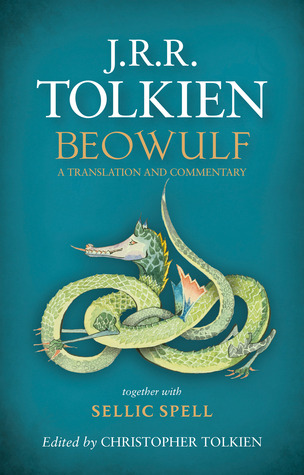
Review – Tolkien’s Beowulf: A Translation and Commentary

Posted May 23, 2014 by Nicky in Academic, Reviews / 2 Comments

Cover of Beowulf trans. J.R.R. TolkienBeowulf: A Translation and Commentary, J.R.R. Tolkien, ed. Christopher Tolkien

I’m full of wonder right now. Not so much at the translation of Beowulf — Tolkien was well-versed in the language and knew what he was doing, and the tone is often reminiscent of The Lord of the Rings, which emphasises his attempts to weave his own stories with the old stories of England — but at all the commentary published together here. Pretty much every issue I considered in my undergraduate class/es on Beowulf is touched on here — the pagan aspects, the episodes, potential interpolations, mythic and historic origins — and dealt with in a confident, convincing way. Tolkien’s close reading of the text is exemplary. I don’t feel like I have the knowledge to criticise his work, but I do know that it’s incredibly worth reading.

As with most of the other posthumously published work by Tolkien, though, this isn’t really something for the layman. It’s not exactly technical, but in delves into the minutiae so much. For a translation of the poem for an interested but not greatly knowledgable layman, I’d still recommend Seamus Heaney’s translation as lively, well-considered and interesting. For commentary on the poem, general introductions are still enough. But for anyone who is more deeply interested in Beowulf, then this is an amazing resource. His treatment of the plot of the poem as a short story, ‘Sellic Spell’, doesn’t entirely convince me as a precursor story to Beowulf (it rings very strongly of fairytales, to me, and not so much to a sort of mythic background) but is interesting nonetheless.

In terms of fans of Tolkien’s fiction as well as or instead of his academic work, there are gems here for us too. His translation of Beowulf really emphasises the Beowulfian elements in The Hobbit, and the way he phrases things, though slightly more archaic, is definitely familiar. His commentary mentions words you might recognise from his novels — maþm, OE ‘gift’, for example, as long as you remember that þ = th…

All in all, this may be because of my personal interests and the fact that I have done some academic work on Tolkien, but I think this is generally more valuable than most of the other work brought out posthumously by Christopher Tolkien, and I found CT’s editing most logical and less of a barrier here than ever since The Silmarillion. I got very excited about it, and while I got an ebook to have it right away, I will shortly obtain a hardcover for my collection, and count it worth it.

Tags: , ,

Divider

Top Ten Tuesday

Posted May 20, 2014 by Nicky in General / 4 Comments

I haven’t done the Top Ten Tuesday thing for a while, a meme hosted by The Broke and the Bookish, but I like this topic — top ten books about friendship.

  1. A Wizard of Earthsea, Ursula Le Guin. The friendship between Ged and Vetch, the quiet solid thereness of it… you know for sure that Vetch would never let you down if he could help it.
  2. The Lord of the Rings, J.R.R. Tolkien. I actually thought of this because they’ve got it in their list, but it’s still true. Frodo and Sam, Legolas and Gimli… even, in a way, Frodo and Gollum, because Frodo manages to reach out with pity and sympathy to Smeagol.
  3. The Prize in the Game,Jo Walton. Ferdia and Darag. “Your name in my heart,” indeed. (Okay, there’s romantic aspects to that, but I think first and foremost they’re friends.)
  4. The Grey King, Susan Cooper. Bran and Will. The way they fit together, understand each other better than anyone else, and the way they still hurt each other because neither of them is perfect.
  5. Captain Marvel, Kelly Sue DeConnick. Carol and Steve! Carol and Jessica! Carol and Monica!
  6. Captain America: The Winter Soldier, Ed Brubaker. Steve and Bucky. Just, Steve and Bucky. I know this is a movie quote but, “I’m with you till the end of the line.”
  7. The Summer Tree, Guy Gavriel Kay. Paul and Kevin, primarily, although all the bonds between the group are great. Kim and Jennifer, particularly. Just the way there are these deep loves that come entirely out of friendship. Guy Gavriel Kay is also pretty good at this in other books, too, like Tigana.
  8. The Universe Versus Alex Woods, Gavin Extence. Alex and Mr. Peterson. So unlikely, and yet Extence made me believe in it.
  9. Sword at Sunset, Rosemary Sutcliff. Arthur and Bedwyr. Ouch, ouch. “I could have cried out to him, as Jonathan to David, by the forbidden love names that are not used between men; I could have flung my arms around his shoulders.”
  10. Good Omens, Neil Gaiman. Crowley and Aziraphale. Because of course.

I am a little bothered by the fact that almost all of those are male friendships. It’s partly a function of the books I’ve loved since I was a kid, before I was really choosy in any way about what I read, but still. Rec me your books with female friendship!

Tags: , , , , , , , , , ,

Divider

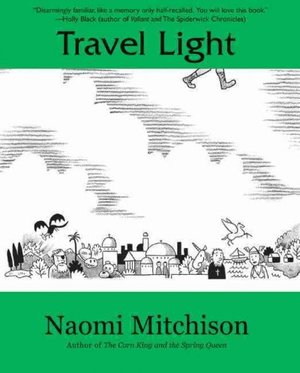
Review – Travel Light

Posted January 3, 2014 by Nicky in Reviews / 4 Comments

Cover of Travel Light, by Naomi MitchisonTravel Light, Naomi Mitchison

I came across this because of Amal El-Mohtar’s NPR review; the idea of a book in dialogue with Tolkien, by one of the women around him who he encouraged and listened to, definitely appealed: I think just recently I was asking if anyone’s written anything about Tolkien’s female students, about whom I know very little except that I’m sure I have been told they existed. (Time for a woman to write a biography of Tolkien? Move over, Humphrey Carpenter, Tom Shippey?)

And this book delivered. It is rather slight — it’s short, and on first glance, rather fable-like. Naomi Mitchison resisted any urge to insist on a moral, though: while there are religious people in the story, and Hella’s travelling light seems a virtue in her, there are good people who struggle with faith, good dragons who keep out of the gods’ way, and though for a while it looks as though there might be a moral about Christianity in there, then there’s also a bit of a wry look at the church in Constantinople, and it ends with some more Norse mythology. I don’t think she honestly ever pushes any moral except finding your way through life and being good to people and creatures, and in the meantime she has an intriguing wander through different cultures and traditions.

Mitchison is a lot less sure than Tolkien about the period and the people she wants to write about, I think. Tolkien talked about creating “a mythology for England”, and I’ve argued elsewhere that Susan Cooper succeeds, but I don’t think Mitchison is as rooted in a place, an idea. Like her protagonist, she’s willing to wander. I wonder what a difference it’d have made to genre fiction now if Mitchison had a greater role, and Tolkien a lesser? Maybe we’d have less to worry about from the constant onslaught of medieval European fantasy.

It won’t scratch the same itch as The Hobbit and Lord of the Rings, for sure. It’s a different sort of story — if you’re a fan of Le Guin, perhaps, it’s more like the stories of Earthsea. Or it’s like a more fantastical, more female Rosemary Sutcliff. Don’t read it for The Hobbit 2.0 — it’s something all its own.

Oh, and it can be quite amusing, too: Dragon Economics 101…

Tags: , , , , , ,

Divider

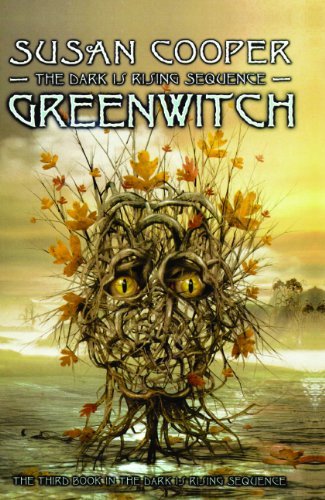
Review – Greenwitch

Posted December 23, 2013 by Nicky in Reviews / 5 Comments

Greenwitch by Susan CooperGreenwitch, Susan Cooper

Greenwitch isn’t really my favourite book of the series, though it is the one with the most mystery — I wonder a lot about the background mythology, the legends of Cornwall that the Greenwitch brings to life and what lies behind each glimpse of part of a story. It occurred to me last night while reading that maybe Susan Cooper has come closer than Tolkien to a “mythology for England”. Granted, he’s closer if you’re looking at England as “the land under the rule of the Anglo-Saxons”, but Cooper has touched on the legends of the land, the real stories that matter, rather than inventing a quest and a ring. Her quests come organically out of the mythology she’s using, and the places where she joins on her own are pretty seamless.

(Tolkien has created a world of his own, I think, and people often put too much emphasis on the “mythology for England” stuff. I don’t mean to do that: whether or not he meant to achieve that, what he achieved in the end was great. I just think the idea of a mythology for England is maybe actually achieved by Cooper.)

Greenwitch also features one of the things I love most about this series — the characters. They’re people. Simon and Barney are good-hearted boys who get jealous and possessive when another boy of a similar age seems to encroach on their time and their friends. Captain Toms, an Old One of the Light, gets laid low by gout. And I liked that the Dark is personified in a single character, this one time — not as the tide of the Dark, but as a single man of the Dark. We see hints of individuality there; his bitterness when he says “I have no friends”, his genuine artistic talent. It’s another of those moments where I think the black/white Dark/Light dichotomy cracks a little.

There are also some gorgeous passages in this book about the beauty and danger of the sea, the amoral and uncaring world of the Wild magic (and then, again, that hint of the Greenwitch as a child, as a lonely creation in need of something to hold on to, of kindness).

Tags: , , ,

Divider

Books that define me

Posted December 20, 2013 by Nicky in General / 0 Comments

I’ve talked about books I reread, and authors for whom I will read anything they produce, which must go some way towards helping even the casual reader get to know me. But when I was thinking about possible posts for this blog, I wandered off into thinking about books that I’d give people to help them understand me — not non-fiction books, which would be too easy, but the fiction books which have shaped me or given a voice to something in me.

So I’ve come up with a little list of five and some explanations; you may also see these as recommendations.

  • There’s a Hippopotamus on Our Roof Eating Cake, Hazel Edwards. If there’s a book that defines my whole childhood, I guess this is it. As far as I was concerned, there was a hippo on my roof too, and if there wasn’t, there should be. (And a giraffe in the garden.) My life is still filled with teddies, many of them hippos, and I keep a copy of this book in sight of my desk. And there’s still a hippopotamus on my roof, although sometimes now he worries about his weight, and trades in the cake for a diet of mushrooms. (Why mushrooms? That’s another story.)
  • The Hobbit, J.R.R. Tolkien. I probably love The Lord of the Rings more than The Hobbit, but this is the book that enchanted me when I was a bit too old for Cat and Mouse or hippos on the roof. I could’ve read this endlessly, and often did. I remember one night when my parents were particularly determined to make me go to sleep, and I was equally determined not to, I read this book by the light of the streetlights down past the end of our garden, shining in just a little through my window. My imagination became full of dragons and trolls, and dwarves and gold, and wizards. And they’ve never left me either.
  • The Positronic Man, Isaac Asimov. Once upon a time, my mother got me some Asimov books out of the library on her account, because they wouldn’t let me into that section and I’d read everything they didn’t drag out of my clutching little hands. I have no idea what the library fine was when I finally allowed her to take this one back, but it’s fair to say it was probably the most epic fine I’ve ever wracked up — and I did manage some epic ones in university. I loved Andrew and his struggle to become human, and still do, even if I’d happily move the other way. Also, Andrew’s struggle for his rights, for the respect of the people around him, certainly speak to me now on a level I wasn’t aware of back then. I had no idea at that age that civil rights would become an issue for me, or that they were an issue for people like me.
  • The Dark is Rising, Susan Cooper. I didn’t read this until I was about fifteen, sixteen, despite what everyone expects when they see my battered to death copy. I reread it just about every year, around this time; it seriously got under my skin. It’s magic with consequences: Will is an adult and more than an adult in a child’s body; Bran is isolated, motherless, starving for love; the Drews grow up over the course of the books; John Rowlands loses the love of his life, learning that she’s not the woman he thought she was… Things don’t really come alright at the end. And, of course, it draws on some of my heritage, Welsh legends, and deals with some of the tensions between Welsh and English. And there are themes about racism and bigotry, and some amazing passages about all sorts of things from justice to Englishness to responsibility.
  • Among Others, Jo Walton. I read this and thought, this is me. Of all these books, if you want to get to know me, this is the most important. Sure, there are ways in which I’m very unlike Mori, but her love affair with books, her thirst for them, some of the Welsh/English issues going on, many of the things she’s dealing with… I recognise them. For Christmas, I gave each of my ex-housemates a copy of this book. On reading the back, they all mentioned the immediate parallels between me and Mori…

Honourable mentions go to Enid Blyton’s Tales of Brave Adventure (I owned two much-loved, faded copies: one my father’s, one my mother’s), C.S. Lewis’ Narnia books, and Rosemary Sutcliff’s The Eagle of the Ninth.

And, perhaps surprisingly even to my mother, the old chapter-a-day retelling of the Bible for children which I had. I’m not a Christian, but I still think that a lot of the goodness in me, I learnt there.

Tags: , , , , , , , ,

Divider

Auto-read list

Posted November 11, 2013 by Nicky in General / 14 Comments

A friend, Lynn, posted a link to and her version of an interesting question at SF Signal a few days ago, and I thought I’d join in as well.

We all have authors whose work, for whatever reason, inspire us more than the rest, whose books standout and can always be counted on to entertain, and even to comfort. These are the ones that we’ll instantly forgive a misstep or two (maybe even three), because we love them that much, and will buy, and read, anything that they write. So, we asked our panel…

Q: What authors are on your autoread list, and why?
I’m going to discount deceased authors, for this, otherwise you’d just get it filled up with Dorothy L. Sayers, J.R.R. Tolkien, Rosemary Sutcliff, and Raymond Chandler. Which in itself probably tells you a lot about me, but hey. To stick to the rules, I will also put Iain M. Banks in this group, although I haven’t read all of his work yet and haven’t quite adjusted to the idea that there will be no more.

  • Ursula Le Guin: I haven’t found all of her work memorable, and some of it I wouldn’t find worth rereading. Some of it I liked better on a reread than I did the first time. The thing with Ursula Le Guin is she’s willing to critique her own work in a way that inspires me: both in essays and by developing her themes further. The whole Earthsea sequence can be seen as a dialogue with fantasy tropes of male power which she first just accepts and then begins to work against. Or in some of her non-fiction collections, she’s critiqued some of the decisions she made in The Left Hand of Darkness to do with portraying gender and sexuality. She’s already prone to writing about diversity, and she’s willing to look back at her work and say, “Nope, screwed that up.” Except much more elegantly. What’s not to love?
  • Gillian Bradshaw: I haven’t read all or even most of her work yet, but Island of Ghosts told me all I needed to know about her attention to detail, her ability to make the historical engaging. I guess she’s comparable to Rosemary Sutcliff in some ways, though her novels are aimed at an adult audience and therefore perhaps less accessible. I should actually buy Island of Ghosts for my mother sometime, if there’s an ebook or larger print edition, because I think she’d like it too. (1)
  • N.K. Jemisin: This is precisely no surprise for anyone who knows me. Jemisin’s work is glorious, with diverse characters, exciting plots and strong world-building. I actually have a recurring dream element where somewhere in a dream about something else entirely, I will see a new N.K. Jemisin book on the shelves and have to read it. I can never remember when I wake up what the plot was about, but even my dreaming brain knows it’s gonna be good.
  • Michael Wood: Yep, this is non-fiction. All of his books are accessible, but detailed and as far as I’ve ever heard, accurate. I remember reading two of his books about medieval England while recuperating from my cholecystectomy, and I could concentrate on them even then, yet they didn’t feel dumbed down.
  • Scott Lynch: I suppose really he needs to write a bit more before I can tell whether it’s the world he’s created that I adore, or his writing alone. But on the strength of The Lies of Locke Lamora and its sequels, I’m willing to try anything he writes, and I’ve enjoyed a short story or two as well.
  • Jacqueline Carey: Okay, so I have Dark Currents on my shelf and haven’t got round to it yet, but regardless, I will eventually get round to everything Carey writes. There are many and varied problems I could point to with her work, particularly with how she deals with races other than the D’Angelines in the Kushiel books, but her work is satisfying in so many other ways. In the Kushiel books, there’s that push-pull relationship between Phèdre and Joscelin, there’s all that delicious loyalty stuff going on with Joscelin, there’s the permissiveness of their world, there’s politics and intrigue… And though many people don’t like them, I love Banewreaker and Godslayer for taking Tolkien’s pretty morally strict world and spinning it so we can see another side. (2)
  • Robin McKinley: I love what she does with retelling fairytales, I love her female protagonists, I love her writing style. Sunshine and Chalice are my favourites, but I’ve found something to enjoy in nearly all her work. Exception: Deerskin. It’s incredibly well written and all the emotions are wonderfully evoked, but it’s not a fictional space I was at all comfortable in. In a way it treats sexual violence much more seriously than, say, Jacqueline Carey. (3)
  • Joanne Harris: I started out life as a Joanne Harris reader with snobbery about Chocolat, only to discover that actually it was very readable, well written, and I fell in love with the characters. Harris actually has a genius for narrators, but also for making everything she writes a very easy read. Which she wouldn’t like me saying, if I recall conversations from Twitter correctly, but ’tis true nonetheless: I find that her books don’t throw up resistance to reading, but are easy to immerse myself in and just read. Which is, at least to me, a compliment.
  • Neil Gaiman: Periodically I come across people complaining about his privilege, or his wife, or his attitude toward women. Often I think these people have some good points to make. Regardless, his books have a similar quality to Harris’ in that I’ve rarely come across a roadblock. Anansi Boys being an exception, firstly because it made me wonder if my dad was secretly Anansi, and secondly because I got far too embarrassed for the characters. (4)
  • Ed Brubaker: At least if it has the words “Captain America” on the cover.
  • Guy Gavriel Kay: His prose is beautiful, and he’s one of the few authors who can frequently move me to tears.
  • [Previously omitted] Jo Walton: She wrote a book that felt just perfect for me, like she’d written it for me — I’m speaking, of course, of her Among Others. She’s written in a lot of different genres: dystopian alternate history with a detective story in the Small Change books; dragons in an Austenesque society in Tooth & Claw; fantasy based around the home and relationships in Lifelode; alternate Arthuriana in The King’s Peace/The King’s Name… She’s a versatile author who has yet to write a book that I didn’t enjoy, and The Prize in the Game is one of those few books that moved me to tears.
(1) I have several measures of admiration for books: do I want to give them to my mother, my sister, my partner, or all three? Island of Ghosts is probably more a Mum book than anything.

(2) Carey’s Kushiel books would be a I will give this to everyone in the world recommendation if it weren’t for the overabundance of kinky, often violent, sex which can’t be skipped because sometimes it’s plot relevant and it’s usually emotionally relevant for Phèdre in some way. Mum, if you read these books, a) no you cannot borrow my copies, you’d damage their spines, b) for the love of god, I don’t want to know if you read them, c) yes I am a prude, d) I’m twenty-four, I really need to stop addressing parts of my blog posts to you like you get to approve or disapprove! I think you gave up trying to regulate my reading material by the time I’d chewed my way through two libraries at the age of twelve anyway.

(3) Mum — and Lisa, if you haven’t read it — Chalice.

(4) Thing about Anansi in Gaiman’s work: if he names something, that name sticks. This can be observed with my dad and the local wildlife, teddy bears, people, or whatever else you can think of. These names somehow spread beyond the immediate circle who should know about it, so that by some alchemy I am Squeak to people who’ve never met my dad and who I don’t recall telling that story to.

Tags: , , , , , , , , , , , , , , , ,

Divider