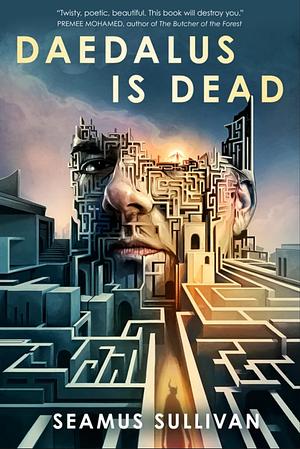
Daedalus is Dead
by Seamus Sullivan
Genres: FantasyPages: 176
Rating:

Synopsis:A beautiful and nightmarish story of fatherhood and masculinity, told through the intertwined fates of Greek mythic figures Daedelus, Icarus, King Minos, and the Minotaur.
Daedalus of Crete is many things: The greatest architect in the world. The constructor of the Labyrinth that imprisoned the Minotaur. And the grieving father of Icarus—plunged into the sea as father and son flew from the grasp of the tyrannical King Minos.
Given the chance to reunite with Icarus in the Underworld, Daedalus will confront any terror to see him again—whether it be the vengeful spirit of Minos, the cunning Queen Persephone, or even the insatiable ghost of the Minotaur.
But there's one terror he didn't expect. As he encounters the people from his life, Daedalus begins to worry that his identity as a husband and father, mentor and friend was all a lie. And that the truth, stalking him in the labyrinth of his own heart, might be too monstrous for him to bear.
Seamus Sullivan’s Daedalus is Dead is a fun one, which takes its full length to fully deliver the sting in the tail of the retelling (which I suspect is why people who DNFed feel it’s a run-of-the-mill retelling that doesn’t bring anything new to the story). In terms of the bones of the story, it doesn’t subvert the actual events too much: there’s a bull, there’s the wrath of the gods, there’s a monstrous baby and a labyrinth, and Daedalus escapes Minos with his son Icarus by shaping two pairs of wings with wax that softens when Icarus flies too high, leaving him to plummet into the sea.
It’s all told in Daedalus’ voice, addresses to his beloved Icarus, apparently the centre of his world. The love is palpable, an almost-obsession with Icarus and what he was like, what he did, why he died. Daedalus is willing to do anything to reunite with him, and we see him bargain with Persephone and reshape hell as he tries to earn the chance.
But through the story, we slowly get little details that make us stop and re-evaluate the good guy persona Daedalus is presenting to us: the treatment of Asterion, the callousness about the deaths of others, the obsession only with his own safety and that of Icarus. The knowledge that what he’s doing is wrong, and doing it anyway to save his own skin. The affectionate relationship with Ariadne, that gets split open later when we actually meet Ariadne… It becomes clear that we have a deeply unreliable narrator, and the whole thing hinges on a moment in which Ariadne identifies something that heroes have in common, that Daedalus too shares.
I won’t give any more spoilers than that — though it’s hard to talk about it in any detail without the acknowledgement of the unreliable narration, and the moments of fracture where you get to see what Daedalus is really like.
It’s a complex one, because the love for Icarus is clearly real: Daedalus will suffer to get to see him again. But how real? Is it love for Icarus, whoever he might have been and whoever he might become? Or is it love of his own legacy, love of someone he shaped, love of the idea of being a good and loving father?
We don’t get answers, as such. We’re left guessing. And that, spun carefully out through the whole novella until the whole of the problem is clear only in the closing pages, is why this is a good retelling.
Rating: 4/5 (“really liked it”)
