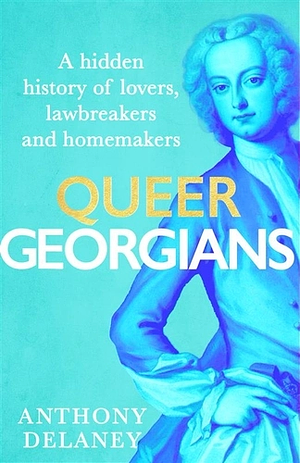
Queer Georgians: A Hidden History of Lovers, Lawbreakers and Homemakers
by Anthony Delaney
Genres: History, Non-fictionPages: 352
Rating:

Synopsis:In this dazzling work of restorative history, Dr Anthony Delaney has traced the stories of people daring to challenge society's expectations, unearthing archives and court records to reveal the tragedies and the joys of queer life three centuries ago. Breathing new life into the forgotten and offering radical new interpretations of celebrated figures such as Anne Lister, Queer Georgians is an invitation to view our shared history in a whole new light.
The celebrated Chevalier d'Éon, soldier, diplomat and spy, challenges a rival to a fencing match. The sweepstake is not over who will win, but whether the Chevalier is a man or a woman.
Mother Clap's Holborn coffee house is open to all comers, a place of companionship and community, until a tip-off leads to a midnight raid.
Two women, exiled from their families, set up a utopian homestead in a remote Welsh cottage, inspiring a generation of Romantic poets.
Anthony Delaney’s Queer Georgians sets out to tell the stories of various Georgian people who in various ways managed to live and love in an environment not friendly to queer experiences. Sometimes these stories aren’t what you might expect, where the people in question — the Chevalier d’Éon and Anne Lister, for instance — have become well known (at least in queer communities) and have had a narrative built up around them.
Some of that’s uncomfortable: Anne Lister was deeply manipulative, out to get control of her partner’s money, and by her own words she sometimes loathed Ann Walker in that process. The Chevalier d’Éon is far from a non-binary icon who slipped between male and female dress as pleased them, but rather someone whose gender presentation was forced upon them, sometimes to their distress. (I’m using neutral pronouns as it isn’t clear to me what they would have finally preferred if they had had any choices left, and I can’t exactly ask.)
Some of it is just sad, or sordid, too. But it all adds up to a world that was queerer than we sometimes think, in which queer people found ways to live authentically and get what they needed, and through their words and other evidence about them it becomes obvious that (though it shouldn’t be any surprise) there have always been queer people, trans people included.
I enjoyed it a fair bit, and though I didn’t check the endnotes myself (it’s just not my area at all), the author is forthright about sources and interpretations, and clearly did his own digging into the evidence in order to celebrate the truth of these queer Georgians. Definitely enjoyed it, even if it sometimes felt sad or uncomfortable. Warts and all, these people have been worth learning about.
Rating: 4/5 (“really liked it”)
