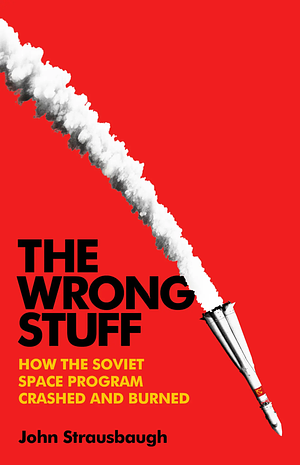
The Wrong Stuff: How The Soviet Space Program Crashed and Burned
by John Strausbaugh
Genres: History, Non-fiction, SciencePages: 272
Rating:

Synopsis:A witty, deeply researched history of the surprisingly ramshackle Soviet space program, and how its success was more spin than science.
In the wake of World War II, with America ascendant and the Soviet Union devastated by the conflict, the Space Race should have been over before it started. But the underdog Soviets scored a series of victories--starting with the 1957 launch of Sputnik and continuing in the years following--that seemed to achieve the impossible. It was proof, it seemed, that the USSR had manpower and collective will that went beyond America's material advantages. They had asserted themselves as a world power.
But in The Wrong Stuff, John Strausbaugh tells a different story. These achievements were amazing, yes, but they were also PR victories as much as scientific ones. The world saw a Potemkin spaceport; the internal facts were much sloppier, less impressive, more dysfunctional. The Soviet supply chain was a disaster, and many of its machines barely worked. The cosmonauts aboard its iconic launch of the Vostok 1 rocket had to go on a special diet, and take off their space suits, just to fit inside without causing a failure. Soviet scientists, under intense government pressure, had essentially made their rocket out of spit and band aids, and hurried to hide their work as soon as their worldwide demonstration was complete.
With a witty eye for detail and a gift for storytelling, John Strausbaugh takes us behind the Iron Curtain, and shows just how little there was to find there.
I gave serious thought to simply not finishing John Strausbaugh’s The Wrong Stuff by just 32 pages in. It was already apparent that he was completely incapable of giving the Soviet space programme a single word of praise, even for ingenuity with outdated and clunky tech (and ingenuity they certainly seem to have had).
As far as I can tell — having cautiously read on — he holds all those who worked for the Soviet space programme in contempt. It doesn’t matter if they were compelled or willing, whether they were frightened or fanatic, whether they lived or died. Rarely did I detect any hint of sympathy or admiration.
Now, I’m not saying the Soviet space programme should be above critique. It shouldn’t be (nor should NASA). And there were bodges and mistakes, and a great deal of luck, even behind their successes. That’s not in question. But the bias is so thick, and the sources so completely absent (aside from a “further reading” section, not even divided into chapters, there is absolutely no indication of any sourcing), that it’s impossible to trust.
It doesn’t help that he also snidely (and wrongly) dismisses Wally Funk’s flight, claiming she didn’t get into space. The Kármán line is at 100km; Blue Origin reached 107km in that flight, clearing the bar. Wally Funk went to space at last, and this smug dickhead couldn’t even look that up, claiming incorrectly that the flight peaked at 76km.
He’s also kind of a dick about Tereshkova. Not that she sounds like a delight (and not to excuse her politics), but then she wouldn’t sound like a delight, described like this.
All in all, I did gain an appreciation for the Soviet space programme’s bodgery and luck at some key junctures, wasn’t surprised by the general slipshod nature of the whole endeavour, and found Strausbaugh at best a jerk and poor researcher, and at worst, perhaps a propagandist liar still trying to fight the Cold War.
Rating: 1/5 (“didn’t like it”)
