Tag: discussions

Fantasy With Friends: Further Reading

Posted May 4, 2026 by Nicky in General / 6 Comments

Fantasy With Friends: A Disccusion Meme hosted by Pages Unbound

A new week, and a new Fantasy with Friends discussion post! The prompts are hosted at Pages Unbound, and this week’s is about fantasies that have inspired you to do further reading:

Has reading a fantasy book ever inspired you to do further research into something else? (ex. Read a classic the book is inspired by/read a history text/read nonfiction writings by the author/research a specific topic)

Almost certainly, but I’m having trouble dragging anything to mind! Tolkien’s an obvious one for me: I actually studied Tolkien for a taught module during my MA, and we read a lot of stories which were… “sources” is the wrong word, but “inspirations” and “patterns” that Tolkien borrowed little bits from and did tribute to in creating his world. I wrote the assignment on “Northern courage” in his work, so I was reading stuff like ‘The Battle of Maldon’, the Prose and Poetic Eddas, and also a lot of the posthumous volumes that got pumped out with his notes, letters, etc. But I don’t think that quite counts here, since it was for a class!

I guess one example that fits is Vivian Shaw’s Strange Practice, in which Greta Helsing (yes, a descendent of that van Helsing) is a GP, and tends to the medical needs of London’s supernatural community. The story features several famous public domain characters, like Lord Ruthven and Varney the Vampyre. I’d read a few of the source texts before and was on nodding acquaintance with some others, but I’ve sought out a few more since plunging into this series.

Other than that, I can’t think of any right now, but maybe I’ll have to edit some in if I remember. Definitely curious to hear what fantasy novels might have inspired others to go further afield and do some extra reading!

Tags: , ,

Divider

Fantasy with Friends: Future Classics

Posted April 27, 2026 by Nicky in General / 8 Comments

Fantasy With Friends: A Disccusion Meme hosted by Pages Unbound

Uhoh, Monday again! That snuck up on me. Once more it’s time for a Fantasy With Friends discussion post! The prompts are hosted at Pages Unbound, and this week’s is about contemporary fantasies that might be set to become classics:

What contemporary fantasy works do you think could become future classics?

Aaaand I’m pretty stumped. I feel like I have a better handle on it for SF, where e.g. Ann Leckie’s Imperial Radch books and Martha Wells’ Murderbot seem likely to stick in people’s minds. But though I read more fantasy than SF, I’m not sure — maybe it’s because I read more fantasy, and not just the standouts? And also maybe because I’m often running a little behind: due to mood reading, I’m not always reading the latest, though I’ve improved on that in the last year and a half.

But really, looking at my shelves at fantasy from the last decade or so, some of the books I thought were really great have already dipped well out of sight into backlists. I suspect as well as quality, there’ll be a degree of visibility required: books that have been pushed hard and made it onto a lot of shelves might have the sticking power in people’s brains because of the saturation of them. Maybe that means the early cosy fantasies like Travis Baldree’s Legends & Lattes will be considered the classics of the current time? Some of the romantasies?

My tongue’s a little bit in my cheek here, but given these books spurred a change in the genre/the solidification of a subgenre, that’s a reason they might genuinely survive, if the subgenre stays strong (even if it fades back into the background as other trends come along).

If I could pick what will become a classic, I think Marie Brennan’s A Natural History of Dragons and sequels would be good choices, Katherine Addison’s The Goblin Emperor, Nghi Vo’s Singing Hills novellas, some of T. Kingfisher’s (maybe Clockwork Boys?)… but sadly, I don’t get to pick. Which is probably good, because I know I must be forgetting many absolutely wonderful books that I’d absolutely endorse.

Still, I kinda like that question. If you could pick a contemporary fantasy to become a classic, just based on your own fondness for it, what would you pick?

ETA: Made slight updates to the wording to make it clear where I’m not entirely serious.

Tags: , ,

Divider

Let’s Talk Bookish: Climate Fiction

Posted April 24, 2026 by Nicky in General / 5 Comments

Graphic for Let's Talk Bookish, created by Rukky @ Eternity Books, Hosted by Aria @ Book Nook Bits and Dini @ Dinipandareads

Let’s Talk Bookish is a weekly bookish meme created by Rukky @ Eternity Books and co-hosted by Aria @ Book Nook Bits and Dini @ Dinipandareads! Every Friday they have a different topic for participants to write about and discuss, e.g. like this post.

This week’s prompt is as follows:

Climate fiction is an increasingly popular genre, and has grown from being seen as a sci-fi subgenre to a broader category of its own — its own literary prize even being established in 2025. Have you read climate fiction (‘cli-fi’) or books centred around environmental issues? Do stories about the climate or the environment make you feel hopeful, anxious, or something else? Do you think cli-fi can influence how people think about the environment?

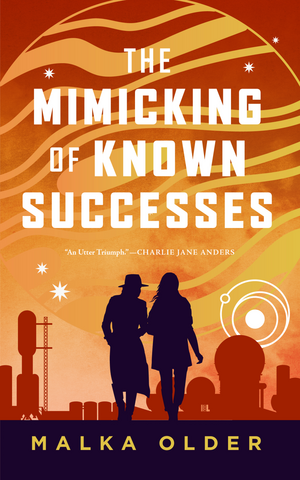
I haven’t really thought of it as a genre on its own, since most of my experience of climate fiction has been in science fiction (where it’s long been a concern, either covered in the main plot or just part of the worldbuilding). I’m not sure how much recent cli-fi that’s written solely as such I’ve actually read, but I’m thinking about stuff like N.K. Jemisin’s The Fifth Season (which is stunning though also horrifying) and A Psalm for the Wild-Built (which is really post-climate disaster and more soothing/hopeful). It haunts other stories, like Malka Older’s The Mimicking of Known Successes… this assumption that we ruined Earth, and had to leave.

(Even when this is for reasons other than climate change, I think it’s reflecting on the same anxiety about the outside impact humans can have on the planet, and it’s coming from the same place, linked with an anxiety about war and destructive weaponry.)

I think whether cli-fi makes me hopeful, anxious or angry is very much down to the book in question, but I think I’m a little bit inured to it because it’s been haunting the fiction I’ve read for so long. There’s a fair bit of science fiction which assumes we’re going to wreck the planet as part of the setup for why we’re out in space or on another planet, and I think that’s generally left a pessimistic mark on me when it comes to fiction.

Out in reality, I do what I can, so I don’t think that stops me — though it might have added to my cynicism about it, given many of the drivers of climate change are completely out of individuals’ control and in the hands of corporations. My small impact by using a renewable energy supplier, cycling and walking when I can, paying for carbon capture, investing in solar and wind farms, using sustainable products… it’s all tiny compared to the damage many corporations are doing.

I don’t really know whether I think cli-fi can make a difference. Given that scientists’ warnings don’t, I’m sort of pessimistic on that too — but then, fiction moves different levers sometimes. So, maybe? I’d be curious if anyone feels like it has for them!

Tags: , ,

Divider

Fantasy with Friends: Favourite Subgenres

Posted April 20, 2026 by Nicky in General / 4 Comments

Fantasy With Friends: A Disccusion Meme hosted by Pages Unbound

Happy Monday! Which means it’s time for the Fantasy With Friends discussion post for this week (prompts hosted at Pages Unbound). This week the prompt’s about favourite genres:

Do you have any favorite subgenres of fantasy such as urban fantasy, historical fantasy, etc.?

Sort of! There are subgenres/combinations of genres that will always draw my attention, but I don’t have exclusive favourites, and it’d probably take some working out from the books on my shelves, because I like to try a bit of everything. I think there are some people who find a subgenre they love and just revel in it for months/years/forever, reading little else, and that’s not me — I’m too restless for that and too prone to trying anything and everything I can.

(Which, to be clear, is not intended as a diss for folks who find a genre or a corner of a genre and get themselves entrenched! It’s just not for me.)

As for what draws my attention, I had to actually have a think about it, because it’s definitely been evolving. I think these are the top ones though:

  • Fantasy mysteries: I do get a little picky about this genre, because a fantasy mystery has to be careful if it wants to be a fair-play mystery (one where the reader has all the clues). People need to get enough background to the story to be able to theorise for themselves. Even when it’s not intended as a fair-play mystery, the reader shouldn’t be totally blindsided by stuff like special murder magic or something at the end of the story. Still, there are some very fun fantasy mysteries out there: Robert Jackson Bennett’s The Tainted Cup and A Drop of Corruption manage to give you enough detail to the world and magic that you can theorise for yourself, though they aren’t 100% fair-play. Katherine Addison’s The Witness for the Dead is pretty good at that as well. I recently snagged Oliver K. Langmead’s upcoming The Killing of a Chestnut Tree as an ARC exactly because it’s a pastiche of Sherlock Holmes in a fantasy world (and indeed loved it!).
  • Cosy fantasy: If anything, I’m even pickier here because sometimes “cosy fantasy” ends up all vibes and no substance, and even interpersonal interactions can get flattened down to keep things low conflict to the point that characters and relationships can end feeling cardboard. Sometimes the happy endings feel too easy to be real, as well. There are cosy/lower-stakes fantasy I’ve loved, though — Legends & Lattes, for example, and The Teller of Small Fortunes.
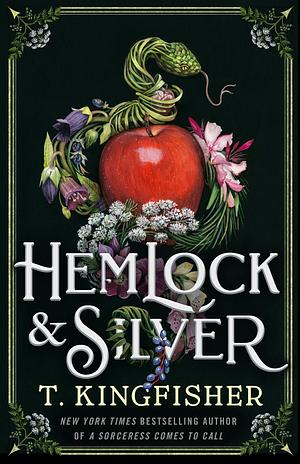
  • Retellings/reinterpretations: There are some ridiculously clever ones that are completely transformative, like T. Kingfisher’s Hemlock & Silver, which is very much a Snow White retelling, but is also full of inventiveness. The mirror monsters are an astounding idea. Shout out too to Jacqueline Carey’s spin on The Lord of the Rings, Banewreaker and Godslayer; it’s been so long since I read those I don’t think I have reviews to link, but which I loved — you wouldn’t think anyone could make Sauron the good guy, and that’s not exactly what Carey does, but you can see the influence. There’s also Jo Walton’s The King’s Peace and sequel, and The Prize in the Game… I’ve been meaning to reread these for quite a while, because they are reflections on Arthurian legends (and The Tain) while being wholly their own thing too. It’s really exciting when people do retellings of less-known stories, too: I’m currently reading Finn Longman’s The Wolf and His King, which retells Marie de France’s ‘Bisclavret’, and I love that.
  • Political fantasy: I read Kushiel’s Dart at an impressionable age, and I’ve often looked for similarly rich political intrigue ever since. The Goblin Emperor and The Hands of the Emperor are recent books that scratched the same itch, and I’ve just remembered E.J. Beaton’s The Councillor as well (and sadly learned that the sequel may never be published). In a slightly different way, The Traitor Baru Cormorant digs into this too, though I didn’t get into the follow-up books.
  • Historical fantasy: Books like Guy Gavriel Kay’s A Song for Arbonne and Sailing to Sarantium really left their fingerprints on me (and arguably Kushiel’s Dart falls under this heading as well, while many of Kay’s books have political scheming too, like Tigana). I do think this genre can tend to be a bit bland and conjure up a very single-note “history” (i.e. medieval European), so it’s also especially nice when someone goes beyond that (I’d gladly take recommendations on this front!).
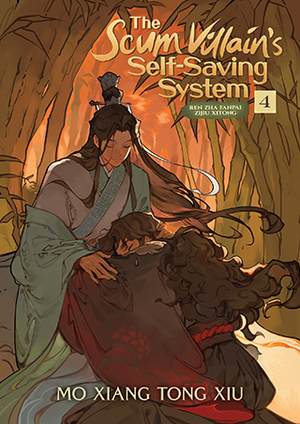
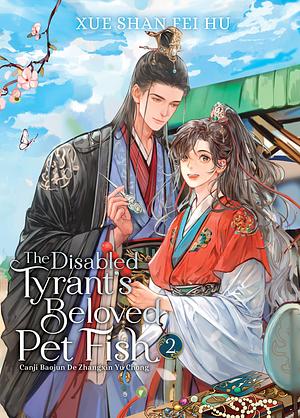
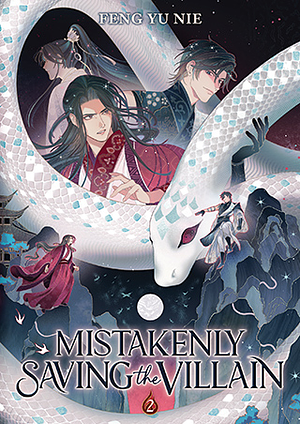
  • Xianxia and wuxia. I’m combining these because it’s a fairly recent interest of mine (though I’ve read a couple of wuxia-inspired novels here and there before), and mostly in the context of danmei and baihe (which I didn’t want to call a subgenre of fantasy because they don’t have to be fantasy). I have fallen totally in love with stories like The Scum Villain’s Self-Saving System, The Disabled Tyrant’s Beloved Pet Fish (though this isn’t quite xianxia, it’s adjacent) and The Beauty’s Blade, and I’m looking forward to reading more wuxia- and xianxia-inspired novels (like S.L. Huang’s The Water Outlaws).

Okay, I’m going to stop there, but it was fun to think about what exactly draws me in!

Tags: , ,

Divider

Fantasy with Friends: Definitions

Posted April 6, 2026 by Nicky in General / 5 Comments

Fantasy With Friends: A Disccusion Meme hosted by Pages Unbound

Aaand somehow it’s Monday again already, meaning Fantasy With Friends discussion time (prompts hosted at Pages Unbound). This week’s theme is about the definition of the genre:

How do you define “fantasy” as a genre?

The simplest answer I can think of is “a story that somehow pushes outside of our reality, in a way not intended to be explained by science” (which would put it more in the realm of science fiction). I think the conventional definition is usually that fantasy includes magic or supernatural elements, but I think that excludes some stories set in an alternative world that may not have magic, but definitely aren’t our world and read to me as fantasy (like Freya Marske’s Swordcrossed).

I was actually for a long time a member of an online book group called The Alternative Worlds: our interests were mostly sci-fi and fantasy, but alternate history (like Jo Walton’s Farthing) also fell into that, and I think that widened my definitions and shaped what I wanted from genre fiction a lot: alternative worlds, alternative ways of being, alternative ways things might have happened. For quite a while, I found the term “speculative fiction” more descriptive of what I’m interested in.

There are a lot of different subgenres of fantasy where different elements are more or less important, but for me being set in a world that doesn’t work quite like our own is what does it (though I wouldn’t argue that Farthing is fantasy in the traditional sense). That might mean adding magic to our world in hidden corners (like Caitlin Rozakis’ The Grimoire Grammar School Parent Teacher Association), by adding it into our world where it didn’t exist before (like Chugong’s Solo Leveling or singNsong’s Omniscient Reader’s Viewpoint), or by creating whole new worlds with different histories and belief systems (like Katherine Addison’s The Goblin Emperor or Victoria Goddard’s The Hands of the Emperor).

Inevitably the definition isn’t perfect and can get a bit porous: is horror fantasy? Sometimes it is, sometimes it isn’t. Buuut I think that’s a feature, not a bug: we needn’t get too rigid in our definitions, less we miss out on stuff that’s new and fun, or stuff that we’d love that’s just outside our clearly defined box. Humans like to define things very narrowly and it’s pretty much always more complicated than that, and things might be better if we could be better (as individuals and as a society) at noticing that putting things into clearly defined and separated boxes is only useful up to a point.

Tags: , ,

Divider

Let’s Talk Bookish: Novels in Verse

Posted April 3, 2026 by Nicky in General / 4 Comments

Graphic for Let's Talk Bookish, created by Rukky @ Eternity Books, Hosted by Aria @ Book Nook Bits and Dini @ Dinipandareads

Let’s Talk Bookish is a weekly bookish meme created by Rukky @ Eternity Books and co-hosted by Aria @ Book Nook Bits and Dini @ Dinipandareads! Every Friday they have a different topic for participants to write about and discuss.

I thought I’d try out doing some more discussion posts and getting more content than just reviews, after the slow years while I was studying (I can’t believe it’s already been like nine months since I finished my course, and my brain’s still recovering). So let’s give this one a shot, and today’s theme iiiis Novels in Verse:

Have you read any novels in verse? Do you think novels in verse can be more emotionally powerful compared to regular prose, or do you think novels in verse are more difficult to connect with? What kind of stories do you think work best in verse (i.e. coming-of-age, grief, romance, historical fiction, etc.)? What are your favourite novels in verse?

So let’s take that a bit at a time!

Have you read any novels in verse?

Yes, a couple. Not a lot, but I’ve read Dove Cooper’s Seafoam and Silence, and I know there’s some other verse novel that I’m forgetting… It’s been quite a while since I came across one that called to me, though, so I haven’t got any recent examples.

Do you think novels in verse can be more emotionally powerful compared to regular prose, or do you think novels in verse are more difficult to connect with?

Neither, really! I think both prose and poetry have their place, depending on the author and the story’s needs, and the reader’s inclinations. Poetry is great at really condensing stuff into a tight package, and that can sometimes be devastating, and sometimes it just won’t land, and that quite likely depends on the tastes of the reader.

I’d probably find I connect better with prose, personally; I like the space it can give an author to give me detail and time with characters, and find that verse often makes things tighter and sparser. Prose is like a broadsword and verse is a little rapier that goes in deep: both of them can be deadly, but I find the broadsword a tad more painful and there’s a fair bit more tissue damage. Sometimes there are moments when the rapier thrust straight to the heart is enough, though.

This analogy isn’t perfect, but I think you probably get where I’m going.

What kind of stories do you think work best in verse?

I suspect that anything could, in the right hands!

What are your favourite novels in verse?

I can’t really pick a favourite, since I remember so few! There’s one where the title’s just on the tip of my tongue that I wouldn’t mind revisiting my review of to see how much I liked it… but since I can only remember the vaguest details, I’m having trouble thinking of it, ahaha. I’ll be curious to see other people’s recommendations!

Tags: ,

Divider

Fantasy with Friends: Underrated Fantasy Books

Posted March 30, 2026 by Nicky in General / 6 Comments

Fantasy With Friends: A Disccusion Meme hosted by Pages Unbound

Aaand somehow it’s Monday again already, meaning Fantasy With Friends discussion time (prompts hosted at Pages Unbound). This week’s theme is about underrated fantasy books:

What is an underrated fantasy book you would recommend?

Which is a very tricky one, so I’m going to narrow it down and give you some recommendations for books in a fantasy niche: Arthurian retellings! These are all books/series I wrote about in my MA dissertation (oh so many moons ago) on the portrayal of Sir Kay and how it was influenced by the original Welsh Cai. I’ll admit I had an absolute ball doing this “research” and reading some obscure books… though I’ll also admit that there are still some Arthurian retellings lurking on my shelves unread that I acquired but didn’t read in time, and still haven’t got round to now the frenzied moment has passed, even though it’s been a decade and change. (Sorry, Parke Godwin! I hear good things!)

First up, one of the series that actually reignited my interest in Arthurian stories, and led to my focus on Gawain and thus, indirectly, to my interest in Kay — Sarah Zettel’s Paths to Camelot books. They have different titles in different countries, and even one protagonist (who has a Welsh name) is renamed for the American edition. Pretty gross, and changing “Rhian” to “Risa” is just bizarre, but at least she’s fictional!

The first book is Camelot’s Shadow, or in the US, In Camelot’s Shadow, and it’s ultimately a retelling of ‘Sir Gawain and Dame Ragnelle’ and ‘The Marriage of Sir Gawain’, and is probably my favourite. I must admit that I don’t know if I’d rate these books so highly absent nostalgia, but I did find a lot to say about the ways they play with the Arthurian legends. They fixed certain things I hated, looked on certain characters with a more sympathetic (or less sympathetic) eye, and I remember them with great fondness. NB: I’d say they are romances first and foremost, but also definitely fantasy, so there is magic as well as swordplay and eventual kissing.

Next up, Cherith Baldry’s Exiled from Camelot, which is so close to Arthur/Kay (and, to be fair, Gawain/Kay) romance that it prompted my dissertation supervisor to check with me that it wasn’t, indeed, going to go there. Nope, it doesn’t, it’s just so heavy with subtext that it practically drips with it, and pretty much the highlight of the book for Kay is being held in Arthur’s arms at the end. I’m not even joking. Regardless, it also does interesting stuff with interpreting the post-Welsh portrayals of Kay and presenting him sympathetically, and I had an absolute whale of a time with it, especially the time that I live-tweeted reading it with quotations.

Finally, and probably the best written of the bunch, I present to you Phyllis Ann Karr’s Idylls of the Queen. It’s a version of the Arthurian legends sympathetic to both Kay and Guinevere, and I’ve been meaning to reread it for a while now. I remember it as being a bit funny, a bit sharp, which is very Kay.

And just to be clear, none of these recommendations are for perfect books, and there’s a certain amount of nostalgia tinting my glasses rose pink as I write. These are just retellings I had fun with, which did interesting things with the stories, and sometimes showed me a new side to characters I hadn’t been interested in before… and which not a lot of people I know have read. If you try one of ’em despite my disclaimers and don’t like it, don’t blame me!

Tags: , , ,

Divider

Fantasy with Friends: Oz

Posted March 16, 2026 by Nicky in General / 9 Comments

Fantasy With Friends: A Disccusion Meme hosted by Pages Unbound

It’s Monday, so time once more for the Fantasy With Friends discussion meme (hosted at Pages Unbound). This week’s question is as follows…

Do you have a favorite interpretation of Oz? Do you try to fit the different adaptations together, or do you see them as separate entities? (Do you try to make Wicked make sense with The Wizard of Oz? And do you think of the book or the movie versions in those instances?)

I am not actually a huge fan of the Oz books, having only read the first and not really enjoyed the book version of Wicked — I thought it was okay, but I didn’t really feel the hype, I guess! I’ve also not been enough of a fan of any other adaptation to really gain a solid opinion here, to be honest.

That said, I do enjoy the musical version of Wicked, so I promise I’m not a dead loss. I’ve seen it live once with friends, before I really knew it, and since then the songs have been in regular rotation for me. I don’t really watch movies, though, so I haven’t even seen those…

I think I’d view them each as separate entities, albeit ones that have interesting things to say to and about each other. Sometimes it might be fun to try to make it all fit, and sometimes it’s just enjoying each one for what it is.

Are there any adaptations/retellings/etc that people really love? Would y’all urge me to give Oz another shot?

Tags: ,

Divider

Fantasy with Friends: Adaptations of Classics

Posted March 9, 2026 by Nicky in General / 0 Comments

Fantasy With Friends: A Disccusion Meme hosted by Pages Unbound

This week’s Fantasy with Friends discussion (hosted by Pages Unbound) is about adaptations:

What are your thoughts on fantasy adaptations of classic literature that originally had no fantasy elements? (Ex. Pride and Prejudice and Zombies, A Far Better Thing, Kindred Dragons)

I’m fairly ambivalent, I guess? The only one of those examples I knew about is Pride and Prejudice and Zombies, which I thought was a funny concept at the time, but there were a few copycats of that stretched the joke too far (basically just trying to cash in). I think in general I’d judge each book on its own merits, rather than the idea of adapting a classic alone… but I probably wouldn’t actively seek out such books.

One example I can think of that I did enjoy is Jo Walton’s Tooth & Claw, which was spawned (according to her story) when she was reading Trollope and Le Guin at the same time. I haven’t read any Trollope, so I read it as a standalone fantasy novel on its own merits, and had a great time. It’s been quite a while since I last read it, but I view it pretty fondly.

So overall, not something that calls to me greatly, but I wouldn’t say no to trying it either in the right circumstances — mostly, I think, when it adds something genuinely transformative, rather than just using a popular novel as a shortcut for getting people truly invested.

Tags: , ,

Divider

Fantasy with Friends: Magical Schools

Posted March 2, 2026 by Nicky in General / 7 Comments

Fantasy With Friends: A Disccusion Meme hosted by Pages UnboundThis week’s question from Fantasy with Friends is all about magical schools:

Do you enjoy books about schools of magic, or do you think they are overdone? Do you have any favorite magical schools or magical school books?

Which obviously immediately presents the massive Scottish castle in the room, hanging over the discussion. It was a hugely popular school story when I was younger, and it still is, and its fingerprints are inevitably all over a lot of the more recent magical school stories. Given the anti-trans views of the author, the frankly racist worldbuilding and character-naming, and the fact that the author uses her money to fund anti-trans lobbying, needless to say I hold no remaining affection for it. Generally I try to avoid interacting with people who continue to support the author and boost the books, because I don’t feel safe with them.

It gets more complicated when it comes to books that feel informed by the existence of that series. There are several published books lately that are apparently serial-numbers-filed-off fanfics, and I’m not entirely sure how I feel about that. I think… broadly supportive, because I appreciate people taking back their investment and turning it into something of their own. It really depends on how much work has been done to differentiate it from the original source text, and whether it’s fixed some of the underlying issues with it rather than just importing them.

(I’ve also undoubtedly read some without knowing, or at least without knowing before I actually bought it, because I didn’t actually read most of that series, and was never part of the fandom. Some stuff just sails over my head. I wish people would stop assuming the cultural supremacy of that series is so complete that everyone else must be able to recognise it!)

Anyway, to turn the discussion away from That Magic School, I do still enjoy the concept of a magical school story, both the ones that feel informed by the Enid Blyton genre of school story, and the ones that are more American like The Grimoire Grammar School Parent Teacher Association. I’ve been especially enjoying ones that are told from a more adult point of view, like The Grimoire Grammar School and Emily Tesh’s The Incandescent: it brings a bit of realism to the genre — and frankly, updates it out of the early 1900s nostalgia fest.

It’s also worth remembering that there have always been other wizarding schools, like the school on Roke in A Wizard of Earthsea. That feels to me like it springs from different roots, and I definitely don’t feel like that kind of otherworldly wizarding school is played out as a story, nor so beholden to That Series.

So yeah, ultimately I feel like the subgenre got over-dominated by That Series and responses to it, and I’d love to see more fantasy schools that aren’t essentially based on British boarding schools of the early to mid 1900s… but I’m not averse to the subgenre automatically. Bonus points if you manage to be queer-inclusive!

Tags: , ,

Divider