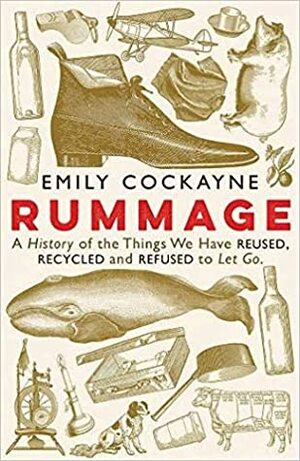
Rummage: A History of the Things We have Reused, Recycled and Refused to Let Go
by Emily Cockayne
Genres: History, Non-fictionPages: 304
Rating:

Synopsis:Rummage tells the overlooked story of our throwaway past. Emily Cockayne extracts glittering gems from the rubbish pile of centuries past and introduces us to the visionaries, crooks and everyday do-gooders who have shaped the material world we live in today - like the fancy ladies of the First World War who turned dog hair into yarn, or the Victorian gentlemen selling pianofortes made from papier-mâché, or the hapless public servants coaxing people into giving up their railings for the greater good.
In this original and fascinating new history, Cockayne illuminates our relationship to our rubbish: from the simple question of how we reuse and recycle things (and which is better), to all the weird and wonderful ways it's been done in the past. She exposes the hidden work (often done by women) that has gone into shaping the world for each future generation, and she shows what lessons can be drawn from the past to address urgent questions of our waste today.
Emily Cockayne’s book Rummage is all about the recycling and reuse of items, some of them items that we don’t recycle now — sometimes for good reasons, sometimes for bad. It’s organised a bit oddly, to my mind, with discussion of the World Wars early on and going backward in time to discuss the Victorian period, ultimately getting as far back as the 1630s. It never gets to properly discussing modern recycling, though it’s referenced now and again, which felt like a serious lack to me, because it would be a very useful comparison point, and there’s lots to be said about it.
It’s all a bit dense, rich with examples but not exactly scintillating reading. I did enjoy learning about some random weird new facts, like a kind of plastic made using slaughterhouse blood, “bois durci”… but mostly I think I got a bit lost in the detail.
I did also find some of the author’s interjections/commentary a bit… childish? Unnecessary? I think it’s meant to lighten up the tone a bit and make it feel chattier, but it just… doesn’t get there.
If you’re fascinated by the history of reuse and recycling, I think there’s plenty here to interest you, but it is a bit of a slow one.
Rating: 2/5 (“it was okay”)
