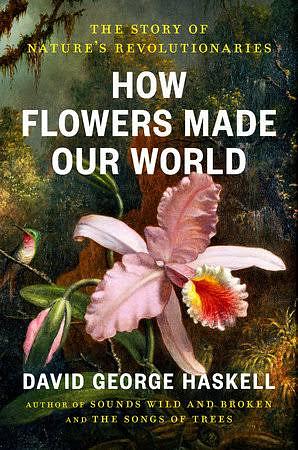
How Flowers Made Our World
by David George Haskell
Genres: Non-fiction, SciencePages: 352
Rating:

Synopsis:An exquisite exploration of the power of flowers, placing them at the center of the story of how evolution created the world we know today.
We live on a floral planet, yet flowers don’t get the credit they deserve. We admire them for their aesthetics, not their power. In this exquisite exploration of the role flowers played in creating the world we know today, David George Haskell observes, smells, and studies flowers such as magnolias, orchids, and roses, as well as fascinating but less celebrated flowers such as seagrasses and tea to show us what we’ve been missing.
Flowers are beautiful revolutionaries. When they evolved, they remade the natural world: Gorgeous petals and alluring aromas transformed former enemies into cooperative partners. Flowers reinvented plant sexuality and motherhood, bringing male and female together in the same flower and amply provisioning seeds and fruits, innovations that also feed legions of animals, ourselves included. Through radical genetic flexibility, flowers turned past environmental upheavals into opportunities for renewal. This inventiveness allowed them to build and sustain rainforests, savannahs, prairies, and even ocean shores.
Without flowers, human beings would not exist. We are a floral species. Flowers catalyzed our evolution, and we now depend on them for food and a healthy planet. When we perfume ourselves, give a loved one a bouquet, or use blooms in gardens and religious ceremonies, we honor the special bond between people and flowers. The study of flowers also shaped modern science and horticulture in ways both marvelous and, sometimes, unjust.
Looking to the future, flowers offer us lessons on resilience and creativity in the face of rapid environmental change. We need floral creativity, beauty, and joy more than ever. How Flowers Made Our World combines lyrical writing, sensual exploration, and the latest in scientific research to explore some of the most consequential life forms ever to have evolved, showing how our planet came to be and how it thrives today.
My main comment on David George Haskell’s How Flowers Made Our World is a plea for even pop-science writers (and, perhaps more to the point, publishers) to use numbered endnotes to give sources. Without knowing the specific source of a particular claim (“X plant does X% of carbon sequestration”), it’s impossible to evaluate the truth of the claim.
I can say that where I do know my stuff, Haskell’s not wrong or exaggerating — I’m not by any measure a botanist, but my first science degree was in natural sciences (emphasis biology), so I do have some grounding in stuff like plant respiration, plant growth, etc. But it’s impossible to call him on the details without reading literally everything that he read.
I did find the close study of various plants and species interesting, all the same; many of his descriptions are based on things you can observe yourself if you like (assuming you’re in the right location for the plant, of course), and it’s always fascinating to read someone enthusing about a pet subject. I suspect it’s largely preaching to the choir about the importance and beautiful diversity of plant life, and the need to protect it, but it’s still an important message.
I think at times it got a bit too wordy or too focused on reporting details of the author’s conversations (e.g. with his sister about an expedition to find seagrasses), but it was fairly readable and the author’s enthusiasm does a lot to hold interest.
Rating: 3/5 (“liked it”)

Oooh, I would love if authors cited sources for their research! I see some references in authors notes at times, or recommendations for further reading, but this would be great!
Cosmic recently posted…Kalyna the Cutthroat – An Introspective Refugee Story
It’s fairly common for non-fiction authors to show their sources, but numbered references would be far better.