Tag: poetry

Review – milk and honey

Posted April 15, 2026 by Nicky in Reviews / 2 Comments

Review – milk and honey

milk and honey

by Rupi Kaur

Genres: Poetry
Pages: 204
Rating: two-stars
Synopsis:

milk and honey is a collection of poetry and prose about survival. About the experience of violence, abuse, love, loss, and femininity. It is split into four chapters, and each chapter serves a different purpose. Deals with a different pain. Heals a different heartache.

milk and honey takes readers through a journey of the most bitter moments in life and finds sweetness in them because there is sweetness everywhere if you are just willing to look.

I ended up picking up Rupi Kaur’s milk and honey collection because Let’s Talk Bookish will be discussing “instapoetry” (Instagram poetry) on Friday, and I hadn’t knowingly read any, so I figured I’d try one of the famous ones and see what I think.

I get that people look down on Instapoetry and similar so I want to be clear, I don’t dislike it because it’s instapoetry — actually, I think that’s kinda cool, in that it makes poetry accessible to different people, and it’s written and enjoyed by people who might not have written or enjoyed poetry in more “traditional” formats.

Personally, I didn’t connect that much with Rupi Kaur’s poetry: it’s certainly easy to read, and I kinda liked the way it was matched with sketches that expressed something about each poem. She does have a way of putting things sometimes that puts something stark and horrible out there (particularly in the early section where sexual assault is a major theme) in a way that’s very clear and just… encapsulates a dreadful moment. For the most part, though, I didn’t find her poetry really got to me: it tends to the simple, clear, freeform style, and in a way it sometimes just feels like reading her disjointed thoughts — which is not my thing, much as it’s a valid way of self-expression and of playing with words even when those aren’t your actual thoughts (important not to assume the two are always the same).

Overall, not for me, though I understand the appeal.

Rating: 2/5 (“it was okay”)

Tags: , , ,

Divider

Review – Part of a Story that Started Before Me

Posted April 7, 2026 by Nicky in Reviews / 0 Comments

Review – Part of a Story that Started Before Me

Part of a Story that Started Before Me

by George the Poet (editor)

Genres: History, Non-fiction, Poetry
Pages: 272
Rating: three-stars
Synopsis:

Part of a Story That Started Before Me is an extraordinary new collection of poems chosen by acclaimed spoken-word performer and social commentator George the Poet.

Taking readers on a thought-provoking poetical journey through Black British history, the anthology brings together some of the most exciting wordsmiths from across the diaspora and fascinating era-by-era notes from historian Dr Christienna Fryar.

From Africans in Roman Britannia to the first Black actor to play Othello on stage, from Malcolm X's visit to the West Midlands to highlighting an organizer of the UK's first Gay Pride, this important collection reveals unsun people and events from our past to recognize the intrinsic impact they've had on Britain today.

Part of a Story that Started Before Me (edited by George the Poet) is a collection of poems about Black British History, reflecting on historical figures and moments in verse, and also providing short introductions to the position of Black people in those periods for almost all of them — there’s just one section without, for some reason.

The majority of the poems are in the most modern sections, despite the premise; there’s just a handful for most historical periods before WWII. The poems themselves aren’t dated, though a few are definitely a touch older (like the Derek Walcott and Grace Nichols ones); I don’t know if any were prompted/commissioned specifically for this volume.

I wasn’t a huge fan of most of the poems, though that’s almost immaterial since here they’re doing their job of reflecting on history. (Plus, gotta note that a couple did stand out, in a couple of cases because they had such a great rhythm and sense of sound that you almost couldn’t help but hear them.) I personally wouldn’t choose it as a poetry collection, but it was worth the read, including for the historical and editorial context provided.

Rating: 3/5 (“liked it”)

Tags: , , , ,

Divider

Review – Southernmost: Sonnets

Posted April 2, 2026 by Nicky in Reviews / 0 Comments

Review – Southernmost: Sonnets

Southernmost: Sonnets

by Leo Boix

Genres: Poetry
Pages: 144
Rating: one-star
Synopsis:

Unearthing an old grief, the poet embarks on a glittering, encyclopaedic exploration of his own past and the Latin America he left behind- a continent haunted by the Europeans who once fixed their telescopes on its shores.

Southernmost reveals truths hidden in plain sight- colonialism's violent legacies; dissidents disappeared by the junta; a young mother's mysterious decline; the clarifying sexuality of a boy whose father can't bear to acknowledge it. At the same time, it tells a story - as sonnets have often done - about love, through Boix's intimate and original evocation of gay marriage. Restlessly intelligent, intoxicated by Latin America's landscapes and rich folklore, this virtuosic net of sonnets offers a glimpse of our world's interconnecting threads.

Leo Boix’s Southernmost: Sonnets is rather autobiographical, with poems focusing on religion, the death of his mother, and queerness (often in a very religious context). Almost all of the poems are sonnets, though there were a few that took other elements where I didn’t count the lines.

I found that the sonnet form felt really forced, and the rhymes felt a bit forced — “obvious” in the sense of being obtrusive, inelegant, not quite the right word. A really good sonnet often makes me forget about the rhyme scheme and makes it all somehow natural, but I was really aware of the intent to write a sonnet.

Combined with the subject matter, it wasn’t really my thing: poetry is very often personal, but I often like stuff that feels like it speaks to something deeper, and I didn’t get that feeling a lot here — the level of detail is so high, so specific, the poems just belong to Boix. Which is fair enough! But not my cup of tea.

I feel bad about rating such a thing so low, so a reminder: it’s always about my level of enjoyment, and not about quality, since I’m writing as a reader and explicitly rating on enjoyment. How I respond to the craft is a part of my enjoyment, but nonetheless craft doesn’t account for all of my rating.

Rating: 1/5 (“didn’t like it”)

Tags: , , ,

Divider

Review – A History of England in 25 Poems

Posted March 29, 2026 by Nicky in Reviews / 2 Comments

Review – A History of England in 25 Poems

A History of England in 25 Poems

by Catherine Clarke

Genres: History, Non-fiction, Poetry
Pages: 400
Rating: five-stars
Synopsis:

This is the history of England told in a new way: glimpsed through twenty-five remarkable poems written down between the eighth century and today, which connect us directly with the nation’s past, and the experiences, emotions and imaginations of those who lived it.

These poems open windows onto wildly different worlds – from the public to the intimate, from the witty to the savage, from the playful to the wistful. They take us onto battlefields, inside royal courts, down coal mines and below stairs in great houses. Their creators, witnesses to events from the Great Fire of London to the Miners’ Strike, range from the famous to the forgotten, yet each invites us into an immersive encounter with their own time.

A History of England in 25 Poems is a portal to the past; a constant companion, filled with vivid voices and surprising stories alongside familiar landmarks, and language that speaks in new ways on each reading. Catherine Clarke’s knowledge and passion take us inside the words and the moments they capture, with thoughtful insights, humour and new perspectives on how the nation has dreamed itself into existence – and who gets to tell England’s story.

Picking up Catherine Clarke’s A History of England in 25 Poems, I was interested but wary. I do love this kind of format for histories, because I think things like poems or fashions or household items and so on can all tell us an astonishing amount about the moments they were made and read, used, etc. But at the same time, “England” and “Englishness” is a bit of a tense concept: witness the English flags being tied to lamp posts and the varied reactions to them, the tensions around how to define Englishness and who belongs in England and — of course, inescapably for me — the tensions between England and other countries it’s ruled, subjugated, etc.

And Clarke handles this well, I think! She explicitly states that it is not a history of Britain, and occasionally calls out the tendency to conflate England with Britain as a geographical or political entity. She discusses the tensions between the Irish/Welsh/Scottish and England, and discusses that in terms of colonialism, because those countries were England’s first colonies. It’s surprisingly rare for someone to recognise that, especially for someone to recognise not just Ireland and Scotland’s issues with England but also the issues for Wales, and I appreciated it a lot. The book feels a bit less strong on the issues between England and the wider world, though it does discuss immigration, Windrush and the Partition of British India towards the end of the book.

The choices of poem are good: not just the canon (though at times it is, or canon-adjacent), and not just higher class voices or male voices. I learned about Mary Leapor, for example, a servant who wrote poetry that was essentially a parody of higher class “country house” poetry, in the same style but about life below-stairs. The poems aren’t all selected for artistic beauty or anything, which is important to know, and it isn’t a history of English poetry (some of the poets aren’t English) — it is a history (non-exhaustive) among many possible histories.

All in all, I would’ve preferred numbered footnotes, and perhaps a little more about the issues of England and colonialism, but I thought the 25 poems chosen did look through some interesting windows at snippets of history, some of which I didn’t already know well. I felt like I learned things, and had a good time; certainly I paused several times to write about the book enthusiastically on Litsy, and looked forward to reading more each time I put it down.

Rating: 5/5 (“loved it”)

Tags: , , , , ,

Divider

Review – Black Cat Bone

Posted March 28, 2026 by Nicky in Reviews / 0 Comments

Review – Black Cat Bone

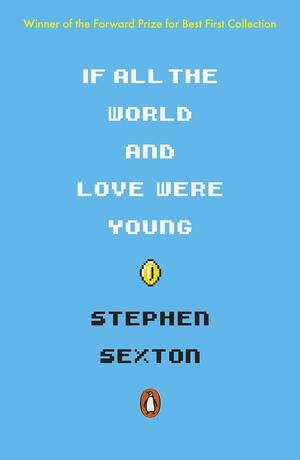
Black Cat Bone

by John Burnside

Genres: Poetry
Pages: 69
Rating: two-stars
Synopsis:

John Burnside's remarkable new book is full of strange, unnerving poems that hang in the memory like a myth or a song. These are poems of thwarted love and disappointment, of raw desire, of the stalking beast, 'eye-teeth/and muzzle/coated with blood'; poems that recognise 'we have too much to gain from the gods, and this is why/they fail to love us'; poems that tell of an obsessive lover coming to grief in a sequence that echoes the old murder ballads, or of a hunter losing himself in the woods while pursuing an unknown and possibly unknowable quarry. Drawing on sources as various as the paintings of Pieter Brueghel and the lyrics of Delta blues, Black Cat Bone examines varieties of love, faith, hope and illusion, to suggest an unusual possibility: that when the search for what we expected to find--in the forest or in our own hearts--ends in failure, we can now begin the hard and disciplined quest for what is actually there. Full of risk and wonder, Black Cat Bone shows the range of Burnside's abilities, but also strikes out for new territories. He remains consistently, though, one of our finest living lyric poets and each of these astonishing poems is as clear and memorable as 'a silver bracelet/falling for days/through an inch and a half/of ice'.

John Burnside’s Black Cat Bone wasn’t for me. It’s hard to put my finger on what didn’t work for me in these poems exactly — there were a few snippets and phrases I liked, like “And I wake, in the cage of my bones, / on the same cold ground” (from ‘Bird Nest Bound’, I think)… but somehow most of it didn’t grab me, though the first poem (which is quite long) made me think I might enjoy it.

Other reviews and descriptions are correct about the wintery feel and the nature imagery, but I guess it didn’t properly strike a chord with me; I think for the most part I just didn’t quite like the choice of words, like each one was subtly off.

Sometimes poetry is like that for me; ah well. You win some, you lose some. It was worth a try.

Rating: 2/5 (“it was okay”)
Tags: , , ,

Divider

Review – Duino Elegies

Posted March 22, 2026 by Nicky in Reviews / 0 Comments

Review – Duino Elegies

Duino Elegies

by Rainer Maria Rilke

Genres: Poetry
Rating: four-stars
Synopsis:

Perhaps no cycle of poems in any European language has made so profound and lasting an impact on an English-speaking readership as Rilke's Duino Elegies. These luminous new translations by Martyn Crucefix make it marvellously clear how the poem is committed to the real world observed with acute and visionary intensity. Completed in 1922, the same year as the publication of Eliot's The Waste Land, the Elegies constitute a magnificent godless poem in their rejection of the transcendent and their passionate celebration of the here and now. Troubled by our insecure place in this world and our fractured relationship with death, the Elegies are nevertheless populated by a throng of vivid and affecting figures: acrobats, lovers, angels, mothers, fathers, statues, salesmen, actors and children. This bilingual edition offers twenty-first century readers a new opportunity to experience the power of Rilke's enduring masterpiece. Selected by Philip Pullman as one of his 40 favourite books. Shortlisted for the Cornelieu M Popscu Prize, 2007."

It’s rough to write a good review of Rainer Maria Rilke’s Duino Elegies, because there are two levels here: just reading the poetry (in translation), and all the interpretation and context around it. I read the poetry and loved so much about it, but I’m also a little worried I missed out on the richness of it because I don’t have a lot of context for it.

This translation by Martyn Crucefix has a helpful introduction and some notes on each poem; I did manage to read the introduction, but could only skim the notes since my copy was due back at the library. The intro was helpful, and I think the notes were too. The translation itself seemed very readable and well written, though I can’t judge how accurate it was!

It’s definitely poetry that can be appreciated without the notes, it’s beautiful, but I would have liked to really dig my teeth in too.

Rating: 4/5 (“really liked it”)

Tags: , , ,

Divider

Review – Wain

Posted March 19, 2026 by Nicky in Reviews / 0 Comments

Review – Wain

Wain

by Rachel Plummer, Helene Boppert

Genres: Poetry
Pages: 126
Rating: three-stars
Synopsis:

Wain is a collection of LGBT themed children's poetry based on retellings of Scottish myths. The collection contains stories about kelpies, selkies, and the Loch Ness Monster, alongside perhaps lesser-known mythical people and creatures, such as wulvers, Ghillie Dhu, and the Cat Sìth. These poems immerse readers in an enriching, diverse and enchanting vision of contemporary life. The poems in this collection are fun, surprising, and full of a magical mix of myth and contemporary LGBT themes – it is a perfect read for children who are learning more about themselves, other people, and the world around them. Wain is fully illustrated, and suitable for readers of all ages.

Rachel Plummer’s Wain is a book of poems that reimagine various Scottish folktales and stories with LGBT twists: a selkie story is a trans story, a sea spirit flirts with a sea captain, etc. The poems are illustrated by Helene Boppert, in the same style as on the cover.

I definitely like the idea of the collection, though I found some of it a bit… obvious? Selkie story as trans narrative, for example. It’s not that it’s not fitting, or that I don’t think there should be trans selkie stories, so it’s hard to articulate just what I mean. Lacking in subtlety, perhaps? Though again, I don’t think subtlety is required. Several of the poems also had a kind of obviousness about them — a lack of layers and mystery, I suppose. I especially don’t get along with the ones that are just a bunch of sentences with full-stops, a collection of statements. I get that it is aimed at kids, but kids can handle subtlety.

That said, the art is lovely, and there were poems I liked. My favourite was ‘Green Lady’, in which a dead person has to choose a colour they want to take with them in death, which ends:

“Green as a sapling too soon torn
from its bank by a winter storm.
Green as the wide lawn’s wet grass.
Green as my dress —

the first I’d ever worn.”

That poem definitely worked for me!

So not a bad collection, and there’s definitely stuff to enjoy — especially, I suspect, for queer kids, the intended audience.

Rating: 3/5 (“liked it”)

Tags: , , , ,

Divider

Review – Altar

Posted March 13, 2026 by Nicky in Reviews / 2 Comments

Review – Altar

Altar

by Desree

Genres: Poetry
Pages: 72
Rating: three-stars
Synopsis:

The debut poetry collection from award-winning writer and spoken word artist, Desree, Altar explores multifaceted dimensions of sacrifice, challenging its heroism and examining its ties to servility. The poems in Altar urge their protagonists to play neither lion nor lamb, but to live and flourish on their own terms. Each page glimmers with vivid, often devastating vignettes: we witness the resilience of youth, the strength of the Black female body, the complexity of chosen and unchosen family, the sweeping effects of gentrification.Through reflections on Black British identity, queer joy, place and belonging, faith and consent, Desree invites the reader on a journey of reclamation, while her wry wit and disarming tenderness hold us through the necessary storms that mark the way.

I wasn’t sure what I’d think of Desree’s Altar; I’ve not been very interested in spoken word poetry, historically, and I read that Desree’s a spoken word artist, so I wasn’t sure how well her work lends itself to print. The answer in this volume is ‘just fine’, though the ebook version didn’t do the formatting any favours.

I didn’t entirely click with it all, but there were some poems and images that did grab me, like the recurring theme of the rose in her mouth, and this stanza:

“i knew bodies
built in the image of a fireplace
were only useful if there
was something burning
inside them. i learnt
safety means between flames“

Not entirely for me, this collection, but I did enjoy giving it a shot. And I do wonder still if some of the poems might not after all be better aloud, even if they did work fine in print.

Rating: 3/5 (“liked it”)

Tags: , , ,

Divider

Review – wake

Posted March 7, 2026 by Nicky in Reviews / 0 Comments

Review – wake

wake

by Gillian Allnutt

Genres: Poetry
Pages: 64
Rating: one-star
Synopsis:

When Gillian Allnutt was awarded the Queen’s Gold Medal for Poetry, Carol Ann Duffy wrote that her work ‘has always been in conversation with the natural world and the spiritual life’. Her ninth collection, wake, shows the two beginning to meld into one: to speak for, even as, one another. As her title signals, these are poems about looking back, keeping watch over the dying and death of an old world and the ways of being human in that world; but also forward, waiting for the new world and being ready to awaken to it when it comes.

There are, as always in her work, many displaced people. No one here is fully at home in the world. These are turbulent times – individually and collectively – and the poems here reflect that. And yet the poems are more ‘among’ than ‘about’ people: speaking out of the horde, and the hoard, of humanity as a whole.

Unfortunately, Gillian Allnutt’s wake was absolutely not for me. I had difficulty finding any poem I actually liked in it — maybe a line here and there, but… I just didn’t “get” it. Some of them were too short to feel like anything (though I often have that problem with very short poems), and it felt like they were lacking all the connective tissue to make them flow and make sense of them for myself.

This may have been made worse by the fact that the notes at the end of the collection weren’t obviously linked in the ebook, so I only read them after reading all of the poems already. Some of the notes do explain things a bit better, but since I had no idea they existed (I only saw the small translation notes on the same page as each poem, no sign of more info) they didn’t really have an impact on my reading experience.

Since a favourite poet of mine (Carol Ann Duffy) praised Allnutt, I was/am willing to believe it’s a deficiency in me here — though I did check back what she said exactly and it was more of a description than outright praise, so I suppose it could’ve been one of those misleading snippets where actually in the full version it’s clear that the writer wasn’t overwhelmed with it. I haven’t looked for more context… I’m just resigned to the fact that I didn’t ‘get’ or like this one.

Rating: 1/5 (“didn’t like it”)

Tags: , , ,

Divider

Review – Seasonal Disturbances

Posted March 1, 2026 by Nicky in Reviews / 0 Comments

Review – Seasonal Disturbances

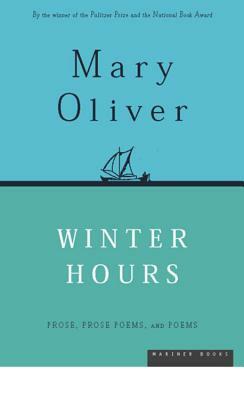
Seasonal Disturbances

by Karen McCarthy Woolf

Genres: Poetry
Pages: 84
Rating: two-stars
Synopsis:

A 2017 Poetry Book Society Recommendation. Following her groundbreaking 2014 debut An Aviary of Small Birds ("technically perfect poems of winged heartbreak" - Observer), Karen McCarthy Woolf returns with Seasonal Disturbances. Set against a backdrop of ecological and emotional turbulence, these poems are charged yet meditative explorations of nature, the city, and the self. A sinister CEO presides over a dystopian hinterland where private detectives investigate crimes against hollyhocks; Halcyon is discovered as a dead kingfisher, washed up on an Italian beach. Lyrical and inventive, McCarthy Woolf's poems test classic and contemporary forms, from a disrupted zuihitsu that considers her relationship with water, to the landay, golden shovel, and gram of &. As a fifth-generation Londoner and daughter of a Jamaican emigre, McCarthy Woolf makes a variety of linguistic subversions that critique the rhetoric of the British class system. Political as they may be, these poems are not reportage: they aim to inspire what the author describes as an "activism of the heart, where we connect to and express forces of renewal and love."

Karen McCarthy Woolf’s Seasonal Disturbances had a few poems or bits of poems that I found interesting and enjoyed, but overall it wasn’t a favourite. It might be partly the fault of the ebook format (I read it from the National Poetry Library’s Overdrive offerings, and Overdrive seems to not always display things the way they’re meant to be read), because there was eventually an explanation for what seemed like random unrelated lines at the end of a poem.

That said, I can only review based on the experience I actually had, and that was pretty confusing. It felt at times like the different stanzas of poems had no relationship to one another at all (and I don’t just mean the one about water that was definitely deliberate, which taught me a new term, “zuihitsu”). Maybe I’m not clever enough for this! Though, clever or not, I have two degrees in English literature, did study poetry within that, and did get good grades, so take that for what that’s worth — partly personal taste, partly not knowing what a “zuihitsu” is in advance, etc.

There was a bit from ‘Ars Poetica 101’ that I did like and wanted to save for myself for later (excerpted below), so it wasn’t a wholly bad experience — but definitely not a great success for me.

Poetry is
what the sea sings to the
last insatiable human
who thinks he’s the only one with a voice
to flood the dark with music and
dance or wonder who we are
and why we’re here or how we
became I, so exclusively…

Rating: 2/5 (“it was okay”)
Tags: , , ,

Divider