Tag: poetry

Review – Food for the Dead

Posted February 13, 2026 by Nicky in Reviews / 0 Comments

Review – Food for the Dead

Food for the Dead

by Charlotte Shevchenko Knight

Genres: Poetry
Pages: 80
Rating: four-stars
Synopsis:

With this searingly powerful first collection, Charlotte Shevchenko Knight gives the current war in Ukraine some much-needed human focus, while examining its brutal aggression within a wider and more accurate historical context.

Central to this book is ‘a timeline of hunger’, a lyric sequence which examines the legacy of the Holodomor (‘death by hunger’ in Ukrainian) – Stalin’s man-made famine of the 1930s. This long poem opens in Kyiv in 2021 – ‘brief visitations / of appetite / I devour / beetroot / its juices / running / down my lips / blood / of the past’ – and closes in Donetsk in 1929: ‘we burst the balloon / skin of tomatoes / between our teeth / seeds running down chins / like confetti / & we already know / every meal / should be celebrated.’ Through the poet’s sensitive approach to the historical, moving from that genocide of the early 1930s, then on through the Second World War, the Chornobyl disaster, to modern-day invaded Ukraine, we understand that within their ‘bones Holodomor / lives on’.

Both a howl of anguish and an eloquent counter-song against totalitarianism, this is a book about invasion, war, destruction and death, but also about the bonds of humanity, family and a history of oppression – about staying alive while always hungry.

Charlotte Shevchenko Knight’s Food for the Dead is a debut collection, as I understand it, and it’s full of poems reckoning with her family’s past, the past of Ukraine, and the legacy still marked in people’s bodies today — particularly the legacies of Holodomor (which are likely to have marked women on an epigenetic level, passing down vulnerabilities, as the Dutch hunger winter did).

It also discusses the way the Ukrainian language has been attacked, and defiantly sprinkles Ukrainian words throughout (introduced via a glossary which worked quite well in the ebook version, and then used without further definition in later poems). I thought this might annoy me more than it did, but at least in the ebook version it was pretty well done. In a print version, it’d probably work better with footnotes… but I’ve only seen the ebook version, and can’t comment on how it looks in print.

I didn’t love every single one of the poems here, but I enjoyed Shevchenko Knight’s imagery and use of language more often than not. The horrible hunger haunts the whole collection, and the reader.

I liked that for one poem there was a family picture as well, making it clear what it sprang from: a literal tree full of the poet’s family.

Rating: 4/5 (“really liked it”)

Tags: , , ,

Divider

Review – Smart Devices

Posted February 8, 2026 by Nicky in Reviews / 0 Comments

Review – Smart Devices

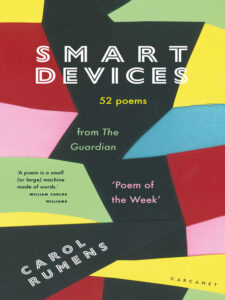
Smart Devices

by Carol Rumens (editor)

Genres: Lit Crit, Non-fiction, Poetry
Pages: 256
Rating: two-stars
Synopsis:

A year of hand-picked poems and commentaries from the Guardian's 'Poem of the Week' blog.

Carol Rumens has been contributing 'Poem of the Week' to the Guardian for more than a dozen years. Do the maths: that's more than 624 blogs! No wonder she has a large and devoted following. She's a poet-reader, not an academic. She is fascinated by the new, but her interest is instructed by the classic poems she has read. They make her ear demanding: when it hears that something, it perks up. She perks up. 'A poem is a small (or large) machine made of words.' Rumens partly agrees with Williams but she develops the conceit, seeing each poem 'as a more flexible instrument, a miniature neo-cortex, that super-connective, super-layered smartest device of the mammalian brain'. She tries to avoid poems built from kits with instruction manuals. She looks for surprises, and she surprises us.

Smart Devices is a collection of Carol Rumens’ choices for The Guardian‘s poem of the week column. If you’re expecting pretention, then, well, you’re not wrong — both from the editor and, if you peek at the comments section, the commenters as well. Here are some choice examples…

…and there, self-condemned by poetically just circularity, one has all of the acorn and the oak that LockJock has to contribute.

Aaand:

Now that sentence tells me a lot about you, the sense of natural entitlement, the geography of your life.

There are some interesting choices of poem, and definitely some poets I’m going to look up and read more of, but getting through the commentary by the editor alone can be quite the feat, and I ended up skimming a number of them because you just get stuff like this:

Among the most readable of the avant garde poets, Langley has occasionally stirred in me what I term the Kenneth Williams effect. The wonderful fabric of his observation would suddenly break or knot, at which point I’d think: “Oh, stop messin’ about. You’re too good for trendy-bendy tricks.” But I was wrong. These weren’t tricks but simply flying sparks, thrown off by language during the process of cutting and drilling through to a cleaner kind of origination. Certainly in the post-millennial collections, there’s no sense of participation in any langpo-regiment’s smartbombing of the synapses. Langley is a purer breed of iconoclast, on a scrupulous quest for revealing what his eye has seen and his mind understood. Despite some serious play, he doesn’t mess about.

Poetry — and commentary on poetry — doesn’t have to be this pretentious. I got a BA (first class honours) and MA in English literature, and I never wrote anything like “cutting and drilling through to a cleaner kind of origination”. Half of it is hot air meant to make it sound like you’re intelligently commenting on the poem.

This is, of course, a matter of taste; certainly some of the other graduates wrote like this and were rewarded for it. It’s not a bad collection for introducing one to a range of poems, including some in translation (though I stumbled through reading the original of the one in French just to see if I still could, since it was included, and surprised myself!).

Rating: 2/5 (“it was okay”)
Tags: , , , ,

Divider

Review – The Iron Bridge

Posted February 2, 2026 by Nicky in Reviews / 0 Comments

Review – The Iron Bridge

The Iron Bridge

by Rebecca Hurst

Genres: Poetry
Pages: 128
Rating: three-stars
Synopsis:

Rebecca Hurst's first collection bridges memory and observation, noting the detail of the natural world and our changing relation to it. The book's places are made familiar by walking. It encounters other worlds alive with new and recovered ideas and images - from the folk traditions of her Sussex childhood, to archival encounters with a nineteenth-century nurse-explorer, and her undergraduate training as a Kremlinologist. Her language is deeply rooted, as keenly aware of etymologies as of history. Shaped by myth, history and desire, the poems of The Iron Bridge are theatrical, fierce, music-infused.

Rebecca Hurst’s The Iron Bridge was a fairly random pick to use my National Poetry Library card, from one of the collections of prizewinners and shortlisted titles — a debut prize, if I recall correctly. The collection includes various poems and a few prose-poems/pieces of microfiction, some of it themed together and some of it less obviously so.

I enjoyed quite a few of the poems, and Hurst’s word choice/cadence, though I definitely preferred the poems over the prose-poems/microfiction, and I thought she was a little over-fond of the descriptor “needle-sharp” (which came up at least three times). I liked “Arrivals/Departures” a lot, in particular.

I’d try other collections by Hurst in future, definitely. Not an instant favourite, but glad I checked it out.

Rating: 3/5 (“liked it”)

Tags: , , ,

Divider

PSA for UK-dwellers: National Poetry Library

Posted January 23, 2026 by Nicky in General / 2 Comments

Did you know that there’s such thing as the National Poetry Library? And that you can sign up to borrow from their online collection if you live anywhere in the UK? I learned this yesterday on Bluesky, and I figured it was worth sharing on my blog as well because I’ve seen several people talking about wanting to read more poetry!

Sign-up is super easy: you just need to fill out the form on their sign-up page link, giving your name, email, phone number and postcode. They’ll then send you an email telling you where to send your proof of address: you can’t reply directly to that email, but just copy the email address they send there and send to that, attaching a copy of some kind of proof of address like a utility bill, bank statement, council tax bill, etc. You can black out any financial details like your account number, though they will also delete whatever you send after verifying that you really do have a UK address.

I got a reply back from them in less than 24 hours with my login details for their Overdrive collection. I can borrow up to two books at once, for up to 14 days.

I’ve been poking around the collection a bit and it looks very worth the small amount of trouble: the split by subjects isn’t very useful for this particular library, but the collections are handy, highlighting various prize winners, recent poetry collections, and other such themes, if you have no idea where to start. I’ve started by checking out two from Seamus Heaney Centre First Collection Poetry Prize:

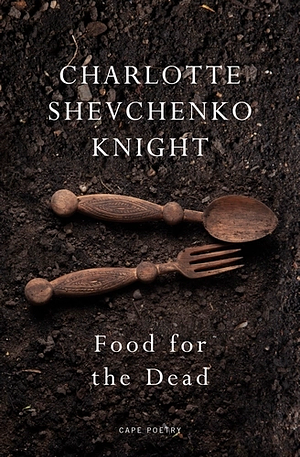
Cover of Food for the Dead by Charlote Shevchenko-Knight Cover of The Iron Bridge by Rebecca Hurst

There are a small number of books about poetry as well, and a small number of audiobooks. It’s not an exhaustive collection by any means, but it definitely offers a lovely way to explore some new-to-me poetry.

The library also has a physical collection, so if you live in range, you can show up with photo ID to be able to get a library card and access their physical holdings. They run poetry-related events as well! Their physical premises are wheelchair-accessible and you can check their accessibility info here. The info about their collections indicates they have braille and audio resources available for blind and partially sighted users.

All in all, worth checking out if you have a UK address and phone number at your disposal!

Tags:

Divider

Review – Finding My Elegy

Posted January 2, 2026 by Nicky in Reviews / 0 Comments

Review – Finding My Elegy

Finding My Elegy: New and Selected Poems

by Ursula Le Guin

Genres: Poetry
Pages: 196
Rating: three-stars
Synopsis:

Though internationally known and honored for her imaginative fiction, Ursula K. Le Guin started out as a poet, and since 1959 has never ceased to publish poems. Finding My Elegy distills her life's work, offering a selection of the best from her six earlier volumes of poetry and introducing a powerful group of poems, at once earthy and transcendent, written in the first decade of the twenty-first century.

The fruit of over a half century of writing, the seventy selected and seventy-seven new poems consider war and creativity, motherhood and the natural world, and glint with humor and vivid beauty. These moving works of art are a reckoning with a whole life.

Because it’s a collection containing both selected older poems and newer poems, Ursula Le Guin’s Finding My Elegy is kind of difficult to evaluate. It’s not quite simply an overview of her poetry over the decades, nor a new collection; themes and evolution of style are all mingled.

So I’ll stick with my gut reaction, which was that I wouldn’t always have chosen those particular poems over others of hers, but they all have an essential “Le Guin”-ness in the choice of themes and images. I’m not sure I’d identify them all as Le Guin’s work if unlabelled, but being told they’re Le Guin’s makes absolute sense. Her concerns in her poetry are similar to her concerns in her writing, and I wonder if you can match them up, poetry-to-fiction, watching her think through the same things at the same time in two different media…

Anyway, I don’t love Le Guin as a poet, compared to how I feel about her fiction; not all of the poems really speak to me. Sometimes it’s just three lines here or there, a stanza, more rarely a whole poem (and often the shortish ones).

Rating: 3/5 (“liked it”)

Tags: , , ,

Divider

Review – Answering Back

Posted December 14, 2025 by Nicky in Reviews / 0 Comments

Review – Answering Back

Answering Back: Living Poets Reply to the Poetry of the Past

by Carol Ann Duffy (editor)

Genres: Poetry
Pages: 144
Rating: three-stars
Synopsis:

Carol Ann Duffy has asked some of the brightest writers in the poetry world to select a poem that is meaningful—or has meant something—to them, and write a response to it. With up-and-coming poets alongside more established names, and original poems alongside the new works they've inspired, Answering Back promises to be a truly unique and insightful anthology.

Answering Back is a fascinating idea for a poetry collection, edited by Carol Ann Duffy, but shaped by the fact that each poet chosen has selected a poem by another poet to respond to. This gives the collection quite a range, with some of the responses being more like they were inspired by the poem, others being direct refutations, some being answers/echos…

Most of the poems being responded to were ones I knew, but not all, and there’s an interesting range of responding poets. Inevitably, it’s a mixed bag where some speak to me and some don’t, and there are some I didn’t appreciate much at all, but overall it’s an interesting idea with some interesting selections.

Rating: 3/5 (“liked it”)

Tags: , , ,

Divider

Review – Death of a Naturalist

Posted December 5, 2025 by Nicky in Reviews / 0 Comments

Review – Death of a Naturalist

Death of a Naturalist

by Seamus Heaney

Genres: Poetry
Pages: 56
Rating: four-stars
Synopsis:

Death of a Naturalist by Seamus Heaney is the stunning and revelatory first collection by the Nobel Prize-winning Irish poet.

Seamus Heaney’s Death of a Naturalist collection contains some of the poems I know best, including my favourite, ‘Mid-Term Break’, the final line of which is always a perfect punch in the gut:

“A four foot box, a foot for every year.”

There’s something that’s very distinctive about Heaney’s voice as a poet for me, something very solid and direct. It’s not that he doesn’t use imagery, or metaphors, or poetic diction — of course he does at times — but it still feels fundamentally straightforward. Which is part of the art of it, of course.

Definitely one of my favourite volumes of poetry I’ve read lately, if not ever.

Rating: 4/5 (“really liked it”)

Tags: , , ,

Divider

Review – Seeing Stars

Posted November 24, 2025 by Nicky in Reviews / 0 Comments

Review – Seeing Stars

Seeing Stars

by Simon Armitage

Genres: Poetry
Pages: 74
Rating: two-stars
Synopsis:

A thrilling new collection from the hugely acclaimed British poet Simon Armitage. With its vivid array of dramatic monologues, allegories, and tall tales, this absurdist, unreal exploration of modern society brings us a chorus of unique and unforgettable voices.

All are welcome at this twilit, visionary carnival: the man whose wife drapes a border-curtain across the middle of the marital home; the black bear with a dark secret; the woman who oversees giant snowballs in the freezer. "My girlfriend won me in a sealed auction but wouldn't / tell me how much she bid," begins one speaker; "I hadn't meant to go grave robbing with Richard Dawkins / but he can be very persuasive," another tells us. The storyteller behind this human tapestry has about him a sly undercover idealism: he shares with many of his characters a stargazing capacity for belief, or for being, at the very least, entirely "genuine in his disbelief." In these startling poems, with their unique cartoon-strip energy and air of misrule, Armitage creates world after world, peculiar and always particular, where the only certainty is the unexpected.

The poems in Simon Armitage’s Seeing Stars are prose-poems, which I’d forgotten; I liked this more than the other collection of his work I read recently, though I can’t say I was a huge fan even so — it’s just that I found this one a bit less insular, I guess? Less rooted to a particular place, and thus more accessible.

There were a couple of pieces that I quite liked, and they’re all pretty inventive and vivid, but I’m not sure it left a huge impression on me, all the same. It’s funny how ambivalent I am about Armitage’s poetry when I love his translation work on Sir Gawain and the Green Knight so much… but there you have it.

I’m still sure that somewhere there was at least one of his poems that I really liked, so the search continues — but only when the library has copies.

Rating: 2/5 (“it was okay”)
Tags: , , ,

Divider

Review – Door into the Dark

Posted November 19, 2025 by Nicky in Reviews / 0 Comments

Review – Door into the Dark

Door into the Dark

by Seamus Heaney

Genres: Poetry
Pages: 56
Rating: three-stars
Synopsis:

"Door into the Dark," Heaney's second collection of poems, first appeared in 1969. Already his widely celebrated gifts of precision, thoughtfulness, and musicality were everywhere apparent.

Seamus Heaney’s Door into the Dark was only his second collection, but his style is unmistakeable. I couldn’t pick a poem from this collection I especially liked as a stand-out, but they all have presence and demand attention: there’s something deliberate about every single word.

Which is not to say ponderous, to be clear — they’re all very readable and don’t drag on too long or anything like that! It just feels like every word and phrase is chosen to be impactful, to have weight.

Not a favourite collection, but it was worth the read.

Rating: 3/5 (“liked it”)

Tags: , , ,

Divider

Review – So Far So Good

Posted November 16, 2025 by Nicky in Reviews / 0 Comments

Review – So Far So Good

So Far So Good

by Ursula Le Guin

Genres: Poetry
Pages: 100
Rating: four-stars
Synopsis:

Legendary author Ursula K. Le Guin was lauded by millions for her ground- breaking science fiction novels, but she began as a poet, and wrote across genres for her entire career. In this clarifying and sublime collection--completed shortly before her death in 2018--Le Guin is unflinching in the face of mortality, and full of wonder for the mysteries beyond. Redolent of the lush natural beauty of the Pacific Northwest, with rich sounds playfully echoing myth and nursery rhyme, Le Guin bookends a long, daring, and prolific career.

Ursula Le Guin’s So Far So Good was her last collection of poetry, with her edits sent in just before her death. I wouldn’t say that’s particularly obvious in the poems — she’s no more preoccupied with death than she ever was, in this collection, at least.

They didn’t all land for me, but there are some lovely ones, and Le Guin’s way with language and imagery is always in evidence. Here’s a favourite, “On Second Hill”:

Where on this wild hill alone
a child watched the evening star,
let these bits of ash and bone
rejoin the earth they always were,
the earth that let her sing her love,
the gift that made the giver
here on the lonely hill above
the valley of the river.

Very typical Le Guin, of course.

An enjoyable collection, and reminded me that I haven’t read all her poetry but have at least one of her other collections from an old Humble Bundle… off to check whether I’ve read that!

Rating: 4/5 (“really liked it”)

Tags: , , ,

Divider