Tag: Let’s Talk Bookish

Let’s Talk Bookish: Pride Month Reading

Posted June 12, 2026 by Nicky in General / 4 Comments

Graphic for Let's Talk Bookish, created by Rukky @ Eternity Books, Hosted by Aria @ Book Nook Bits and Dini @ Dinipandareads

Let’s Talk Bookish is a weekly bookish meme created by Rukky @ Eternity Books and co-hosted by Aria @ Book Nook Bits and Dini @ Dinipandareads! It’s just moved to a lower-frequency posting schedule which you can check out here.

June’s prompt is as follows:

Happy Pride! ‍ What are your favorite books with LGBTQIA+ representation? Are there authors or series you always recommend? What books are on your Pride Month TBR? What do you think makes representation feel genuine?

I have to say that I don’t really think of what I read in terms of representing minority groups at the moment: not that it doesn’t, because I am interested in books that are by and about and for groups that are marginalised in society on all kinds of different axes. It’s mostly because I pulled back on the number of obsessive stats about books I was keeping for my mental health, and also because I got somewhat uncomfortable about some of the associated baggage like “own voices”, which became an intense pressure on people to come out and share personal details. I’m thinking about e.g. the situation where Becky Albertalli was pressured to come out because of Leah on the Offbeat.

Given my swing to reading more non-fiction as well, I kind of naturally fell out of the habit of thinking about books this way, so despite the fact that I read plenty of queer fiction, I didn’t have an immediate answer here, but let’s see if I can do better!

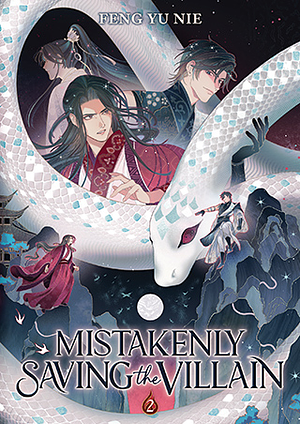
Cover of Mistakenly Saving the Villain vol 2 by Feng Yu NieAt the moment, a lot of the queer stuff I’m reading is danmei, which I wouldn’t necessarily refer to as being good LGBTQIA+ representation in general. I think it does things which are radical, particularly in context, where queerness is common and people are accepting… but there are also a lot of issues baked in, like gong and shou dynamics, and the fact that the shou sometimes ends up with a rather feminised role (sometimes down to being referred to as “wife”), authors insist that the dynamic is immutable, etc. Still, I don’t think ruling danmei out entirely as queer fiction is fair, and I’ve been deeply enjoying Mo Xiang Tong Xiu’s work, Priest’s Guardian, Xue Shan Fei Hu’s The Disabled Tyrant’s Beloved Pet Fish, and currently Feng Yu Nie’s Mistakenly Saving the Villain.

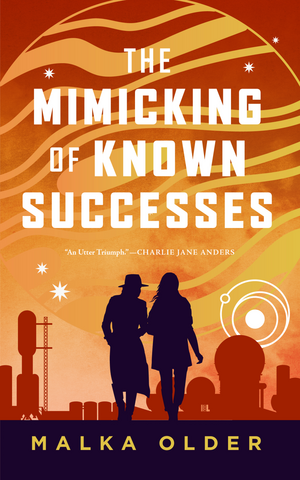
Cover of The Mimicking of Known Successes by Malka OlderMost of the other queer books I read are sci-fi or fantasy, where I really enjoy hopepunk takes like Becky Chambers’ A Long Way to a Small Angry Planet and sequels, where homophobia just isn’t a thing, or Ann Leckie’s Ancillary Justice et al, which play with gender and relationships — everyone in the Radch is referred to as “she”, no matter what. Malka Older’s murder mysteries set on Jupiter are a lot of fun too, with a gender-swapped Sherlock and Watson duo who are, yes, in a romantic relationship as well…

There’s so much I’m missing here: I love K.A. Doore‘s roundups of each year’s queer SFF for this, which often help me find books I’d somehow never come across at all that sound amazing. I highly recommend keeping an eye out for these.

When it comes to romance, of course there’s plenty out there: favourites of mine include Jordan L. Hawk (usually his work has SF/F and horror crossover), KJ Charles (sometimes has fantasy elements too) and Cat Sebastian.

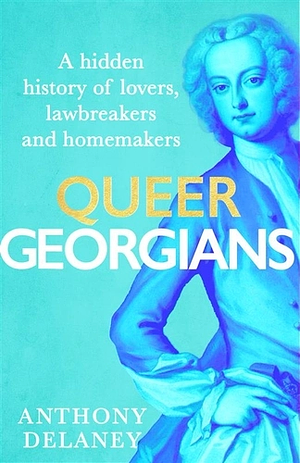
Cover of Queer Georgians, by Anthony DelaneyIn my non-fiction reading, fear not, there have been some queer books there too! Most recently Anthony Delaney’s Queer Georgians, which uncovers various stories of queer people in the Georgian period in the UK. I have Will Tosh’s Straight Acting on the go, which is about Shakespeare’s sexuality and all the debate there is around that, and I’m quite looking forward to picking up a copy of A.J. West’s How Queer Bookshops Changed the World when I can, especially after reading Jane Cholmeley’s A Bookshop of One’s Own.

As you may have guessed from the preamble above, I don’t have a Pride-specific reading list. I’m queer all year round, and so is my reading.

I’d say that’s also the key to what makes representation feel genuine: you can’t just be checking a box. The queerness has to be lived in, baked into your story (even if that’s in small ways) in the way it’s baked into the world. If you can cut it out by simply swapping the pronouns of your side character’s partner and omitting to mention the pride flag in the coffee shop window… well.

Tags: , ,

Divider

Let’s Talk Bookish: Climate Fiction

Posted April 24, 2026 by Nicky in General / 5 Comments

Graphic for Let's Talk Bookish, created by Rukky @ Eternity Books, Hosted by Aria @ Book Nook Bits and Dini @ Dinipandareads

Let’s Talk Bookish is a weekly bookish meme created by Rukky @ Eternity Books and co-hosted by Aria @ Book Nook Bits and Dini @ Dinipandareads! Every Friday they have a different topic for participants to write about and discuss, e.g. like this post.

This week’s prompt is as follows:

Climate fiction is an increasingly popular genre, and has grown from being seen as a sci-fi subgenre to a broader category of its own — its own literary prize even being established in 2025. Have you read climate fiction (‘cli-fi’) or books centred around environmental issues? Do stories about the climate or the environment make you feel hopeful, anxious, or something else? Do you think cli-fi can influence how people think about the environment?

I haven’t really thought of it as a genre on its own, since most of my experience of climate fiction has been in science fiction (where it’s long been a concern, either covered in the main plot or just part of the worldbuilding). I’m not sure how much recent cli-fi that’s written solely as such I’ve actually read, but I’m thinking about stuff like N.K. Jemisin’s The Fifth Season (which is stunning though also horrifying) and A Psalm for the Wild-Built (which is really post-climate disaster and more soothing/hopeful). It haunts other stories, like Malka Older’s The Mimicking of Known Successes… this assumption that we ruined Earth, and had to leave.

(Even when this is for reasons other than climate change, I think it’s reflecting on the same anxiety about the outside impact humans can have on the planet, and it’s coming from the same place, linked with an anxiety about war and destructive weaponry.)

I think whether cli-fi makes me hopeful, anxious or angry is very much down to the book in question, but I think I’m a little bit inured to it because it’s been haunting the fiction I’ve read for so long. There’s a fair bit of science fiction which assumes we’re going to wreck the planet as part of the setup for why we’re out in space or on another planet, and I think that’s generally left a pessimistic mark on me when it comes to fiction.

Out in reality, I do what I can, so I don’t think that stops me — though it might have added to my cynicism about it, given many of the drivers of climate change are completely out of individuals’ control and in the hands of corporations. My small impact by using a renewable energy supplier, cycling and walking when I can, paying for carbon capture, investing in solar and wind farms, using sustainable products… it’s all tiny compared to the damage many corporations are doing.

I don’t really know whether I think cli-fi can make a difference. Given that scientists’ warnings don’t, I’m sort of pessimistic on that too — but then, fiction moves different levers sometimes. So, maybe? I’d be curious if anyone feels like it has for them!

Tags: , ,

Divider

Let’s Talk Bookish: Poetry in the Age of Social Media

Posted April 17, 2026 by Nicky in General / 8 Comments

Graphic for Let's Talk Bookish, created by Rukky @ Eternity Books, Hosted by Aria @ Book Nook Bits and Dini @ Dinipandareads

Let’s Talk Bookish is a weekly bookish meme created by Rukky @ Eternity Books and co-hosted by Aria @ Book Nook Bits and Dini @ Dinipandareads! Every Friday they have a different topic for participants to write about and discuss, e.g. like this post.

This week’s theme is about Instagram poetry and the like:

A few years ago, poetry saw a surge of popularity on social media thanks to “Instagram Poetry” or “instapoetry” by authors like Rupi Kaur, Amanda Lovelace, and Atticus. Do you think social media platforms have changed how people discover poetry? Do you think “instapoetry” makes poetry seem more approachable, or do you agree with critics who say that it’s not “real poetry”? Have you read any instapoetry, and if so, what are your favourite authors/poems/collections?

So let’s take it bit by bit…

Do you think social platforms have changed how people discover poetry?

Like any change in how people communicate, yes, and also because it proves a different potential poetic form as well as a different platform, just like artificial character limits created a trend for very short fiction among a subset of people.

It hasn’t changed how I discover poetry, since I’m not on Instagram and I’ve been a reader (and writer) of poetry since I was a child, before anything even generally like Instagram was accessible: I read poetry collections and anthologies (often via my libraries by just picking at random), follow recommendations from other readers via reviews and blogs (though there aren’t a ton around that talk about poetry much), and am a member of the National Poetry Library (UK folks interested in poetry should sign up!).

Do you think “instapoetry” makes poetry seem more approachable, or do you agree with critics who say that it’s not “real poetry”?

I’m not super interested in artificial cutoffs here; if someone says they’re writing poetry, they’re writing poetry, whether it’s poetry that I like or not. I suspect “instapoetry” is indeed more accessible for some, in part because it’s out there on a social media platform they use, rather than tucked away in specific poetry collections that they might not have access to or know about. Poetry is often seen as less accessible than prose anyway, and putting it out there in people’s Instagram feeds is often getting it in front of people who wouldn’t otherwise seek out poetry.

A lot of people who want to create artificial barriers and say something isn’t “real poetry” or “a real novel” or a real anything else are threatened by it and frightened of change, contemptuous of what “young people” (or other trendsetting subgroups) like as a reflex to prove their superiority, etc. There are reasons why critics may not like a given poem, instapoetry or not, and those are valid… but dismissing the whole form/format? That’s sour grapes about something becoming popular of which they don’t approve, and I don’t have time for it.

Have you read any instapoetry, and if so, what are your favourite authors/poems/collections?

Not much that I’m aware of, but it’s not that I wouldn’t; I don’t promise to like it, but I’d happily try it. I borrowed Rupi Kaur’s milk and honey from the National Poetry Library this week, and didn’t love it, though I could see the appealing factors.

Any other suggestions I should try?

Tags: , ,

Divider

Let’s Talk Bookish: Novels in Verse

Posted April 3, 2026 by Nicky in General / 4 Comments

Graphic for Let's Talk Bookish, created by Rukky @ Eternity Books, Hosted by Aria @ Book Nook Bits and Dini @ Dinipandareads

Let’s Talk Bookish is a weekly bookish meme created by Rukky @ Eternity Books and co-hosted by Aria @ Book Nook Bits and Dini @ Dinipandareads! Every Friday they have a different topic for participants to write about and discuss.

I thought I’d try out doing some more discussion posts and getting more content than just reviews, after the slow years while I was studying (I can’t believe it’s already been like nine months since I finished my course, and my brain’s still recovering). So let’s give this one a shot, and today’s theme iiiis Novels in Verse:

Have you read any novels in verse? Do you think novels in verse can be more emotionally powerful compared to regular prose, or do you think novels in verse are more difficult to connect with? What kind of stories do you think work best in verse (i.e. coming-of-age, grief, romance, historical fiction, etc.)? What are your favourite novels in verse?

So let’s take that a bit at a time!

Have you read any novels in verse?

Yes, a couple. Not a lot, but I’ve read Dove Cooper’s Seafoam and Silence, and I know there’s some other verse novel that I’m forgetting… It’s been quite a while since I came across one that called to me, though, so I haven’t got any recent examples.

Do you think novels in verse can be more emotionally powerful compared to regular prose, or do you think novels in verse are more difficult to connect with?

Neither, really! I think both prose and poetry have their place, depending on the author and the story’s needs, and the reader’s inclinations. Poetry is great at really condensing stuff into a tight package, and that can sometimes be devastating, and sometimes it just won’t land, and that quite likely depends on the tastes of the reader.

I’d probably find I connect better with prose, personally; I like the space it can give an author to give me detail and time with characters, and find that verse often makes things tighter and sparser. Prose is like a broadsword and verse is a little rapier that goes in deep: both of them can be deadly, but I find the broadsword a tad more painful and there’s a fair bit more tissue damage. Sometimes there are moments when the rapier thrust straight to the heart is enough, though.

This analogy isn’t perfect, but I think you probably get where I’m going.

What kind of stories do you think work best in verse?

I suspect that anything could, in the right hands!

What are your favourite novels in verse?

I can’t really pick a favourite, since I remember so few! There’s one where the title’s just on the tip of my tongue that I wouldn’t mind revisiting my review of to see how much I liked it… but since I can only remember the vaguest details, I’m having trouble thinking of it, ahaha. I’ll be curious to see other people’s recommendations!

Tags: ,

Divider