Tag: Carwyn Graves

Review – Welsh Food Stories

Posted September 6, 2026 by Nicky in Reviews / 4 Comments

Review – Welsh Food Stories

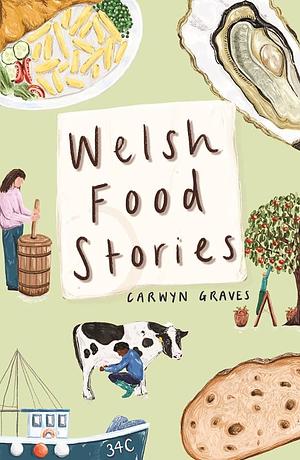
Welsh Food Stories

by Carwyn Graves

Genres: History, Non-fiction
Pages: 272
Rating: four-stars
Synopsis:

Welsh Food Stories explores more than two thousand years of history to discover the rich but forgotten heritage of Welsh foods - from oysters to cider, salted butter to salt-marsh lamb. Despite centuries of industry, ancient traditions have survived in pockets across the country among farmers, bakers, fisherfolk, brewers and growers who are taking Welsh food back to its roots, and trailblazing truly sustainable foods as they do so. In this important book, author Carwyn Graves travels Wales to uncover the country's traditional foods and meet the people making them today. There are the owners of a local Carmarthenshire chip shop who never forget a customer, the couple behind Anglesey's world-renowned salt company Halen Mon, and everyone else in between - all of them have unique and compelling stories to tell about how they contribute to the past, present and future of Welsh food. This is an evocative and insightful exploration of an often overlooked national cuisine, shining a spotlight on the importance - environmentally and socially - of keeping local food production alive.

I’ve been meaning to get around to reading Carwyn Graves’ Welsh Food Stories for a while, because I don’t actually know much about the Welsh food tradition (as distinct from a more general British one). I do know about bara brith and Welshcakes and laverbread and cawl… but that’s not all there is to it, right? And indeed, Graves digs deeper into it than that, discussing the kind of flour produced in Wales historically, the saltiness of the butter, the joy of leeks, etc.

What I was pleased to find is that a lot of the things I love — salty butter, sweet ciders, and of course plentiful cheese, even though I had my gallbladder removed well over a decade ago and can’t digest it so well — are pretty in line with historic Welsh tastes! Despite the snobbery about sweet cider that I sometimes encountered in the English folk music scene, historically Welsh ciders tend to be much sweeter than English ones (though admittedly I think my love of toffee apple cider is probably a step too far).

I think at times Graves tends toward the preachy about eating locally and eating traditional food and using traditional varieties, but not without merit, and overall I found it a good read and learned things: my favourite new information was about the Breton Sioni Winwns, though of course, Brexit ended that tradition entirely.

Rating: 4/5 (“really liked it”)

Tags: , , , ,

Divider

Review – Tir: The Story of the Welsh Landscape

Posted November 30, 2025 by Nicky in Reviews / 2 Comments

Review – Tir: The Story of the Welsh Landscape

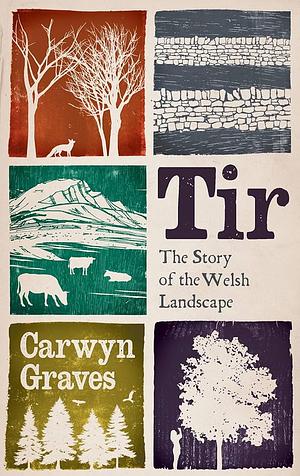
Tir: The Story of the Welsh Landscape

by Carwyn Graves

Genres: History, Non-fiction
Pages: 240
Rating: four-stars
Synopsis:

A journey through the natural landscapes of Wales.

In Tir -- the Welsh word for "land" -- writer and ecologist Carwyn Graves takes us on a tour of seven key characteristics of the Welsh landscape. He explores such elements as the ffridd, or mountain pasture, and the rhos, or wild moorland, and examines the many ways humans interact with and understand the natural landscape around them. Further, he considers how this understanding can be used to combat climate change and improve wildlife populations and biodiversity.

By diving deep into the history and ecology of each of these landscapes, we discover that Wales, in all its beautiful variety, is just as much a human cultural creation as a natural phenomenon: its raw materials evolved alongside the humans that have lived here since the ice receded.

Carwyn Graves’ Tir: The Story of the Welsh Landscape took me longer to read than expected. It was very nice to read a book by a Welsh person, steeped in Welsh culture, acknowledging that the Welsh are indigenous people and have a long, long, long history of being wrapped up in the landscape. He does mention that being Welsh has a lot to do with language, and that’s not how I see being Welsh (given I was raised in England and speak only English), but nonetheless his love for the land, the language, and the culture entwining the two is clear and enjoyable to read.

(Lest you wonder, I’m with Glyn Jones in The Dragon Has Two Tongues: “To me, anyone can be a Welshman who chooses to be so and is prepared to take the consequences.”)

I think Graves is a little idealistic at times, and obviously chooses examples which suit his theories — but I think he is also fairly convincing that Welsh traditions of farming can boost biodiversity, soil retention, water management, and even food security, and that these efforts will be better for the people and the land than conservation or rewilding per se (though at times I felt these were put up as straw men: there are many ways of doing conservation and rewilding), even if it involves cutting some peat for fires over the winter, etc. The Welsh names for the landscape often tell us how certain fields were used, and the farmers who once worked that land knew what it was good for: we should listen.

I did also learn some new snippets of Welsh history, for example about the (often successful) fight back against enclosure in Wales.

But, overall, looking back… I did feel a bit of a tinge of unwelcomeness myself in the Wales that Graves describes and champions. If (and when) I come back to Wales to live permanently, as I hope to do, I will be one of the people who Graves seems to feel can’t (or won’t) connect into the local culture and language. I have a local network in Wales, but it isn’t farmers and poets, we don’t swap englyn, and I’d be surprised if anyone knows how to cut peat in the ancient ways.

For all that, I think Graves is wrong and that anyone can belong here if they love the land. I was here every holiday when I was little, and I lived here for university and a few years beyond that, and I too feel a connection to it: it’s my home. I may not be able to tell rhos from mynydd, but Wales will still have me, from the city streets I knew best to the path up Caerphilly Mountain, walking along in the shade of the hedgerow where all the conkers fall, up to the “secret” patch of blackberries my grandad liked to pick, and back down through a patch of woodland along by the train tracks.

It doesn’t matter whether I can say all that in Welsh. It’s my home too.

Rating: 4/5 (“really liked it”)

Tags: , , , , ,

Divider