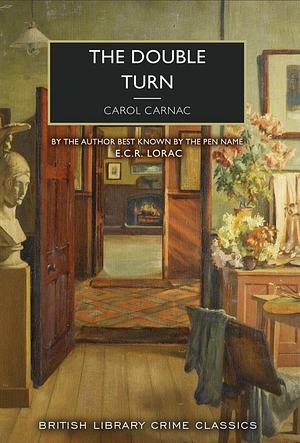
The Double Turn
by E.C.R. Lorac, Carol Carnac
Genres: Crime, MysteryPages: 220
Series: British Library Crime Classics
Rating:

Synopsis:At Firenze, the reclusive artist Adrian Delafield’s Florentine enclave in St John’s Wood, the whispers of an impending tragedy are growing louder. The tension between the fanatical zealot of a housekeeper Miss Trimming and Delafield’s sister Virgilia is just shy of fever pitch, when a cold morning at the house finds Trimming and Adrian sprawled at either end of the staircase – upstairs, an injury; downstairs, death.
The windows and doors were all locked from the inside, and yet Inspector Julian Rivers, trained to see the malice behind deadly accident, suspects that a murderer had a hand in the fell deed. But if this is true, Rivers is faced with both the inexplicable puzzle of motive, and the task of untangling an impossible crime in Carnac’s compelling and twisting 1956 mystery exploring the demands of kinship, art-world secrets and religious mania.
Carol Carnac, AKA E.C.R. Lorac, is one of my favourite finds through the British Library Crime Classics series. I reliably enjoy her sense of place and ability to create characters I really root for, though I generally prefer her work under the name E.C.R. Lorac — I think because all of those I’ve read have starred Macdonald, and he’s such a humane sort of detective that it makes everything just a little comfier. I’m less fond of the detectives in The Double Turn, Lancing and Rivers: I’ve no reason to believe they’re meant to be any less decent than Macdonald, but they just don’t get the same fondness from me. I didn’t quite understand their frustration with one of the (innocent) characters, for example.
I still enjoyed The Double Turn as a mystery, though; I’m not sure if it was fair play, as the solution eventually partly hinged on a small detail that I can’t remember being mentioned previously (though there were other clues that could lead you in the right sort of direction, and there was a major one I didn’t pay enough attention to). I did realise that it was likely to end up being a character I didn’t want to be implicated, because Lorac’s so good at that, at creating people with massive flaws who nonetheless also have admirable qualities… but that’s more of a meta-clue.
In the end, it left me feeling a bit sad, to be honest. The way it ends doesn’t feel entirely like justice or everything being set to rights, because you can’t undo the harm done, and the victim wasn’t likeable but was in some ways admirable, and either way obviously didn’t deserve to be murdered in that way — and there was collateral damage too. It’s just… ugh.
All in all, not a favourite of Lorac’s; plenty of worthy aspects, but not my personal cup of tea.
Rating: 3/5 (“liked it”)