Author: Carol Carnac

Review – The Double Turn

Posted March 12, 2026 by Nicky in Reviews / 2 Comments

Review – The Double Turn

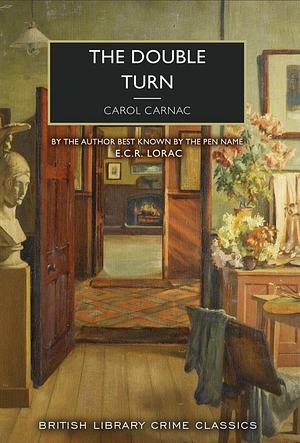
The Double Turn

by E.C.R. Lorac, Carol Carnac

Genres: Crime, Mystery
Pages: 220
Series: British Library Crime Classics
Rating: three-stars
Synopsis:

At Firenze, the reclusive artist Adrian Delafield’s Florentine enclave in St John’s Wood, the whispers of an impending tragedy are growing louder. The tension between the fanatical zealot of a housekeeper Miss Trimming and Delafield’s sister Virgilia is just shy of fever pitch, when a cold morning at the house finds Trimming and Adrian sprawled at either end of the staircase – upstairs, an injury; downstairs, death.

The windows and doors were all locked from the inside, and yet Inspector Julian Rivers, trained to see the malice behind deadly accident, suspects that a murderer had a hand in the fell deed. But if this is true, Rivers is faced with both the inexplicable puzzle of motive, and the task of untangling an impossible crime in Carnac’s compelling and twisting 1956 mystery exploring the demands of kinship, art-world secrets and religious mania.

Carol Carnac, AKA E.C.R. Lorac, is one of my favourite finds through the British Library Crime Classics series. I reliably enjoy her sense of place and ability to create characters I really root for, though I generally prefer her work under the name E.C.R. Lorac — I think because all of those I’ve read have starred Macdonald, and he’s such a humane sort of detective that it makes everything just a little comfier. I’m less fond of the detectives in The Double Turn, Lancing and Rivers: I’ve no reason to believe they’re meant to be any less decent than Macdonald, but they just don’t get the same fondness from me. I didn’t quite understand their frustration with one of the (innocent) characters, for example.

I still enjoyed The Double Turn as a mystery, though; I’m not sure if it was fair play, as the solution eventually partly hinged on a small detail that I can’t remember being mentioned previously (though there were other clues that could lead you in the right sort of direction, and there was a major one I didn’t pay enough attention to). I did realise that it was likely to end up being a character I didn’t want to be implicated, because Lorac’s so good at that, at creating people with massive flaws who nonetheless also have admirable qualities… but that’s more of a meta-clue.

In the end, it left me feeling a bit sad, to be honest. The way it ends doesn’t feel entirely like justice or everything being set to rights, because you can’t undo the harm done, and the victim wasn’t likeable but was in some ways admirable, and either way obviously didn’t deserve to be murdered in that way — and there was collateral damage too. It’s just… ugh.

All in all, not a favourite of Lorac’s; plenty of worthy aspects, but not my personal cup of tea.

Rating: 3/5 (“liked it”)

Tags: , , , , , ,

Divider

Review – Murder as a Fine Art

Posted February 24, 2025 by Nicky in Reviews / 2 Comments

Review – Murder as a Fine Art

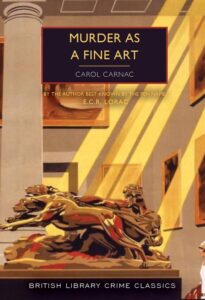
Murder as a Fine Art

by Carol Carnac, E.C.R. Lorac

Genres: Crime, Mystery
Pages: 236
Series: British Library Crime Classics
Rating: four-stars
Synopsis:

When a civil servant at the newly formed Ministry of Fine Arts is found crushed beneath a monstrous marble bust after dark, it appears to be the third instance in a string of fatal accidents at the department. Already disturbed by rumours of forgeries and irregularities in the Ministry’s dealings, Minister Humphry David is soon faced with the possibility that among his colleagues is a murderer – though how the bust could have been made an instrument of death is a masterstroke of criminal devilment. Taking charge of the case, Inspector Julian Rivers of Scotland Yard enters a caustic world of fine art and civil service grievances to unveil a killer hiding in plain sight.

Murder as a Fine Art is one of E.C.R. Lorac’s books under the “Carol Carnac” pen-name, and features Rivers and Lancing rather than Macdonald. I do prefer the books which feature Macdonald, because he seems a bit more human and sympathetic than Rivers or Lancing: my sense is that the puzzle of it is more important than the human element in the books featuring them.

Which is not to say that Lorac’s usual attention to character and place is absent: the story is set within a building called Medici House, in a post-war government Ministry, and the Minister himself is a sympathetic character, one you find yourself hoping isn’t entangled in the crime. There’s definitely still a good eye to what people are like: for example, the two detectives agree that the deceased was probably not hated by his subordinates, as there’s a sort of affectionate nickname for him suggesting toleration of his foibles. And Medici House is very carefully evoked, its splendours and inconveniences all at once.

But overall there’s a lot of time spent on the howdunit, on procedure, and my impression is that there’d be a bit less of that with Macdonald — or perhaps it’d feel more hands on? Personal? I’m not sure exactly; maybe it’s just that I don’t feel I “know” Rivers and Lancing and what they’ll do or care about.

Anyway, it’s still an enjoyable puzzle. Not a favourite, but absorbing and worthwhile.

Rating: 4/5

Tags: , , , , ,

Divider

Review – Impact of Evidence

Posted February 21, 2024 by Nicky in Reviews / 0 Comments

Review – Impact of Evidence

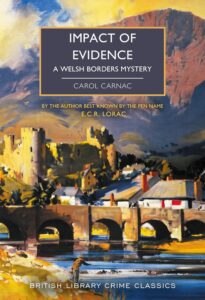
Impact of Evidence

by E.C.R. Lorac, Carol Carnac

Genres: Crime, Mystery
Pages: 221
Series: British Library Crime Classics
Rating: three-stars
Synopsis:

Near St Brynneys in the Welsh border country, isolated by heavy snow and flooding from the thaw, a calamity has occurred. Old Dr Robinson, a known 'menace o the roads', has met his end in a collision with a jeep at a hazardous junction. But when police arrive at the scene, a burning question hints at something murkier than mere accident: why was there a second body - a man not recognised any locals - in the back of Robinson's car?

As the local inspectors dive into the muddy waters of this strange crime, Chief Inspector Julian Rivers and Inspector Lancing are summoned from Scotland Yard to the windswept wilds, where danger and deceit lie in wait.

Puzzling and atmospheric, this exceedingly rare mystery from one of the masters of crime fiction's Golden Age returns to print for the first time since its publication in 1954.

It’s always exciting when the British Library Crime Classics series bring out another of E.C.R. Lorac’s books, especially the rare and out of print ones. I’m slightly less fond of Lorac’s work under the Carol Carnac pseudonym, perhaps because I’m not as fond of the detective — though Lorac’s McDonald doesn’t show us a lot of his personal life, he does show a constant decency and patience, and that impression has been cumulative through the books in which he’s featured. Lancing and Rivers don’t really compare (and don’t really stand out to me, either, though nor did McDonald at first).

In any case, Impact of Evidence is the latest, a book which is out of print and almost unattainable until now. The setup is intriguing: details are drawn from Lorac’s own experience of Lunesdale, but transplanted to the Welsh borders, and she depicts farm life with her usual care for what’s needed and how those communities worked. As usual, she’s idealised the working farmer a little here, with her usual “salt of the earth” rock-solid decent characters — but having read more of her work, one’s always aware of the tension there, and when those people might do wrong.

I admit I was onto what happened fairly early on just because of certain details that were drawn to the reader’s attention multiple times, but it was still interesting to see how it worked out, and how some things were subverted (like the Derings matter-of-fact behaviour about the accusations of them).

Rating: 3/5

Tags: , , , , ,

Divider