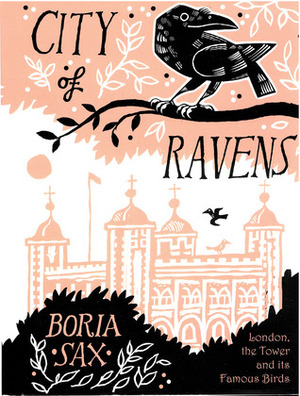
City of Ravens
by Boria Sax
Genres: History, Non-fictionPages: 206
Rating:

Synopsis:Tales tell of how Charles II, fearful of ancient legends that Britain will fall if the ravens at the Tower of London ever leave their abode, ordered that the wings of the six ravens be clipped. But the truth is that the ravens only arrived at the Tower in 1883, when they were brought in as props in tales of Gothic horror that were told to tourists. The legend itself originated from the summer of 1944, when ravens in London were used as unofficial spotters for enemy bombs and planes.
Boria Sax gives us the first book to tell the true story of the ravens, which has far more high drama than any of the tales the tourists get to hear. Its heroes are the raven couple Grip and Mable, who eloped from the Tower together after World War II, leaving it empty and prompting fears that the British Empire would end; Jackie, who kept watch at a brewery; McDonald, who was murdered; and Thor, who could not accept his loss of flight. For over a century, the ravens have been symbols of cruelty, avatars of fate—and cuddly national pets. But Sax shows us how the ravens have come to represent Britain's natural heritage, without which any nation would be impoverished. This informing and reflective volume addresses the need to connect with animals and the natural world and shows us the human need for wonder at nature.
Boria Sax’s “history” of the ravens of the Tower of London, City of Ravens, is pretty slight. While he uses plenty of sources for what he does say, and I don’t doubt his assertion that the tradition of the ravens in the Tower as known today is fairly recent in date… I had big problems with linking that tradition to the tradition of Bran the Blessed based on no more than the coincidence of name (Bran = raven) and place (the Tower of London).
It’s not the whole of his theory, but it’s one of the more interesting ones, and it’s mostly unsupported. Given that Welsh mythology is comparatively unknown now even after several translations of The Mabinogion and slightly wider knowledge of the Welsh triads, and an amount of scholarly interest in them, I have doubts that they were known at the time the tradition grew up again. I’d be ready to see evidence, but as far as I can tell Sax presents none, just “it can’t be a coincidence”.
Yes, yes it can. Sources, please.
It’s not a bad short read, but otherwise not revelatory.
Rating: 2/5 (“it was okay”)
