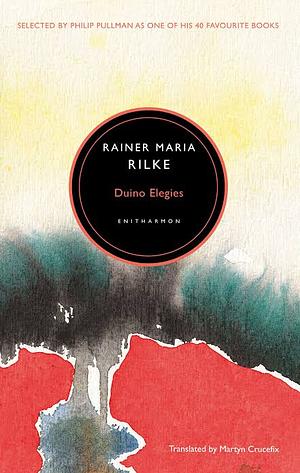
Duino Elegies
by Rainer Maria Rilke
Genres: PoetryRating:

Synopsis:Perhaps no cycle of poems in any European language has made so profound and lasting an impact on an English-speaking readership as Rilke's Duino Elegies. These luminous new translations by Martyn Crucefix make it marvellously clear how the poem is committed to the real world observed with acute and visionary intensity. Completed in 1922, the same year as the publication of Eliot's The Waste Land, the Elegies constitute a magnificent godless poem in their rejection of the transcendent and their passionate celebration of the here and now. Troubled by our insecure place in this world and our fractured relationship with death, the Elegies are nevertheless populated by a throng of vivid and affecting figures: acrobats, lovers, angels, mothers, fathers, statues, salesmen, actors and children. This bilingual edition offers twenty-first century readers a new opportunity to experience the power of Rilke's enduring masterpiece. Selected by Philip Pullman as one of his 40 favourite books. Shortlisted for the Cornelieu M Popscu Prize, 2007."
It’s rough to write a good review of Rainer Maria Rilke’s Duino Elegies, because there are two levels here: just reading the poetry (in translation), and all the interpretation and context around it. I read the poetry and loved so much about it, but I’m also a little worried I missed out on the richness of it because I don’t have a lot of context for it.
This translation by Martyn Crucefix has a helpful introduction and some notes on each poem; I did manage to read the introduction, but could only skim the notes since my copy was due back at the library. The intro was helpful, and I think the notes were too. The translation itself seemed very readable and well written, though I can’t judge how accurate it was!
It’s definitely poetry that can be appreciated without the notes, it’s beautiful, but I would have liked to really dig my teeth in too.
Rating: 4/5 (“really liked it”)

Leave a Reply